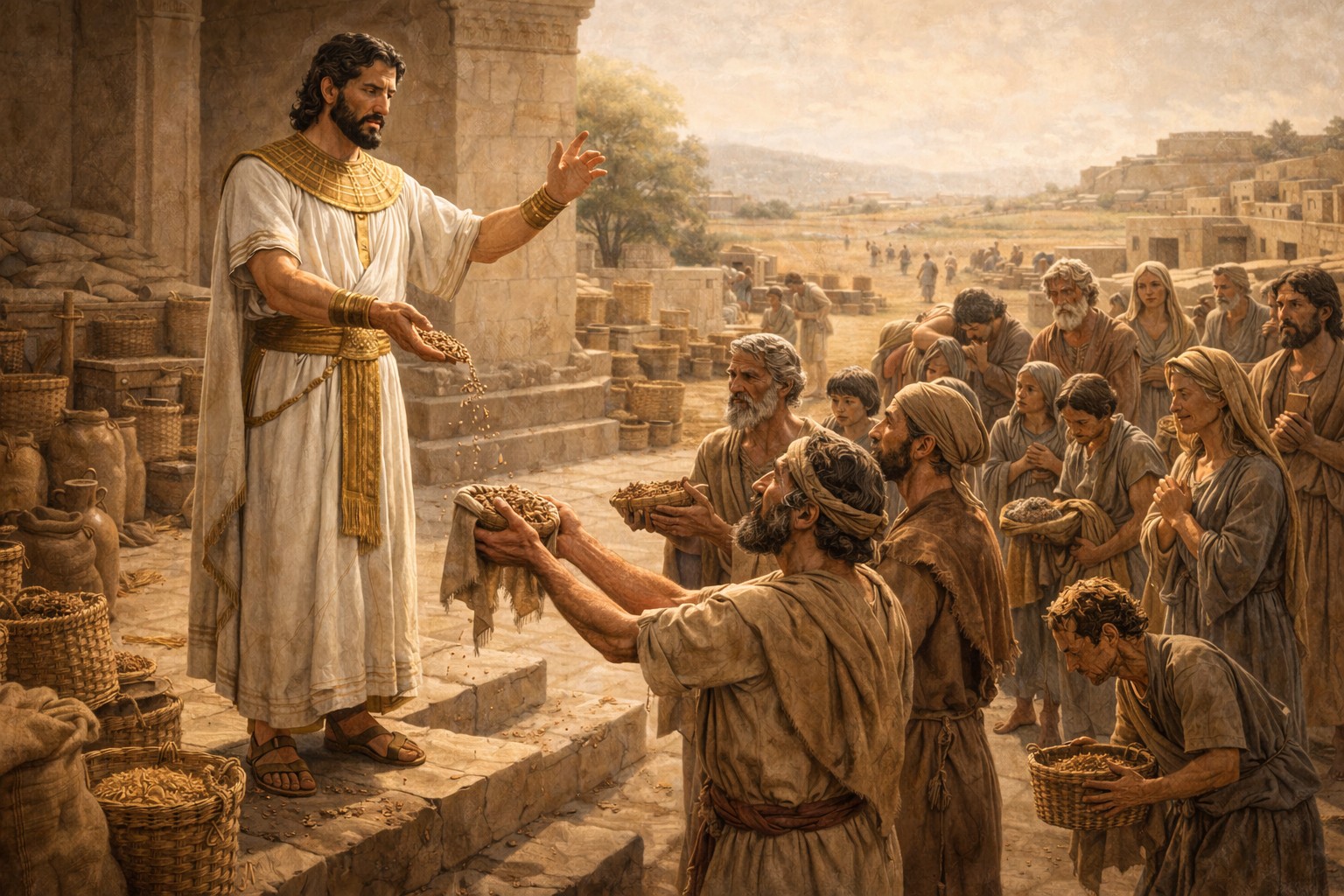
Genesis 47 — Joseph settles Israel in Goshen, preserving the covenant people within a foreign land.
Genesis 47 records how Joseph settles Jacob and his family in the land of Goshen, securing a place where the covenant people may live and grow within Egypt. In the midst of severe famine, Joseph administers Egypt with life-preserving wisdom, while Jacob, nearing death, anchors Israel’s future not in Egypt but in the promised land of Canaan. The chapter reveals how God preserves His people within a foreign world without allowing their identity or hope to be lost.
Goshen: The Place God Prepared
Genesis 47 centers on Joseph settling his father Jacob and his brothers in the land of Egypt. Joseph presents his brothers before Pharaoh and openly declares that they are shepherds. In Egyptian society, shepherding was regarded as a low occupation, yet Joseph does not conceal their identity. By preserving who they truly are, he ensures that they may live within Egypt without losing their distinctiveness.
Pharaoh grants them the land of Goshen. This is more than a geographical settlement. Goshen becomes the place God prepares within a foreign land so that His covenant people may be preserved. The scene reveals a quiet providence: even within the structures of the world, God creates space for His people to remain who they are.
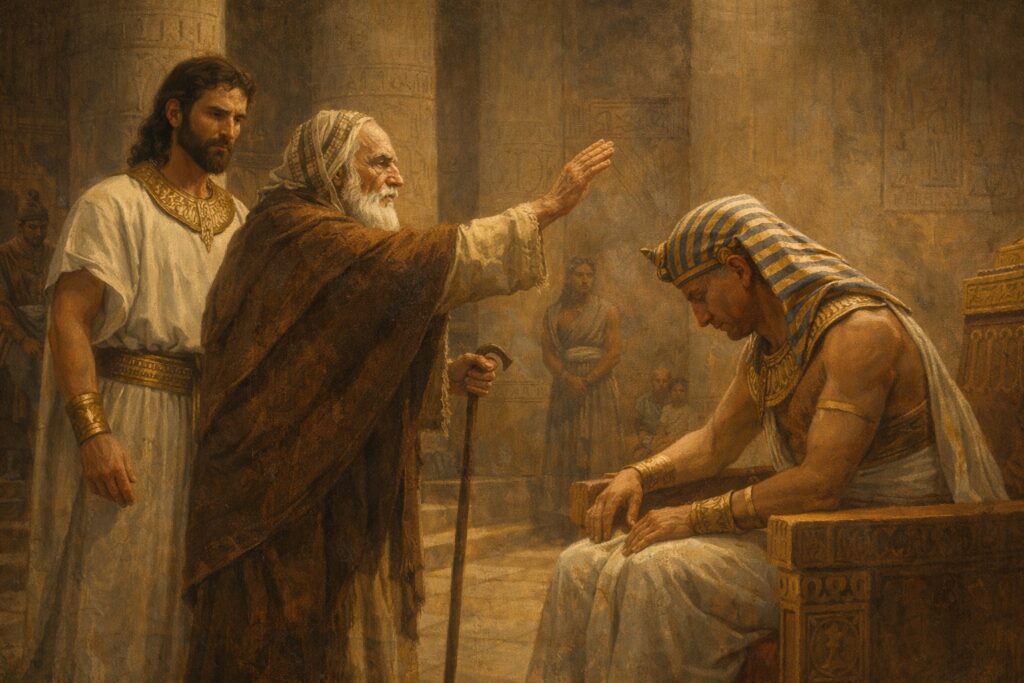
Joseph’s Rule Revealed in Famine
The narrative then turns to Egypt’s survival during the severe famine. The people exchange money, livestock, land, and eventually themselves in order to receive grain. At first glance, the passage appears to describe an economic transformation. Yet beneath the surface, Scripture portrays the preservation of life through ordered governance.
Joseph’s authority is not merely administrative skill. It is stewardship entrusted by God for the sake of life. In the midst of disaster, he establishes continuity rather than collapse. The text quietly discloses the purpose of God-given authority: true rule exists not to dominate, but to sustain life.
Living in Egypt, Hoping in Canaan
The focus returns to Jacob. Israel’s family settles in Goshen and begins to flourish. Jacob spends his final years in Egypt, yet as his death approaches, he makes one solemn request of Joseph: that he not be buried in Egypt, but in the land of his fathers.
This request is not simply about burial custom. Jacob has lived in Egypt, but he does not belong to Egypt. His hope
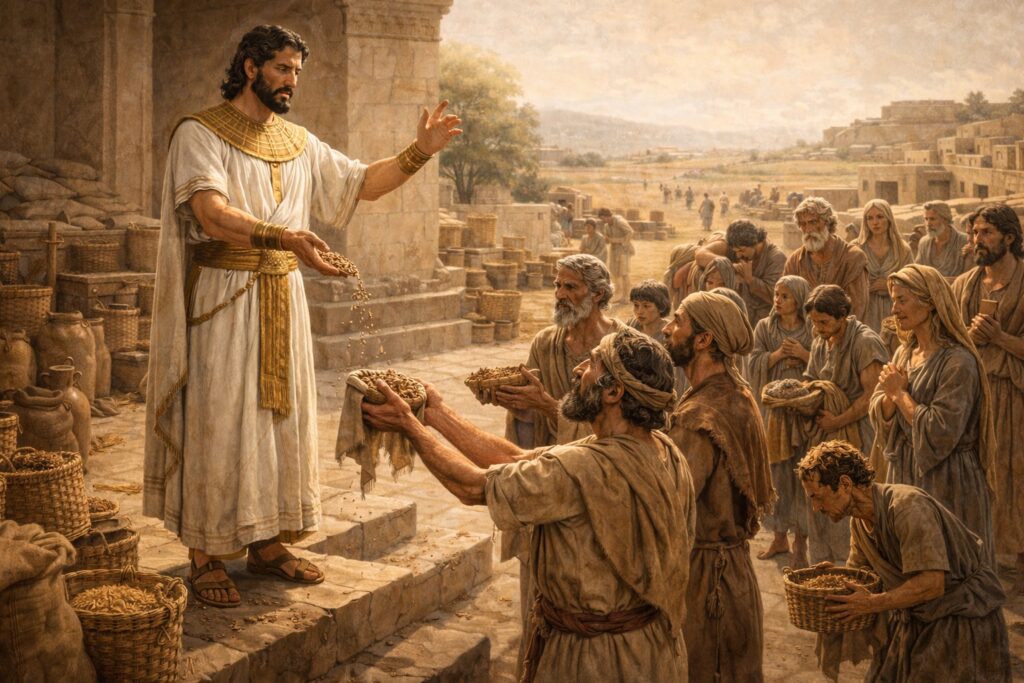
A Covenant People Preserved Within the World
Genesis 47 shows how the covenant people enter and remain within a foreign world. God does not immediately return them to Canaan. Instead, He sustains them inside a great empire. Yet they are not dissolved, erased, or assimilated. They remain a distinct people under His care.
Goshen becomes an image of the place where God’s people live within the world yet are preserved by Him. God does not remove His people from history; He keeps them within it. At the center of that preservation stands providence working through a faithful mediator. Joseph becomes the human instrument through whom God secures the future of the covenant community.
This video invites quiet reading and meditation on Genesis 47, helping us contemplate how God sustains His people and preserves their identity even in unfamiliar lands.
◀ Previous: Genesis 46 — Jacob Goes to Egypt
▶ Next: Genesis 48 — Jacob Blesses Ephraim and Manasseh
👉 Full Genesis Playlist
📚 Genesis meditation playlist