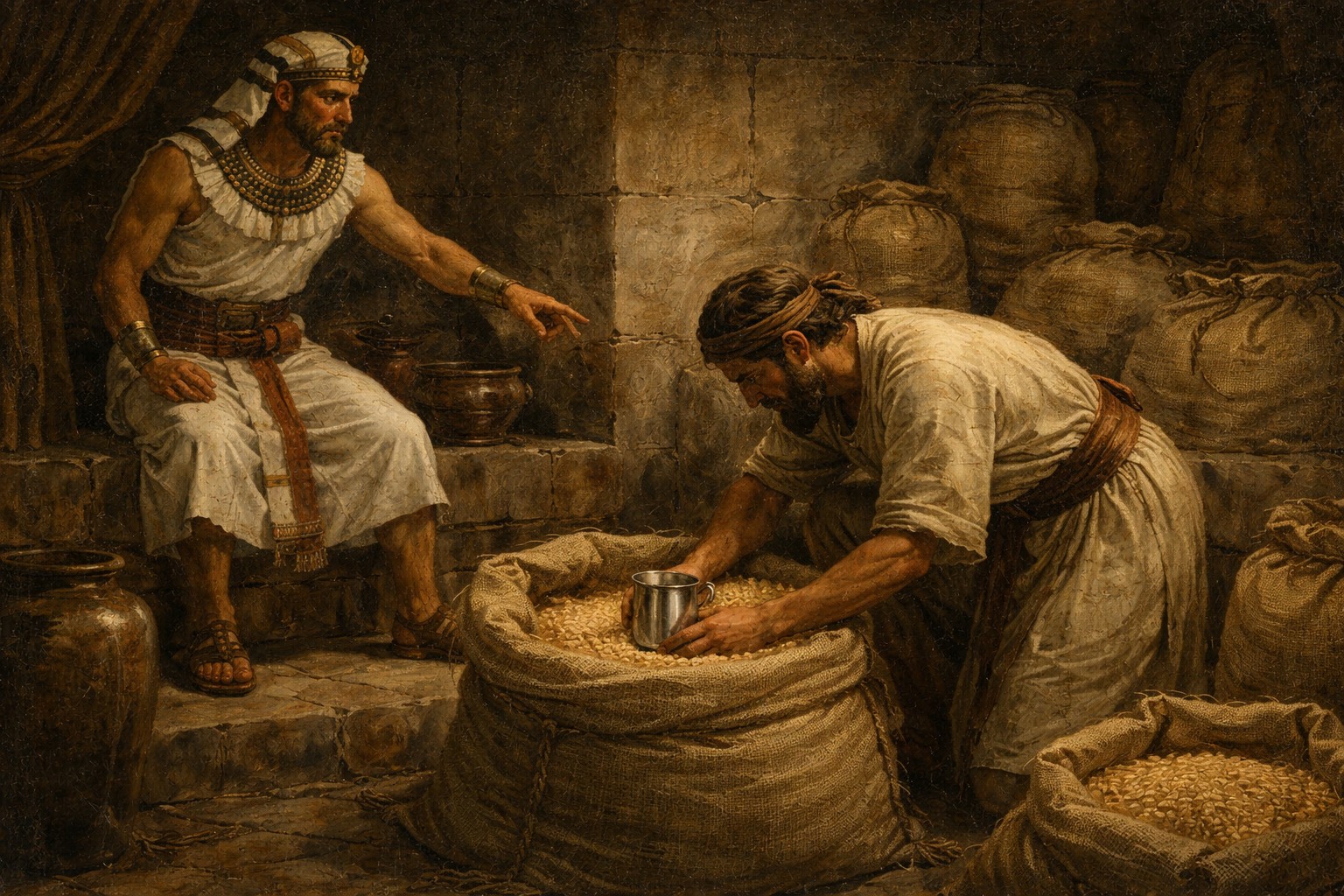
Genesis 44 reveals Judah’s self-offering in Benjamin’s place —
the completion of repentance and the restoration of a broken family.
Genesis 44 stands at the turning point of the Joseph narrative, where Judah’s repentance reaches its completion.
Once the brother who sold Joseph, Judah now offers himself in Benjamin’s place.
This chapter reveals how true repentance restores relationship, transforms rivalry into protection, and begins to reflect the sacrificial love that later culminates in the cross.
Joseph’s Test and the Depth of Repentance Revealed
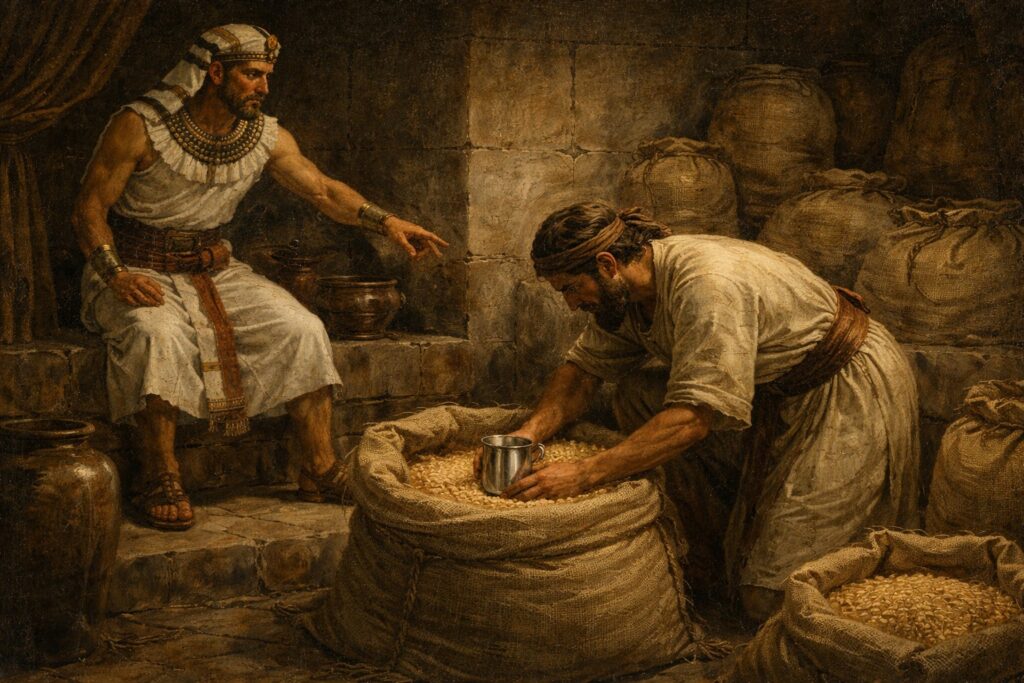
Genesis 44 marks a decisive turning point in the Joseph narrative. Joseph still conceals his identity and tests his brothers once more. This time, the center of the test is Benjamin. Placing the silver cup in his sack and accusing him is not merely a stratagem; it is a way of revealing how deeply the brothers’ hearts have changed. In the past, they sold Joseph out of jealousy and rivalry. Now the question stands: what will they choose for Benjamin, who occupies the same vulnerable place? This is Joseph’s unspoken question.
A New Judah — Repentance Expressed Through Self-Offering
Within this test we encounter a profoundly changed Judah. The one who once sold a brother now offers himself in the brother’s place: “Please let your servant remain instead of the boy.” This confession is more than emotion; it is the completion of repentance. Not only the sinful act but its root—envy and competition—has been transformed. Repentance does not end with admitting guilt. It reaches fulfillment when it restores relationship, protects another, and accepts the cost personally.
The Man Who Learned the Father’s Heart
Judah’s transformation is not merely moral resolve. He has come to understand his father Jacob’s grief through his own life. Having known the loss of sons and the fear of losing the youngest, Judah now sees Benjamin through Jacob’s eyes. His gaze is no longer jealousy but protection. His plea before Joseph carries not only a brother’s concern but the father’s heart itself.
The Shadow of the Cross
In Judah’s self-offering we glimpse the shadow of the cross. The willingness to bear another’s penalty and stand in another’s place foreshadows the path of the One who would come from Judah’s line. Substitution, responsibility, and sacrificial love lie at the heart of redemption. Genesis 44 is therefore not only a family episode but a revelation of how the principle of atoning love begins to appear within human history.

From Broken Family to Covenant Community
God was turning evil into good and shaping a fractured family into a covenant community. Joseph’s testing was not meant to condemn his brothers but to restore them. The brothers who were once divided by rivalry are now willing to sacrifice for one another. This is how the community God calls is completed—through repentance that leads to shared life and self-giving love.
Repentance That Restores Community
Even today, God leads us not toward condemnation but toward repentance that restores community. He addresses the roots of sin, heals relationships, and calls us to bear love’s cost. Genesis 44 shows how far repentance must go—ultimately to the place of the cross, where one stands in another’s place. The same restoring work God accomplished within Jacob’s family continues to move within our lives and communities now.
◀ Previous: Genesis 43 — Brothers Return with Benjamin
▶ Next: Genesis 45 — Joseph Reveals Himself
👉 Full Genesis Playlist
📚 Genesis meditation playlist