Exodus 7 records the first confrontation between God and Pharaoh, where Aaron’s staff becomes a serpent and the Nile River is turned into blood, revealing God’s authority over Egypt and its gods.
Exodus 7 marks the beginning of God’s public demonstration of power in Egypt through Moses and Aaron. God appoints Moses to stand before Pharaoh “like God,” and Aaron becomes his spokesman. Together they deliver a simple but powerful message from the LORD: “Let my people go.”
Yet Pharaoh refuses to listen. His heart is hardened, and he rejects the authority of the God of Israel. This chapter shows that the Exodus is not merely a historical event but the beginning of a dramatic confrontation between the LORD and the powers of Egypt.
The Staff That Became a Serpent
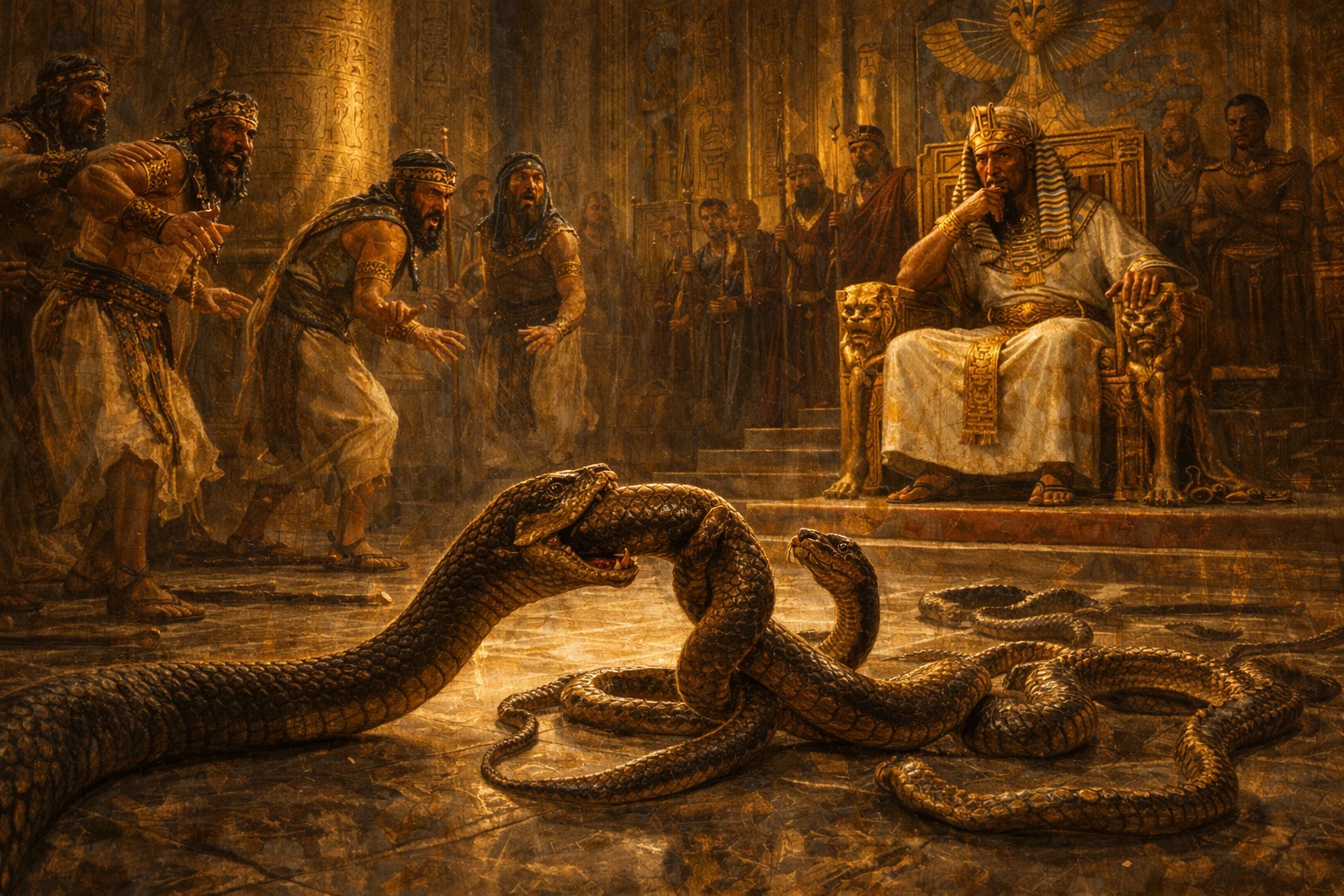
God commands Moses and Aaron to perform a sign before Pharaoh. Aaron throws down his staff, and it becomes a serpent. Pharaoh responds by calling the Egyptian magicians, who also cast down their staffs and produce serpents through their secret arts.
However, a decisive moment reveals the difference between human imitation and divine authority. Aaron’s serpent swallows the serpents of the magicians. This powerful sign demonstrates that the power of God surpasses all human skill and every spiritual power that Egypt claims to possess.
Still, Pharaoh’s heart remains hardened, just as the LORD had said.
The Nile Turned to Blood
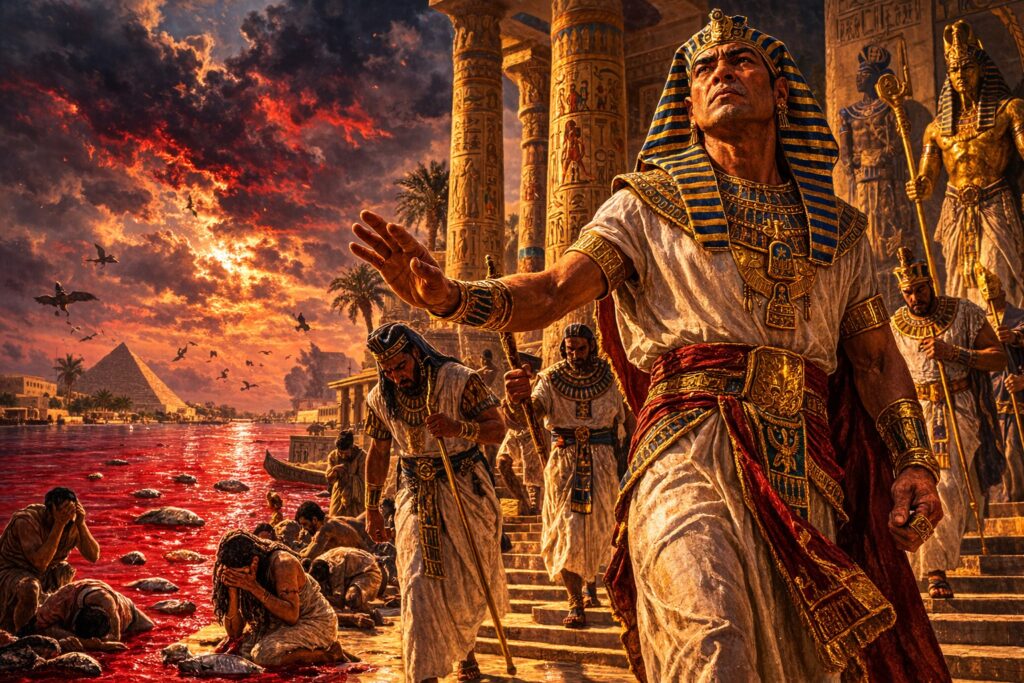
Because Pharaoh refuses to obey, God brings the first plague upon Egypt. Moses and Aaron meet Pharaoh at the Nile River, the very source of Egypt’s life and prosperity. At God’s command, Aaron strikes the waters of the Nile with his staff.
Immediately the river turns into blood.
Fish die, the water becomes foul, and the Egyptians cannot drink from the river. The Nile, once the lifeline of Egypt, becomes a source of death and judgment. Even the water stored in vessels of wood and stone turns into blood.
This plague reveals something deeper than a natural disaster. It is a direct judgment against the gods of Egypt, especially the Nile deities that the Egyptians believed sustained their civilization.
Pharaoh’s Hardened Heart
Despite witnessing these signs, Pharaoh refuses to humble himself. He turns away and returns to his palace, ignoring the suffering spreading throughout the land. Meanwhile, the Egyptians dig along the banks of the Nile in desperate search of drinkable water.
The king of Egypt still refuses to acknowledge the authority of the LORD.
Exodus 7 therefore presents a profound spiritual question that runs throughout the entire Exodus story: Who is truly King?
A Question for Our Lives
The story of Exodus is not only about ancient Egypt. It speaks directly to every generation.
Pharaoh lived as if he were the ultimate ruler of his own world. Because of that, he could not submit to God.
Moses, however, lived like a staff in the hand of God — an instrument through whom God’s will was accomplished.
The same question confronts us today. Are we living like Pharaoh, insisting on our own authority? Or are we willing to become instruments in the hands of God?
Exodus 7 invites us to recognize the LORD as the true King and to live under His authority.
📖 Scripture: Exodus 7:1–25
◀ Previous: Exodus 6 — God Reaffirms His Covenant
▶ Next: Exodus 8 — The Plague of Frogs
📖 Series: Genesis–Exodus Bible Meditation Series
🎬 Full Playlist: Genesis–Exodus Bible Meditation Playlist