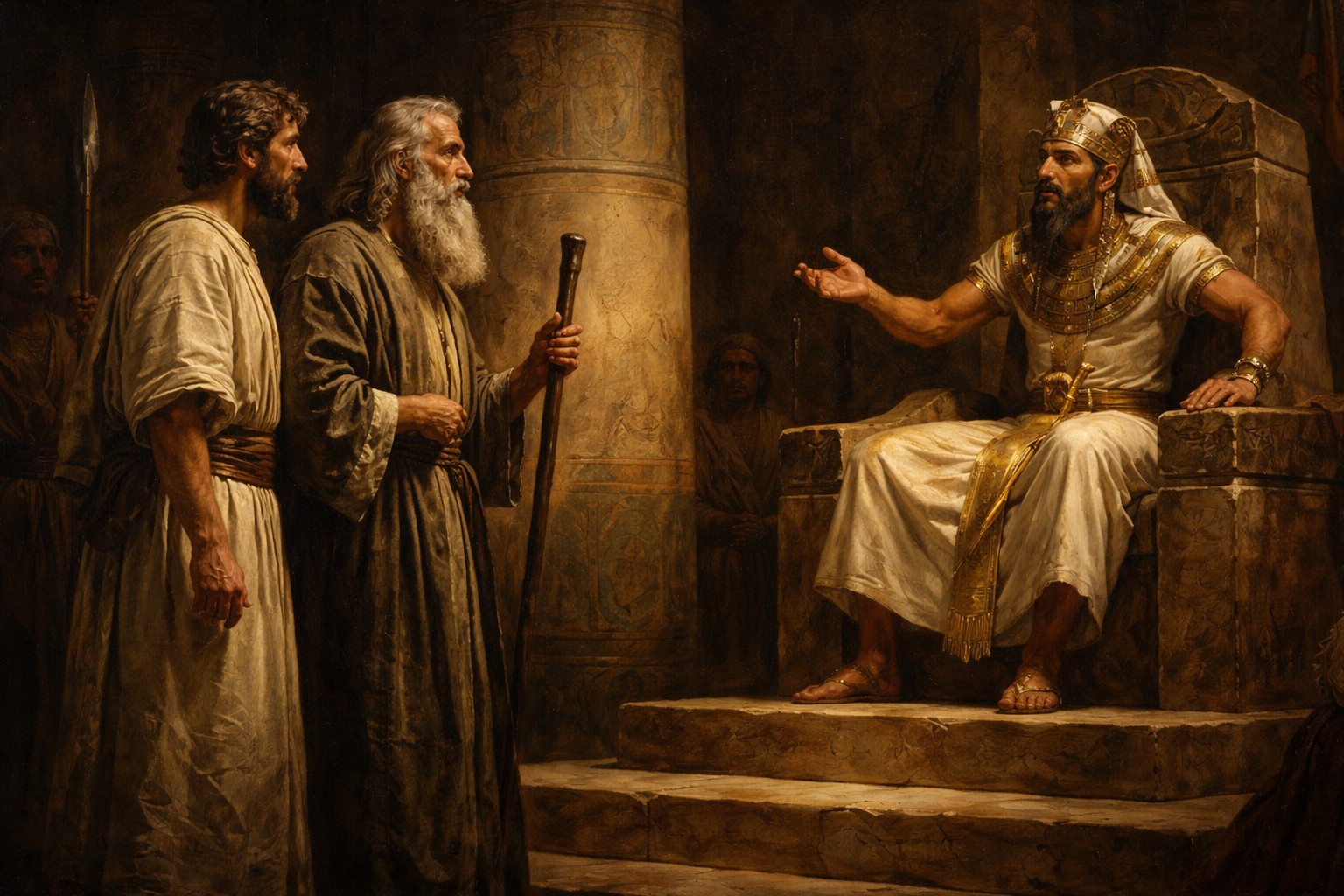
Exodus 5 reveals how Moses and Aaron confront Pharaoh with God’s command, only to see Israel’s suffering increase, reminding us that God’s redemptive work often begins in the midst of deeper hardship.
Exodus 5 begins with Moses and Aaron standing before Pharaoh as messengers of God. They deliver the divine command: “Let my people go.” Yet Pharaoh refuses and openly declares that he does not know the LORD. Instead of releasing Israel, he intensifies their oppression by increasing their labor and removing the straw needed for brickmaking. Exodus 5 reveals a profound spiritual reality: when God begins His work of deliverance, resistance often grows stronger before redemption arrives.
Moses and Aaron Confront Pharaoh
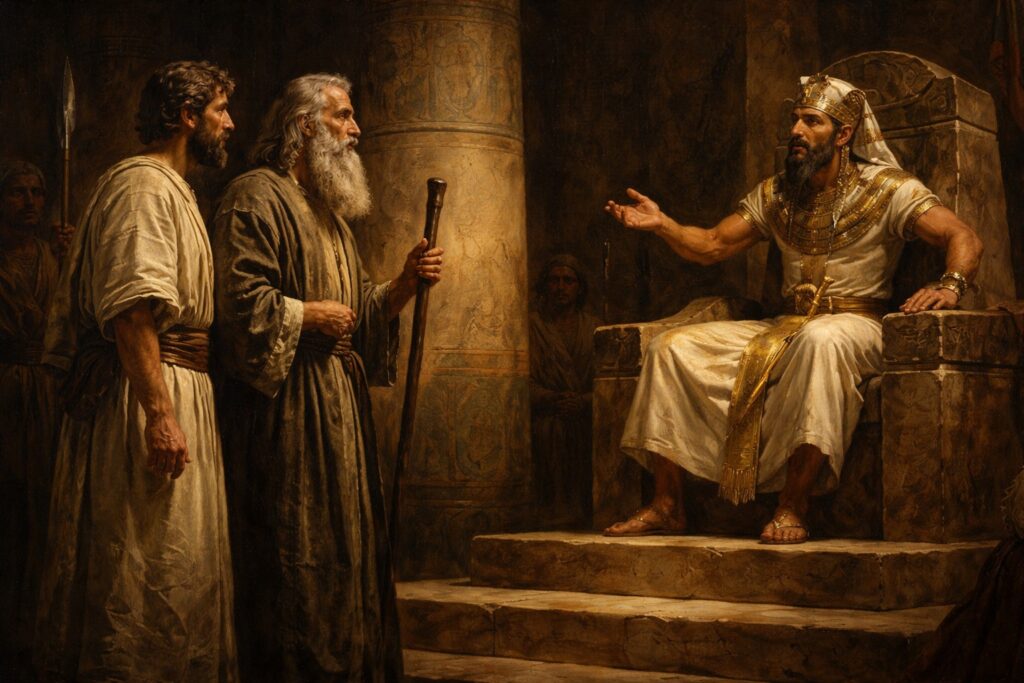
After receiving God’s calling, Moses and Aaron go directly to Pharaoh to proclaim the LORD’s command. Their message is simple but powerful: the people of Israel must go into the wilderness to worship their God.
Pharaoh’s response reveals the true conflict of the story. He asks, “Who is the LORD?” This question is not merely curiosity—it is a challenge to God’s authority. Pharaoh, who was regarded as a divine ruler in Egypt, refuses to acknowledge the God of Israel.
In this moment, the confrontation becomes more than a political dispute. It becomes a clash between the authority of God and the power of human kings.
The Burden of Labor Becomes Heavier
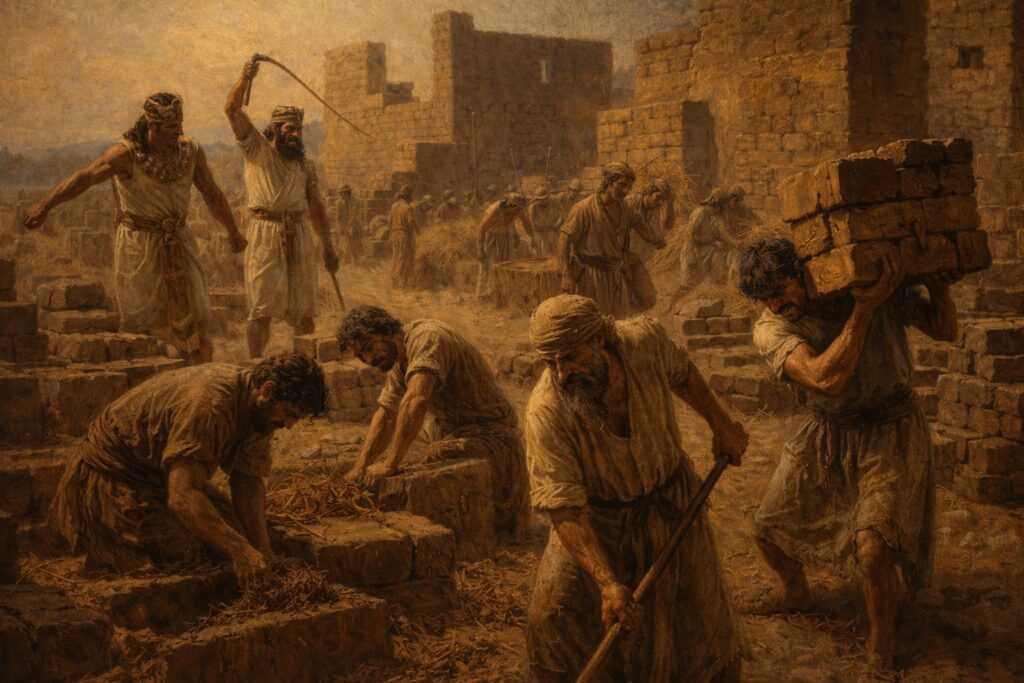
Pharaoh responds to the request with harsher oppression. He commands that the Israelites must gather their own straw while still producing the same number of bricks as before.
This cruel decree is designed to exhaust the people. By increasing their workload, Pharaoh hopes that the Israelites will stop listening to Moses and Aaron. The strategy is not about improving productivity or maintaining order. It is about silencing the voice that carries God’s message.
Oppression becomes a tool to keep the people from hearing the word of God.
A People Losing Sight of Their Purpose
As the suffering grows worse, the Israelite foremen are beaten for failing to meet the impossible demands. In their desperation, they cry out to Pharaoh for relief.
Yet their appeal reveals something tragic. They do not ask for freedom. They do not ask for the Exodus. Instead, they simply ask for the beating to stop.
After generations of slavery, their vision has grown small. The goal of deliverance is forgotten, replaced by the desire to survive the present hardship.
Turning to God Instead of People
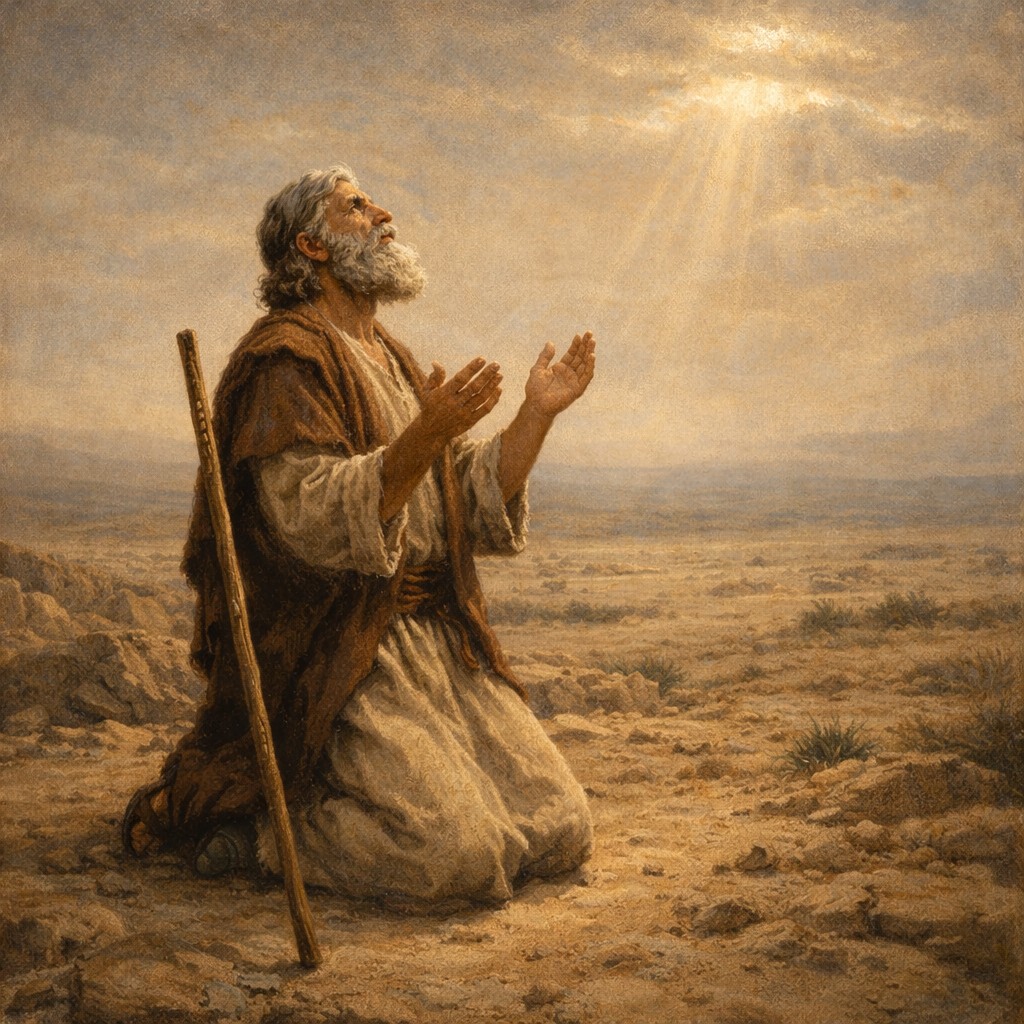
The people turn their frustration toward Moses and Aaron, blaming them for the increased suffering. But Moses responds differently.
Rather than arguing with the people or defending himself, Moses turns to God. He brings his questions and confusion directly before the Lord.
This moment reveals a crucial principle of faith. When God’s people face hardship, the ultimate answer is not found in human authority but in seeking God Himself.
The Message of Exodus 5
Exodus 5 reminds us that the beginning of God’s work may not look like immediate victory. Sometimes obedience leads into deeper struggle before the breakthrough comes.
Yet even in these moments, God is still at work. The suffering of Israel is not the end of the story—it is the beginning of the greater redemption that God is about to accomplish.
For believers today, the question remains the same:
Where do we turn when hardship comes?
Exodus 5 calls us to look beyond the immediate struggle and trust the God who holds the final outcome.
◀ Previous: Exodus 4 — Moses Sent to Deliver Israel
▶ Next: Exodus 6 — God Reaffirms His Covenant with Israel
📖 Genesis–Exodus Bible Meditation Series
Full Playlist: