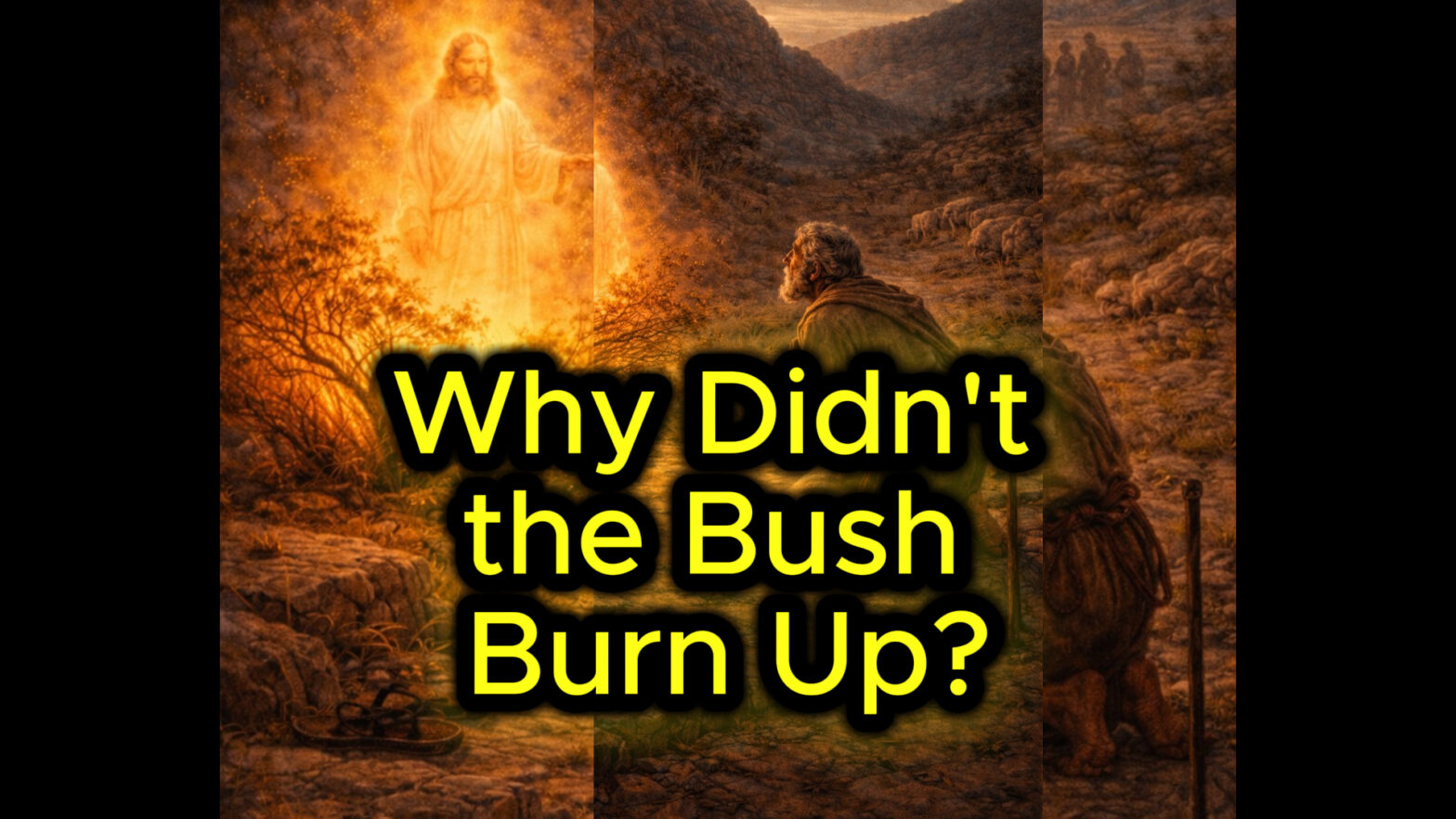
Exodus 3 reveals the moment when God calls Moses through the burning bush and begins His work of delivering Israel from Egypt.
This chapter stands as one of the most significant moments in the Old Testament, where God reveals both His holiness and His covenant faithfulness. The encounter at Mount Horeb marks the beginning of the Exodus, the great act of redemption through which God will lead His people out of slavery and toward the promised land.
God Appears in the Burning Bush
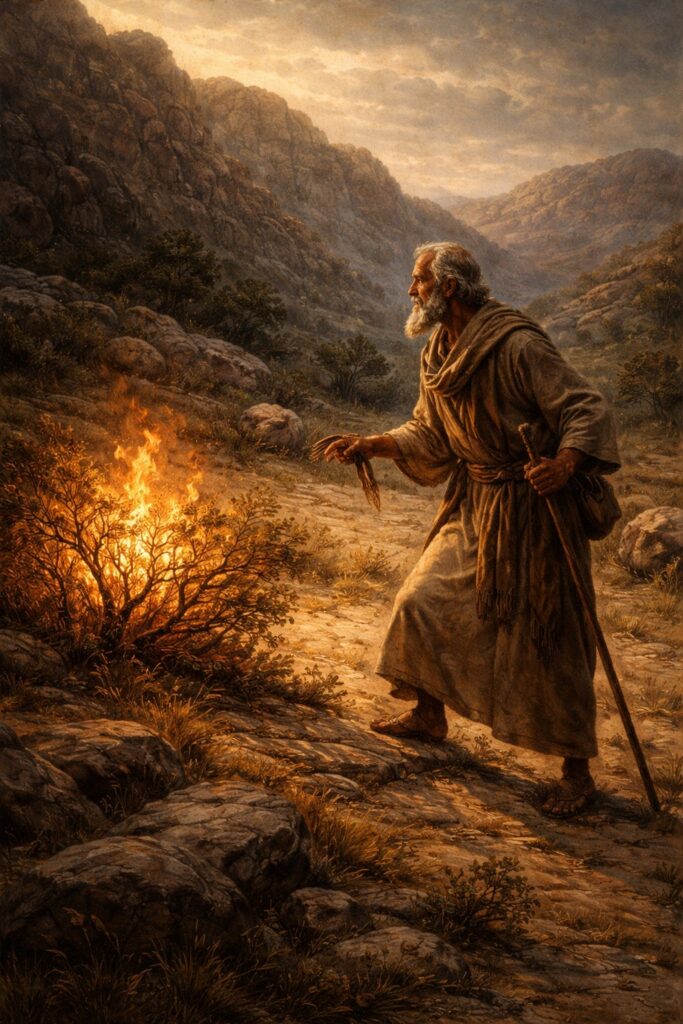
While tending the flock of his father-in-law Jethro in the wilderness, Moses comes to Horeb, the mountain of God. There he sees an extraordinary sight: a bush that burns with fire yet is not consumed. When Moses turns aside to look, God calls to him from the midst of the bush.
God commands Moses to remove his sandals because the ground is holy. This moment reveals the holiness of God and the reverence that His presence demands. The God who speaks to Moses identifies Himself as the God of Abraham, the God of Isaac, and the God of Jacob—the covenant God who has faithfully guided His people through generations.
God Sees the Suffering of His People
In this encounter, God declares that He has seen the affliction of the Israelites in Egypt. He has heard their cries and knows their suffering. The oppression of God’s people has not been ignored. Instead, God announces that He has come down to deliver them and to bring them into a good and spacious land, a land flowing with milk and honey.
This statement reveals the compassionate heart of God. He is not distant from the pain of His people. He sees, hears, and responds in His appointed time. The Exodus will become one of the greatest demonstrations of God’s saving power in the Old Testament.
The Calling of Moses
God then calls Moses to a task that seems impossible: he is to return to Egypt and bring the Israelites out of slavery. Moses responds with hesitation and humility, asking, “Who am I that I should go to Pharaoh?”
God’s answer is not based on Moses’ ability but on His own presence: “I will be with you.” This promise becomes the foundation of Moses’ mission. The deliverance of Israel will not depend on human strength but on God’s faithful presence and power.
The Revelation of God’s Name
When Moses asks what he should say if the Israelites ask for God’s name, God responds with one of the most profound declarations in Scripture: “I AM WHO I AM.” Through this name, God reveals Himself as the eternal, self-existent, and unchanging God.
He is the God who was with Abraham, Isaac, and Jacob, and He remains faithful to His covenant promises. The name “I AM” expresses God’s absolute being and sovereignty. It assures Israel that the God who sends Moses is the living and active Lord of history.
The Beginning of God’s Great Deliverance
Exodus 3 marks the beginning of the great redemption story of the Exodus. Through Moses, God will confront Pharaoh, demonstrate His power, and lead His people out of bondage. The burning bush is not only the moment of Moses’ calling; it is the moment when God openly declares that the time of deliverance has come.
For readers and listeners today, this chapter reminds us that God sees the suffering of His people, remembers His promises, and calls His servants to participate in His work. The God who spoke to Moses is the same faithful God who continues to guide His people throughout history.
◀ Previous: Exodus 2 — The Birth and Early Life of Moses
▶ Next: Exodus 4 — Moses Sent to Egypt
🎬 Full Playlist
Genesis–Exodus Bible Meditation Series
Genesis
Exodus Bible Meditation Series