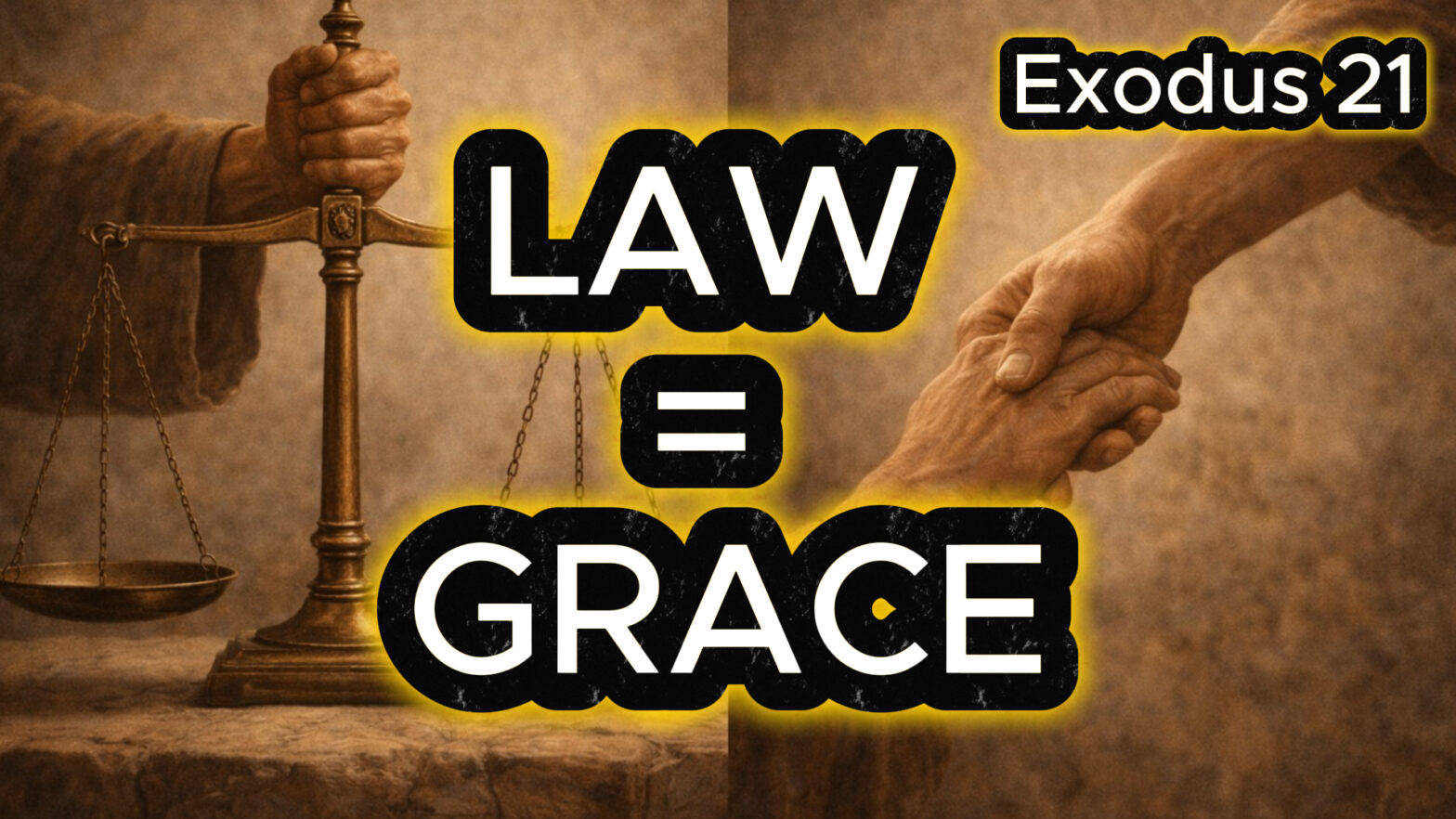
What if God’s laws were not meant to control you—
but to protect the weak and restore what is broken?
God’s law is not about restriction, but about protecting life, limiting injustice, and establishing true justice.
Exodus 21 presents a series of laws given after the Ten Commandments, revealing how God’s justice operates in real life. Rather than abstract commands, this chapter applies God’s standards to human relationships, addressing issues such as servitude, personal injury, and responsibility. In a world where power often dominates, God establishes boundaries that protect human dignity, restrain revenge, and uphold the value of every life. These laws are not about control—but about restoration.
📖 What Is Exodus 21 About?
Exodus 21 begins what is often called the “Book of the Covenant” (Exodus 21–23), where God applies the principles of the Ten Commandments to everyday life.
This directly builds on Exodus 20, where God first establishes the foundation of His law.
Instead of general commands, God now speaks into specific situations:
- How should servants be treated?
- What happens when someone is injured?
- Who is responsible when harm occurs?
This chapter shows that God is not only concerned with worship—
but also with justice between people.
It moves from principle to practice.
🧩 Key Structure of Exodus 21
Exodus 21 can be divided into three major sections:
1. Laws About Servants (Verses 1–11)
These laws regulate the treatment of Hebrew servants.
Rather than abolishing an existing system immediately, God places limits on it.
- Service is not permanent
- Dignity must be preserved
God introduces protection where exploitation was common.
2. Laws About Personal Injury (Verses 12–27)
This section includes the well-known principle:
👉 “Eye for eye, tooth for tooth”
This is not permission for revenge—
it is a limitation of it.
- Justice must be proportional
- Punishment must not exceed the offense
God restrains human violence and emotional retaliation.
3. Laws About Responsibility and Property (Verses 28–36)
These laws address situations involving negligence and indirect harm.
For example:
- If an animal causes injury
- If someone fails to take proper responsibility
Even if harm is not intentional,
accountability still applies.
God holds people responsible not only for actions,
but also for negligence.
👉 This chapter moves from principle to practice,
showing that God’s law is not abstract—but deeply practical.
👉 These laws continue and expand further in Exodus 22,
where justice is applied to even more everyday situations.
🧠 What This Reveals About God
Exodus 21 is not merely a legal text—
it reveals the character of God.
1. God Protects the Weak
Servants, victims, and the vulnerable are not overlooked.
God establishes boundaries that prevent abuse.
He stands on the side of justice.
2. God Limits Human Sin
Human beings tend toward excess—especially in anger.
God places limits on retaliation.
👉 Justice replaces emotional reaction.
3. God Values Life Deeply
No injury is insignificant.
No life is treated lightly.
Every person matters before God.
🔥 Why This Chapter Still Matters Today
At first glance, Exodus 21 may seem ancient and distant.
But its principles remain deeply relevant.
We still live in a world where:
- Power can be abused
- Anger can escalate quickly
- Responsibility is often avoided
God’s law speaks directly into this reality.
- Justice must be fair
- Power must be restrained
- Responsibility must be upheld
This chapter is not outdated—
it is foundational.
👉 These laws are not random rules,
but part of a covenant relationship between God and His people.
👉 This covenant begins in Exodus 19,
where God calls Israel to be His holy nation.
🙏 Meditation
We often think of freedom as the absence of rules.
But without boundaries,
the strong dominate the weak.
Without limits,
sin spreads unchecked.
God’s law was not given to restrict life—
but to protect it.
So the question is:
👉 Do you see God’s word as a burden—
or as a protection?
🔗 Internal Links
- Exodus 20 — The Foundation of God’s Law
- Exodus 22 — Justice in Daily Life Continues
- Exodus 19 — The Beginning of the Covenant