Why didn’t God end it sooner?
Why repeat the plagues—
again and again?
Was it judgment only?
Or something more?
God did not repeat the plagues because He lacked power—
but because He was revealing who He is.
Exodus 10 records the eighth and ninth plagues—locusts and darkness—and raises an important question: why did God continue sending repeated plagues instead of ending the situation immediately? This chapter reveals that the plagues were not random acts of judgment, but intentional demonstrations of God’s power, designed to confront false gods, expose hardened hearts, and reveal His identity to both Egypt and Israel. Through repetition, God ensures that His works will be remembered for generations.
📖 What Is Exodus 10 About?
Exodus 10 continues the final phase of the plagues.
Two devastating judgments unfold:
- The plague of locusts
- The plague of darkness
The locusts consume everything left after the hail—
leaving Egypt with nothing.
Then comes darkness.
Not ordinary darkness—
👉 a darkness that can be felt
For three days:
- Egypt is paralyzed
- But Israel has light
Pharaoh responds again:
- temporary confession
- partial compromise
- final refusal
👉 His heart remains unchanged
But God explains something crucial:
👉 These events are being repeated
👉 so that they will be told
“to your children and grandchildren”
👉 This is not just about Egypt
👉 It is about future generations
👉 This leads directly into Exodus 11,
where the final judgment is announced.
🧩 Key Structure of Exodus 10
Exodus 10 unfolds in three revealing movements:
1. The Plagues Intensify — Judgment (Verses 1–20)
The locusts destroy what remains.
Nothing is left.
👉 God is systematically dismantling Egypt
This is not random.
👉 Each plague reveals God’s authority over creation and false gods
2. The Darkness Falls — Revelation (Verses 21–23)
Darkness covers Egypt.
- no movement
- no sight
- no escape
But Israel has light.
👉 This is more than physical
👉 It is spiritual contrast
- blindness vs sight
- judgment vs protection
3. Pharaoh Refuses — Exposure (Verses 24–29)
Pharaoh offers compromise:
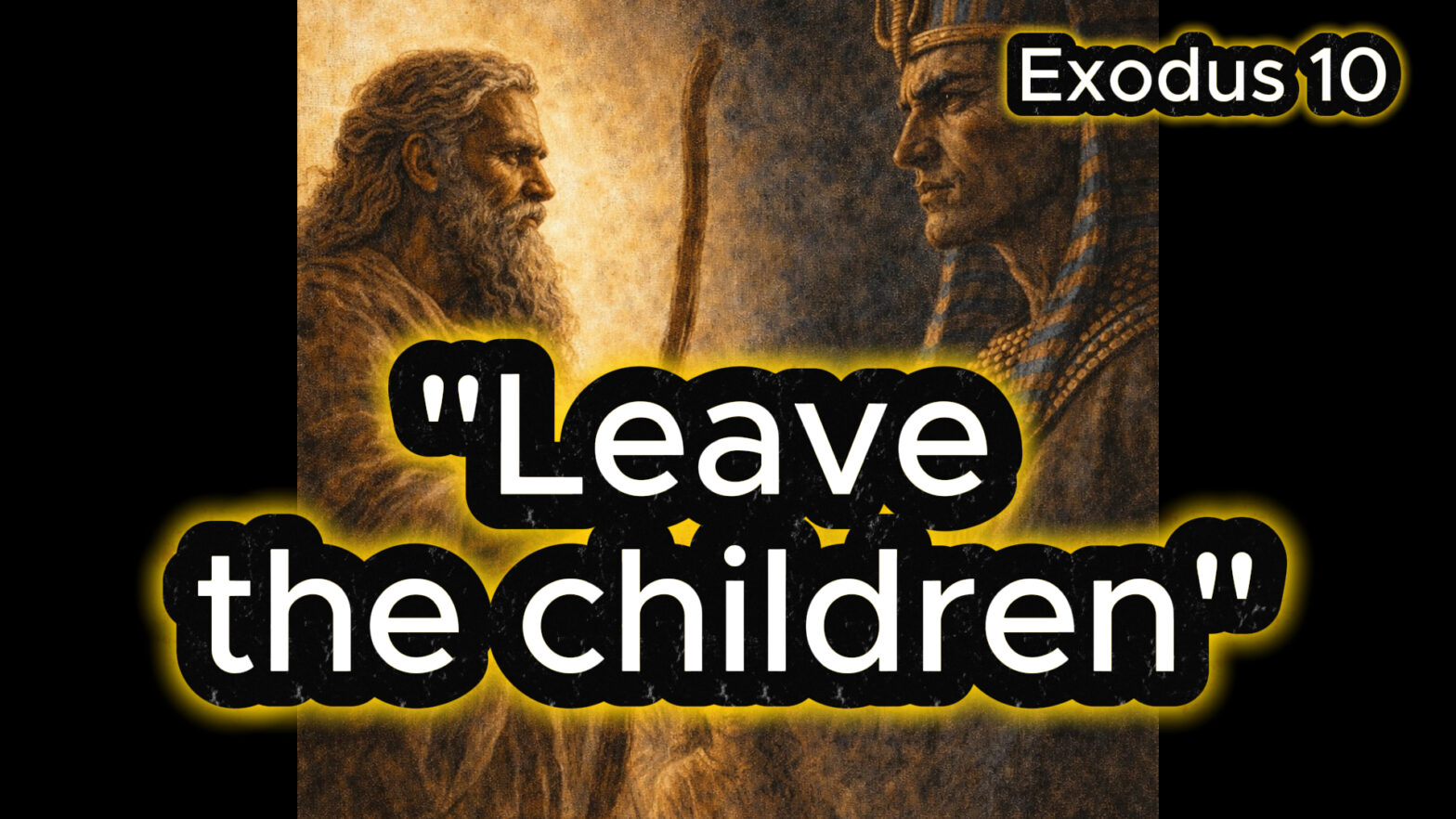
👉 “Go—but leave something behind”
But Moses refuses.
Why?
👉 God does not accept partial obedience
Pharaoh hardens again.
👉 This reveals the real issue:
Not lack of evidence—
but refusal of surrender
👉 This tension leads directly into Exodus 11,
where the final line between life and death is drawn.
🧠 What This Reveals About God
Exodus 10 answers the key question:
👉 Why repetition?
1. God Reveals Himself Through Repetition
God says:
👉 “So that you may know that I am the Lord”
This phrase repeats throughout the plagues.
👉 The goal is revelation—not just judgment
2. God Confronts False Systems
Egypt was not just political.
It was spiritual.
- false gods
- false power
- false identity
👉 Each plague dismantles those systems
3. God Teaches Future Generations
This is the key.
👉 These events must be told
Why?
Because:
👉 faith is transmitted
God is not only saving Israel—
👉 He is forming their memory
🔥 Why This Chapter Matters Today
We often ask:
“Why does God allow repetition?”
- repeated problems
- repeated struggles
- repeated lessons
But Exodus 10 shows:
👉 repetition is not failure
👉 it is formation
God may be:
- revealing something deeper
- exposing something hidden
- teaching something lasting
👉 This continues in Exodus 11,
where repetition ends—and judgment comes.
🙏 Meditation
Why didn’t God end it earlier?
Because the point was not speed—
but revelation.
Because what is seen once
can be forgotten.
But what is repeated—
is remembered.
So maybe the question is not:
👉 “Why is this happening again?”
But:
👉 “What is God trying to show me?”
🔗 Navigation
◀ Previous: Exodus 9 — God’s Judgments on Egypt
▶ Next: Exodus 11 — The Final Plague Announced
📚 Full Series: Exodus Bible Meditation Guide
👉 Full Exodus Playlist