
What if God calls you—
and you don’t feel ready?
Not qualified.
Not confident.
Not willing.
God does not call the ready—
He makes ready those He calls.
Exodus 4 continues God’s calling of Moses, revealing a series of objections, doubts, and fears. Moses questions whether people will believe him, whether he is capable, and ultimately asks God to send someone else. In response, God provides signs, promises His presence, and appoints Aaron as a helper. This chapter shows that God’s calling is not based on human ability, but on His power, His presence, and His purpose. It also reveals that reluctance does not disqualify someone—God works through weakness to accomplish His plan.
📖 What Is Exodus 4 About?
Exodus 4 is a conversation.
Not about Egypt—
but about Moses.
Moses raises objections:
👉 “What if they don’t believe me?”
So God responds—not with argument,
but with signs:
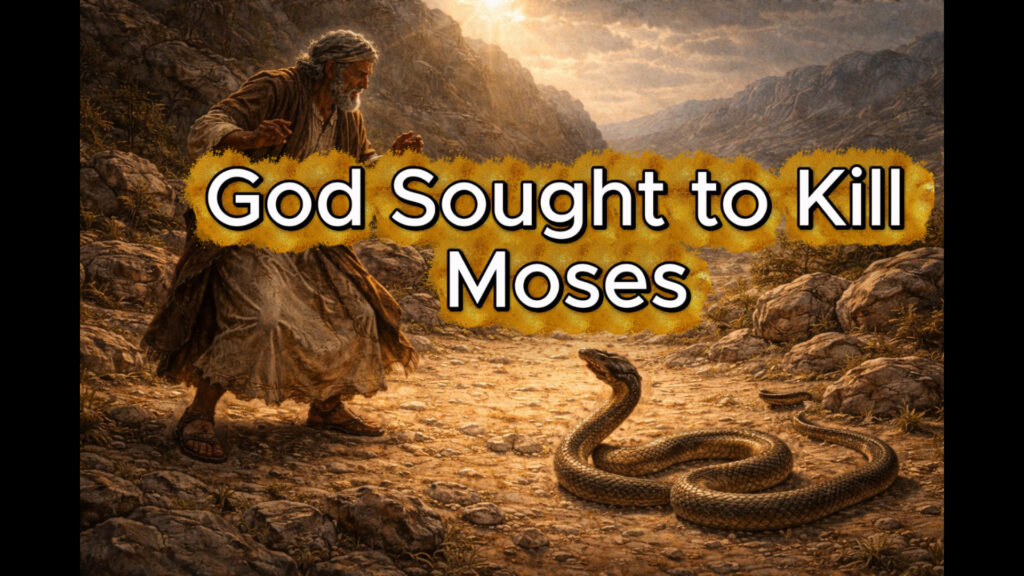
- staff → serpent
- hand → leprous → healed
- water → blood
These signs are not random.
👉 They are given so people will believe
👉 that God has truly sent Moses
But Moses continues.
👉 “I am not good at speaking”
God responds:
👉 “Who made the mouth?”
👉 “I will be with you”
Still—
Moses resists.
👉 “Send someone else”
At this point:
👉 God becomes angry
But instead of replacing Moses—
👉 He provides Aaron as a partner
Then something unexpected happens.
On the journey—
👉 God confronts Moses
Why?
👉 because Moses had not obeyed a covenant command (circumcision)
This reveals something serious:
👉 calling does not replace obedience
Finally—
Moses and Aaron meet the people.
They speak.
They show the signs.
👉 And the people believe
👉 and worship
👉 This leads directly into Exodus 5,
where obedience meets resistance and things become harder.
🧩 Key Structure of Exodus 4
Exodus 4 unfolds in three powerful movements:
1. Excuses — Human Weakness (Verses 1–13)
Moses gives multiple objections:
- they won’t believe me
- I am not capable
- I cannot speak
- send someone else
👉 This is not just fear
👉 it is resistance
2. God’s Response — Power and Presence (Verses 2–17)
God does not remove Moses.
He equips him.
- gives signs
- promises His presence
- provides Aaron
👉 God answers every objection
But He does not cancel the calling
3. Obedience Begins — Movement (Verses 18–31)
Moses finally goes.
- returns to Egypt
- meets Aaron
- speaks to the people
👉 And the people believe
👉 The mission begins
👉 This movement continues into Exodus 5,
where obedience leads into unexpected hardship.
🧠 What This Reveals About God
Exodus 4 reveals foundational truths.
1. God Uses Weak People
Moses was:
- unsure
- afraid
- resistant
Yet God chose him.
👉 Calling is not based on ability
2. God Equips What He Calls
God did not say:
👉 “Become better first”
He said:
👉 “Go—and I will be with you”
👉 The signs were given to confirm the message, not Moses’ ability
3. God Requires Obedience From Those He Calls
The circumcision moment shows:
👉 calling does not excuse disobedience
👉 leadership requires alignment
🔥 Why This Chapter Matters Today
We often think:
👉 “I’m not ready”
- not skilled
- not confident
- not enough
But Exodus 4 shows:
👉 that is not the issue
The real issue is:
👉 willingness
We also hesitate like Moses:
- fear rejection
- fear failure
- want someone else to go
But God’s pattern is clear:
👉 He calls
👉 He equips
👉 He sends
👉 This continues in Exodus 5,
where obedience does not lead to ease—but to conflict.
🙏 Meditation
What has God asked you to do—
that you are resisting?
What excuse are you repeating?
“I’m not ready”
“I can’t do it”
“Send someone else”
Moses said all of these.
And still—
God did not change the calling.
So the question is:
👉 Will you wait until you feel ready—
or go because God is with you?
🔗 Navigation
◀ Previous: Exodus 3 — The Burning Bush and the Call of Moses
▶ Next: Exodus 5 — Moses and Aaron Confront Pharaoh
📚 Full Series: Exodus Bible Meditation Guide
Exodus Bible Meditation Series