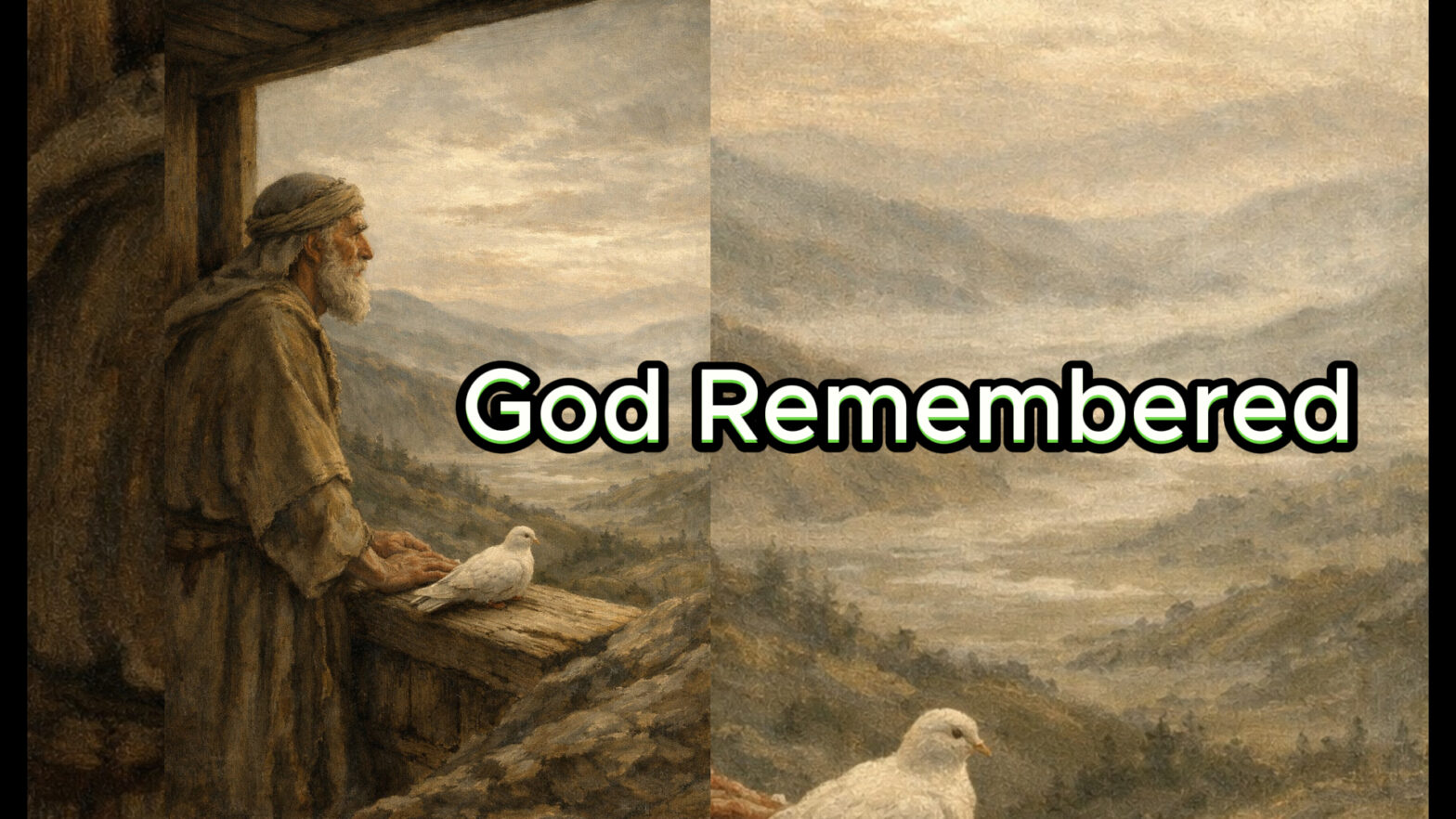
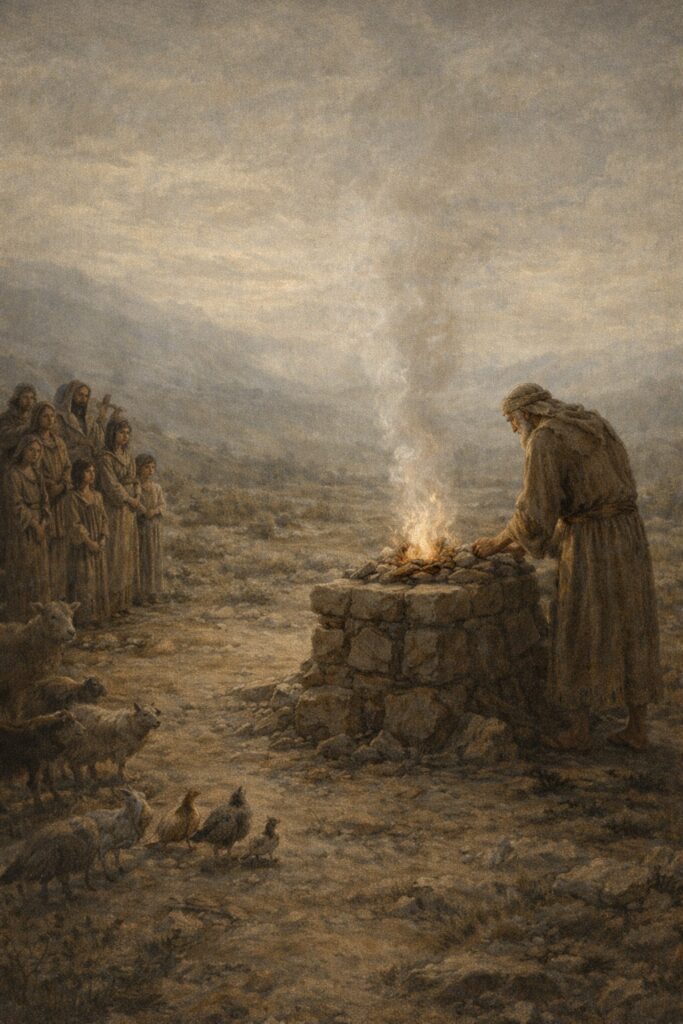
Genesis 8 records how God remembered Noah and caused the floodwaters to recede, bringing the ark to rest and beginning the renewal of life on the earth.
Genesis 8 records how God remembered Noah during the flood and began restoring life on the earth as the waters receded. After the judgment of the flood, the ark came to rest on the mountains of Ararat, revealing both God’s faithfulness in preserving life and the beginning of a renewed world. The chapter shows that even in the midst of judgment, God never forgets those who belong to Him, and His covenant mercy continues to guide the future of humanity.
Can God forget anything?
Genesis chapter 8 opens with a striking statement:
“God remembered Noah.”
This does not mean that God had forgotten and then suddenly recalled. The all-knowing God never forgets. To be remembered by God means to be continually held in His heart—to be watched over without interruption, even in silence.
Throughout the flood, while judgment swept across the earth, the lives inside the ark were never once outside God’s care.
Judgment and Preservation in the Flood
The flood was judgment, but it was also preservation.
God did not forget the sorrow bound up with judgment itself. Rain fell for forty days, the waters prevailed for one hundred fifty days, and the waiting afterward was long and heavy.
God, who delights in His creation, could not judge without grief. Because He is truthful, He could not withhold judgment. Because He is loving, He could not avoid sorrow.
Yet through it all, the ark remained at the very center of His attention.
Waiting According to God’s Time
Eventually, the ark came to rest on the mountains of Ararat.
Even when the mountain peaks appeared, Noah did not rush. He waited forty more days, sending out the raven and then the dove. He waited seven days, and seven days again.
Noah lived by God’s rhythm, ordering time according to God’s word rather than circumstance. He did not act by self-reliant judgment, but by obedient waiting.
Obedience Before Stepping into the New World
When the earth was finally dry, Noah still did not step out immediately.
He waited until God spoke.
Nearly a full year had passed since the flood began. Only after hearing God’s command did Noah lead his family and every living creature onto the renewed earth.
The new world began not with human initiative, but with obedience to God’s word.
The First Act: Worship
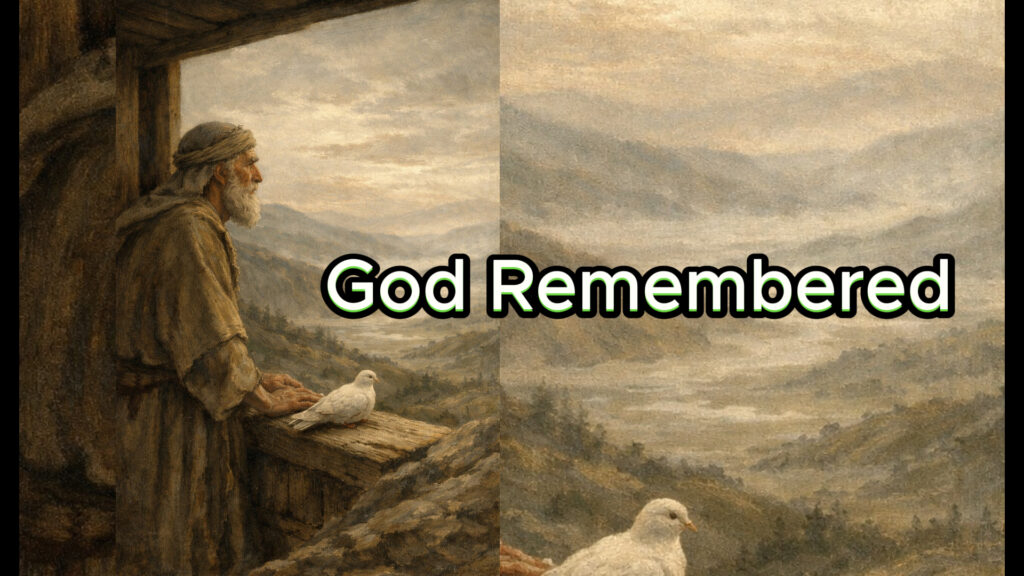
The first thing Noah did was not to build a home or cultivate the land.
He built an altar.
His burnt offering remembered the covenant of atonement first revealed in Eden, where life was given so that sinners might be covered.
Noah’s sacrifice pointed forward to the blood of Christ, the true covering for humanity.
A Pleasing Aroma Before the Lord
Scripture says that the LORD smelled a pleasing aroma.
What pleased God was not the burning offering itself, but the blood-centered devotion behind it.
The same truth that once led to judgment—human sin—now led to patience and preservation, because blood had been offered.
The Promise that Sustains the World
As long as the earth endures, God declared that seasons will continue.
Seedtime and harvest, cold and heat, summer and winter, day and night would not cease.
The world still stands not by human strength or natural order, but because God looks upon the blood of Christ and holds it together.
May our lives today become worship offered in remembrance of that blood—a fragrance that comforts the heart of God and brings life to the world.
◀ Previous: Genesis 7 — The Flood Begins
▶ Next: Genesis 9 — Covenant with Noah
👉 Full Genesis Playlist
Genesis Bible Meditation Playlist