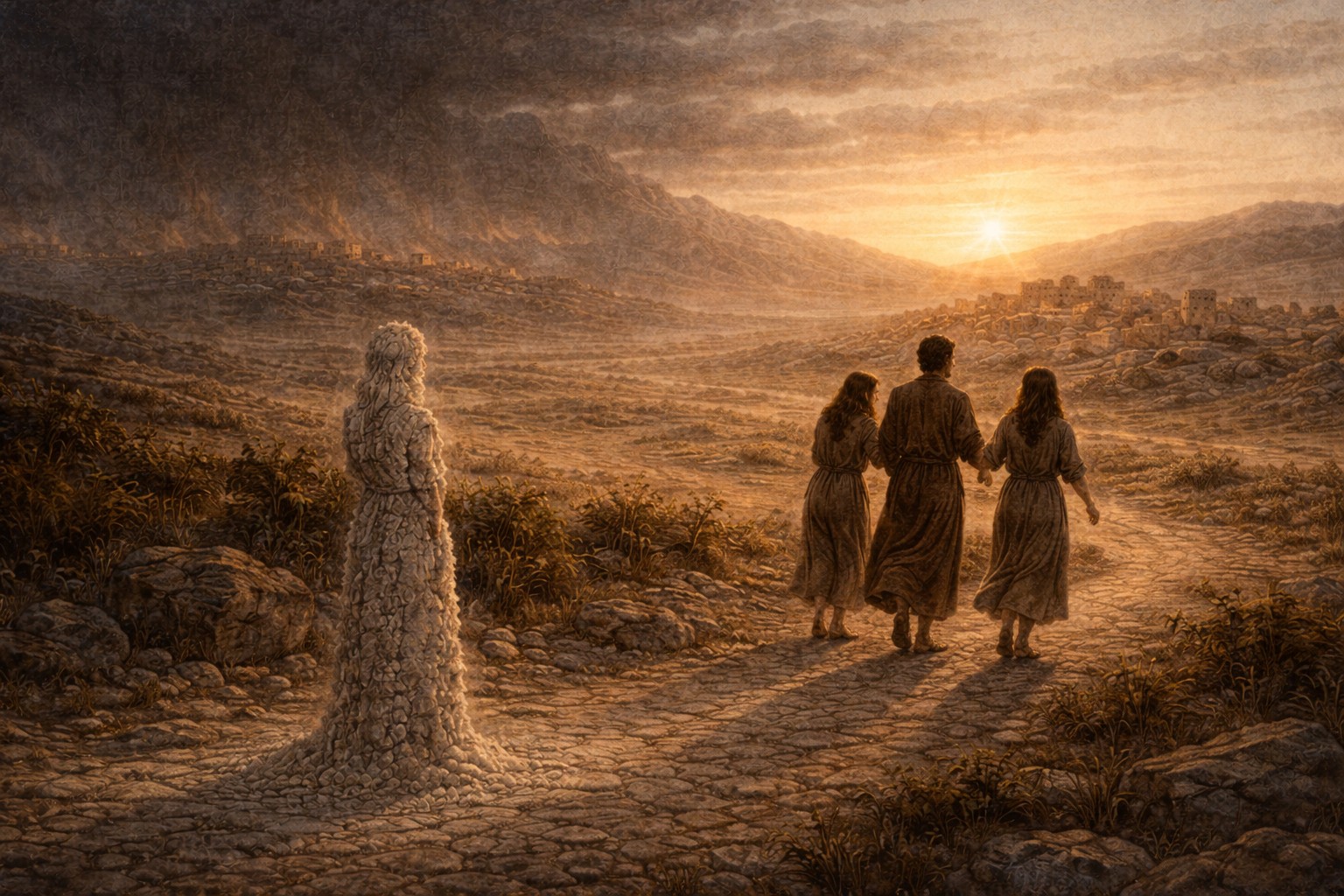
Genesis 19 records the judgment of Sodom and Gomorrah as God rescues Lot and reveals the seriousness of sin and the mercy of divine deliverance.
Genesis 19 records the dramatic judgment of Sodom and Gomorrah while revealing both the severity of sin and the mercy of God. After Abraham’s intercession in Genesis 18, God sends two angels to Sodom to rescue Lot and his family before destruction falls upon the city. The chapter shows that divine judgment is never careless or rushed. God was willing to spare the entire city if even ten righteous people could be found. Judgment was delayed, searched, and restrained. Yet in the end, not even that minimum was present, and the destruction of Sodom and Gomorrah became unavoidable.
The destruction described in Genesis 19 is not presented as a mere symbol but as a historical act of divine judgment. The region around the Dead Sea, known for its salt formations, sulfur, and asphalt deposits, has long been associated with the biblical account of Sodom and Gomorrah. In Scripture, this landscape stands as a lasting reminder that God’s judgment against sin is real, while His mercy is revealed in the rescue of Lot.
Lot’s Rescue: Mercy, Not Assurance
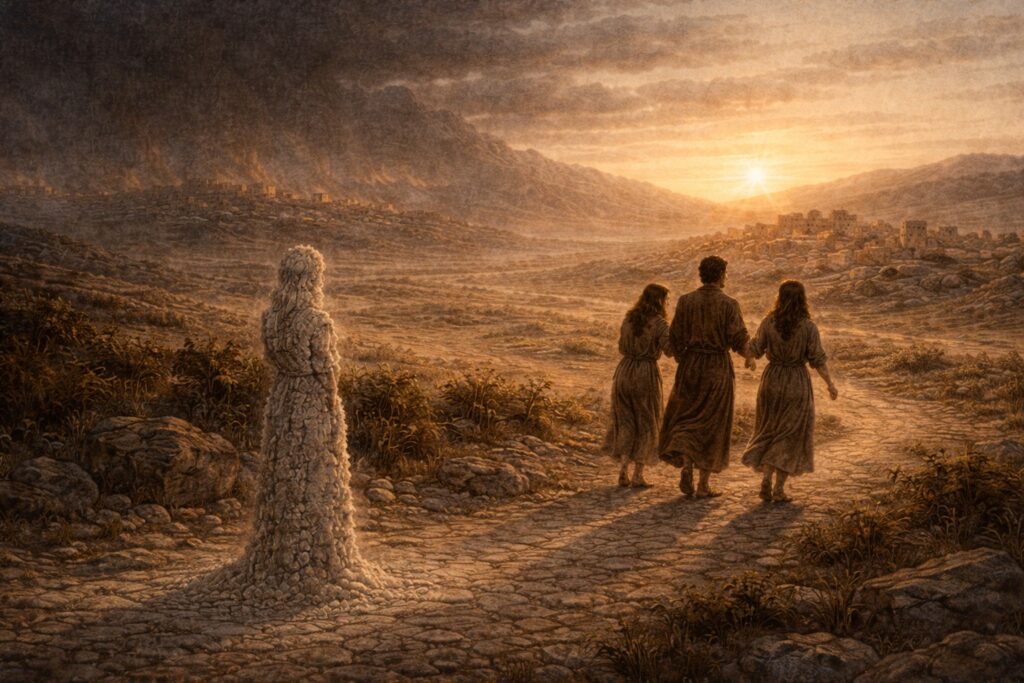
Lot was rescued, but not because he was righteous. Scripture is explicit: God remembered Abraham and sent Lot out of the destruction. Lot’s rescue was not a declaration of secured salvation, but rather an extension of mercy—an opportunity to repent and return. Yet Lot never rejoined the covenant community. The consequences of that choice unfolded through his descendants, Moab and Ammon, nations later barred from the assembly of the LORD.
This does not mean that individual salvation was entirely closed. Through Ruth the Moabite, God demonstrated that grace could still reach individuals. Yet the collective judgment upon those nations remained. Leaving the covenant community may appear reasonable in the moment, but its consequences echo across generations.
The Sin of Sodom and Lot’s Compromise
Lot welcomed the strangers, much like Abraham had. On the surface, the two men appeared similar. But when Sodom’s reality was exposed, Lot’s inner condition was also revealed. From the youngest to the oldest, the entire city gathered in unified violence. Sodom’s sin was not the failure of a few, but the normalized corruption of an entire society.
In this moment, Lot makes a shocking proposal—offering his daughters to protect the angels. This reveals his deepest failure. He attempted to restrain evil by proposing another evil, and he treated the dignity of his daughters lightly. His judgment was guided not by God’s truth, but by human reasoning. Good intentions cannot replace divine standards.
Delayed Obedience and Relentless Mercy
Even after being struck with blindness, the men of Sodom pursued their lust. Judgment was sealed. What followed was rescue. When Lot hesitated, the angels seized his hand and dragged him out. Mercy was added upon mercy. Yet Lot again insisted on his own way, choosing Zoar instead of the hills. God’s concern was the presence of sin; Lot’s concern was distance and comfort.
In the end, fear followed him even to Zoar, and he fled to the hills anyway. Faith is revealed not by words, but by the direction of one’s life.
The Cave, the Tragedy, and the Final Question
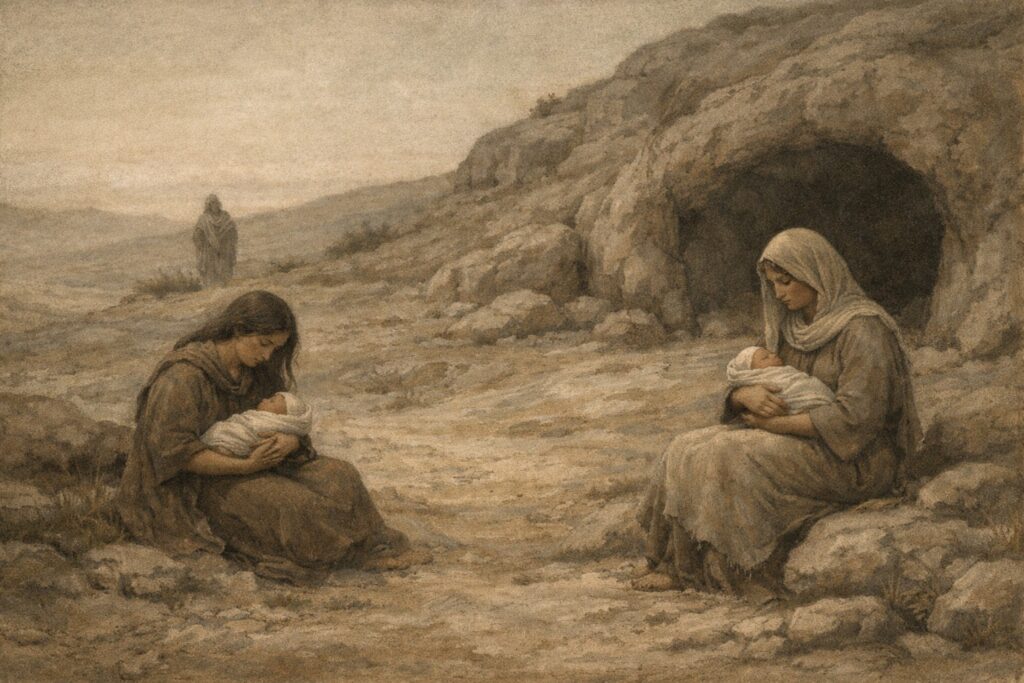
What occurred in the cave was not accidental. The distorted values formed in Sodom had already shaped Lot’s household. From the moment he left the covenant community, the spiritual foundation of his family began to collapse.
The grace given to Lot flowed from Abraham, and the grace given to Abraham was grounded in the covenant of Jesus Christ. Grace flows from Christ, through the covenant community, and outward to others. The question remains for us today: will we remain where grace flows, or will we leave?
Rescue may still be possible outside the covenant community, but restoration will be far away. May we abide in the fellowship established by the blood of Christ, holding fast to truth and walking to the end within the grace of God. Amen.
◀ Previous: Genesis 18 — The Lord Appears to Abraham
▶ Next: Genesis 20 — Abraham and Abimelech
👉 Full Genesis Playlist
Genesis Bible Meditation Playlist