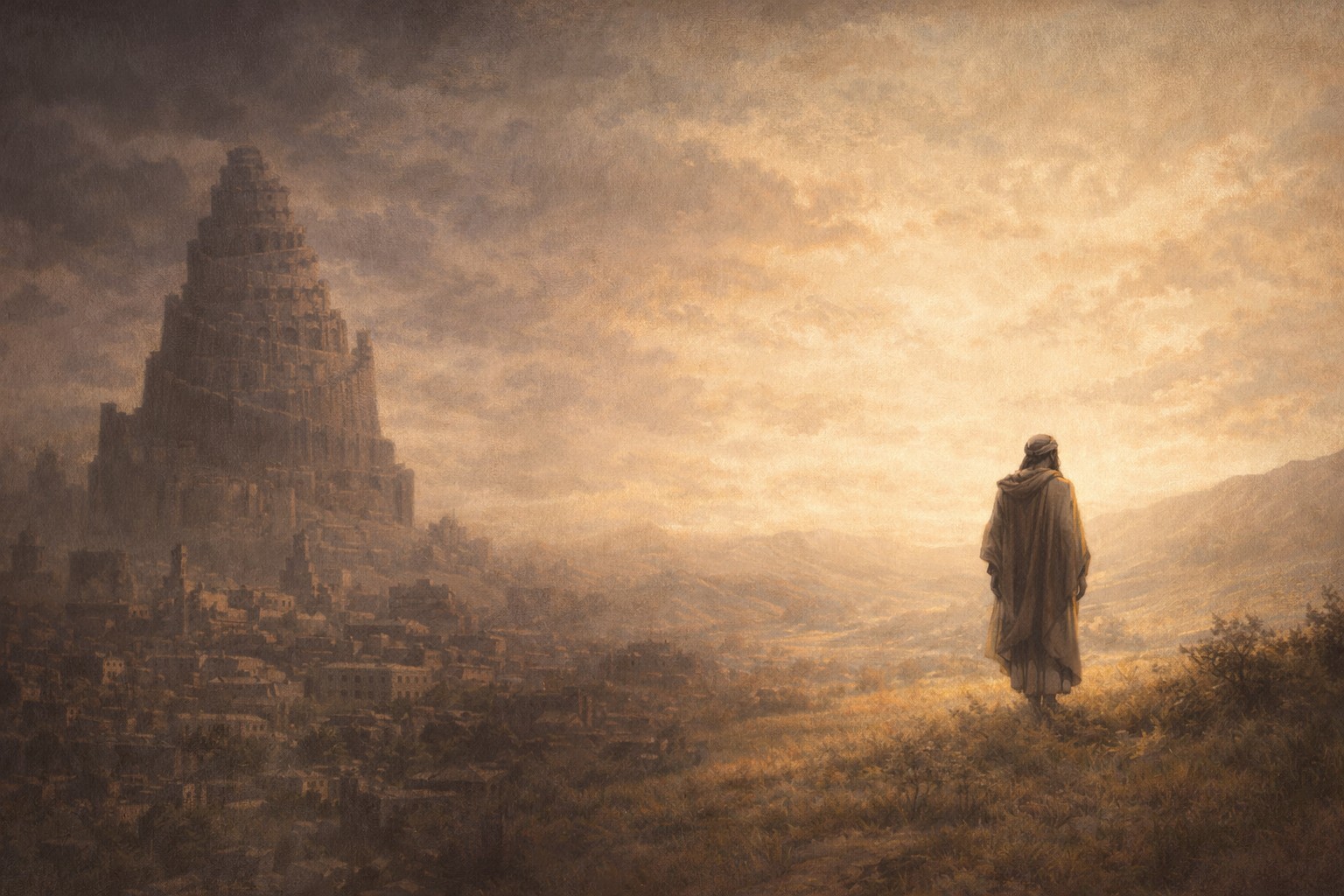
Genesis 11 records the Tower of Babel, where God confuses human language and scatters the nations, and it concludes with the genealogy leading to Abram.
Genesis 11 records the story of the Tower of Babel, where humanity united in pride to build a city and a tower reaching toward heaven. In response, God confused their language and scattered the nations across the earth. The chapter concludes with the genealogy of Shem leading to Abram, showing how God quietly prepared the beginning of the covenant story even in the midst of human rebellion.
One Language and One People
Genesis chapter 11 opens with a striking statement:
“The whole earth had one language and the same words.”
After the flood, humanity began to multiply once again. People settled together on the plain of Shinar, forming a unified society.
While Genesis chapter 10 records how nations eventually spread across the earth, chapter 11 brings us back to an earlier moment — a time before that scattering took place.
God had comforted Noah and his family with the covenant of the rainbow, promising never again to destroy the earth by water. Along with that promise came a command:
“Be fruitful and multiply, and fill the earth.”
The rainbow was meant to remind humanity of grace — judgment delayed, mercy extended — and to encourage them to trust God’s word as they spread across the earth.
Humanity’s Refusal to Scatter
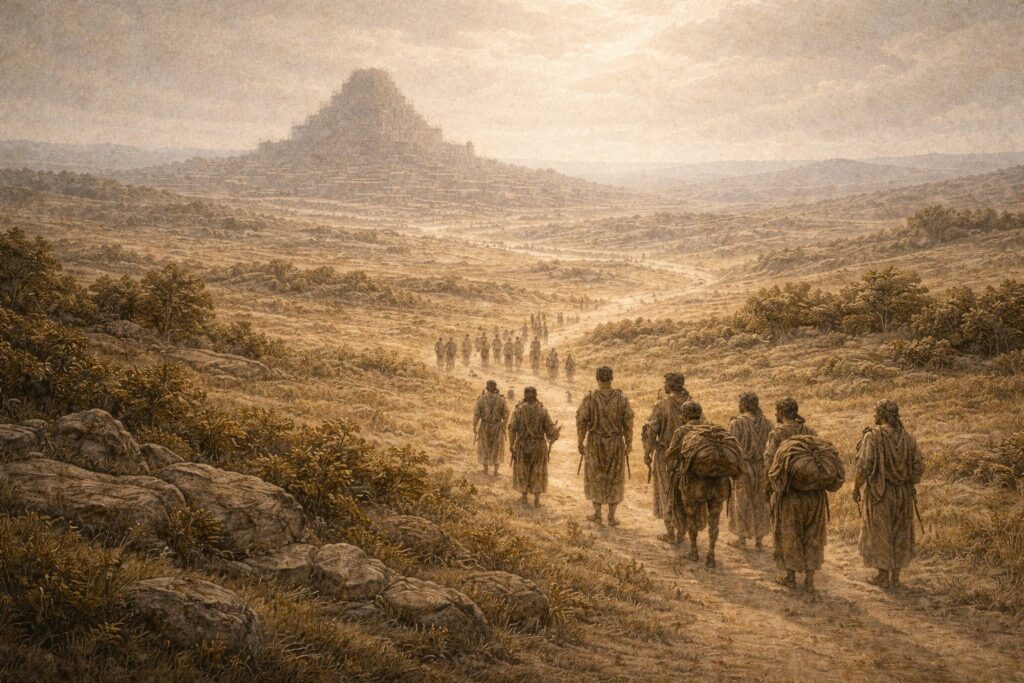
But they did not scatter.
Instead, they gathered.
They began to build a city and a tower — much like Cain, who once left the presence of the LORD and built the city of Enoch.
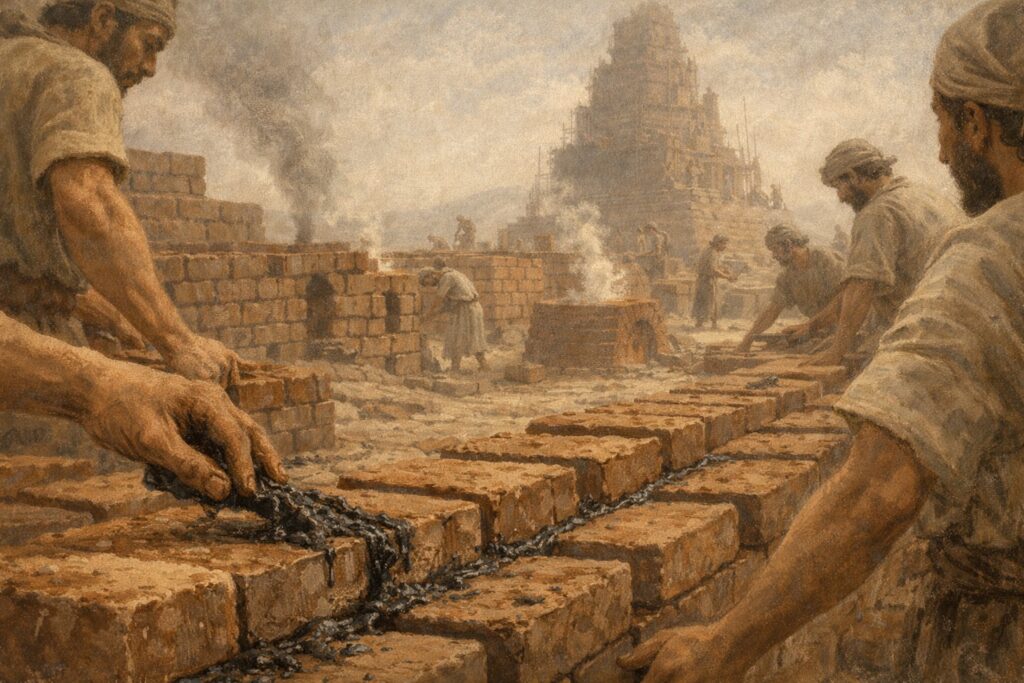
The people made bricks and baked them thoroughly, using bitumen as mortar. Though this was an ancient society, it was already a highly advanced civilization with developed construction technology. Archaeological discoveries of Babylonian ruins align closely with the biblical record.
Yet technology itself was not the problem.
The problem was the human heart that used it.
They said:
“Let us build ourselves a city and a tower with its top in the heavens, and let us make a name for ourselves, lest we be scattered over the face of the whole earth.”
The Pride Behind the Tower
The Tower of Babel had two clear purposes.
First, it was a desire for glory that challenged God:
“Let us make a name for ourselves.”
This was competition with God — a declaration of pride.
Second, it was collective rebellion against God’s command.
They rejected the word, “Fill the earth,” and chose unity over obedience. They gathered within the city to consolidate power, even attempting to protect themselves from future judgment by their own strength.
If another flood were to come, they chose to climb higher rather than repent.
They remembered the flood, but they did not trust the covenant.
They feared judgment without abandoning sin.
This is the essence of the Tower of Babel: human resistance that stacked height upon height instead of turning back in repentance.
The Deeper Source of Human Pride
Where did this pride come from?
Scripture answers:
“How you have fallen from heaven, O morning star, son of the dawn.”
Behind human pride stands the pride of the devil — the one who sought to be like God and fell through arrogance.
That same pride continues to operate within human hearts today, leading people to oppose God.
This is why Scripture declares so clearly:
God opposes the proud but gives grace to the humble.
God Came Down
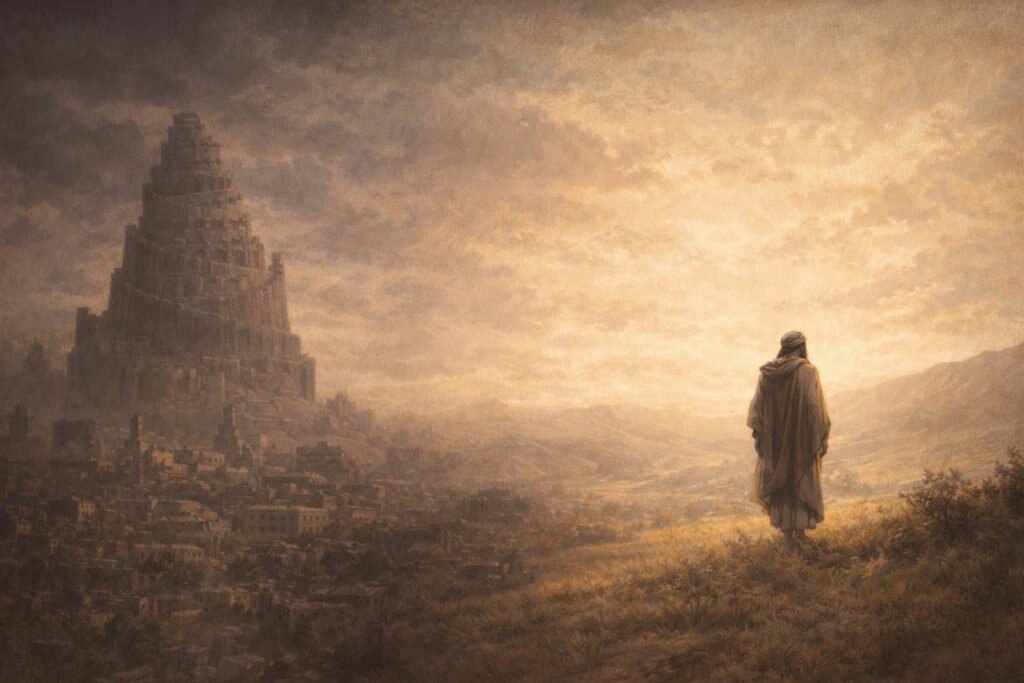
People built a tower to reach heaven, but Scripture records:
“The LORD came down.”
God already sees all things. So why does the Bible say that He came down?
The message is unmistakable.
No matter how high humans climb, they cannot reach God on their own.
Meeting is possible only when God comes down.
Human religion is the effort to ascend.
The gospel is the grace of God descending.
Our calling is not to build higher, but to kneel.
The Confusion of Language
God then confused their language.
This was not merely punishment, but a merciful restraint — a measure that prevented sin from becoming organized, unified, and unstoppable.
Language was originally given as a tool for communion with God.
Fallen humanity turned it into a weapon against Him.
Though they refused to scatter, they were scattered nonetheless.
God’s will is always fulfilled.
From Babel to Abraham
Immediately after the Babel incident, the genealogy of Shem continues all the way to Abram.
This is no coincidence.
The first half of Genesis 11 records human pride and rebellion.
The latter half reveals God’s quiet preparation for salvation.
Though the calling begins in chapter 12, God was already guiding history toward Abraham in chapter 11. His gaze was already fixed upon him.
In Scripture, the final figure in a genealogy is always the key.
Adam’s line leads to Noah.
Noah’s line leads to Shem.
Shem’s line leads to Abraham.
And the final fulfillment of all genealogies is Jesus Christ.
The Genealogy of the Gospel
After Christ, genealogies based on bloodline are no longer necessary.
Old Testament genealogies are not mere birth records. They reveal the flow of salvation — how life is passed on according to God’s purpose.
What matters to us today is not a genealogy of blood, but the genealogy of the gospel.
That genealogy is recorded in Revelation as the Book of Life of the Lamb.
Grace Begins in Human Weakness
Scripture says:
“Sarai was barren; she had no child.”
This was not a record of despair, but a stage prepared for grace.
It was meant to awaken a longing for God’s provision.
When we long for grace and are united with God through it, He waits for His appointed time.
God carries forward the lineage of life not by human ability, but by His own grace.
Babel or Abraham
Babel was a city of pride.
Abraham was the beginning of faith.
Even today, God asks us:
“Are you building Babel, or are you leaving everything behind to follow Me?”
Life is proven when it is passed on.
The Tower of Babel is a symbol of pride.
The lineage of Abraham is a flow of grace.
The Book of Life is the genealogy of the gospel.
Blessing always flows along a lineage.
Prayer
Lord,
Do not let me become one who seeks to rise like Babel,
but one who obeys Your word in faith, like Abraham.
May my name not only be written in the Book of Life,
but may the fruits of the gospel I have passed on
continue to be written there.
In the name of Jesus Christ,
Amen.
◀ Previous: Genesis 10 — Nations from Noah
▶ Next: Genesis 12 — Call of Abram
👉 Full Genesis Playlist
Genesis Bible Meditation Playlist