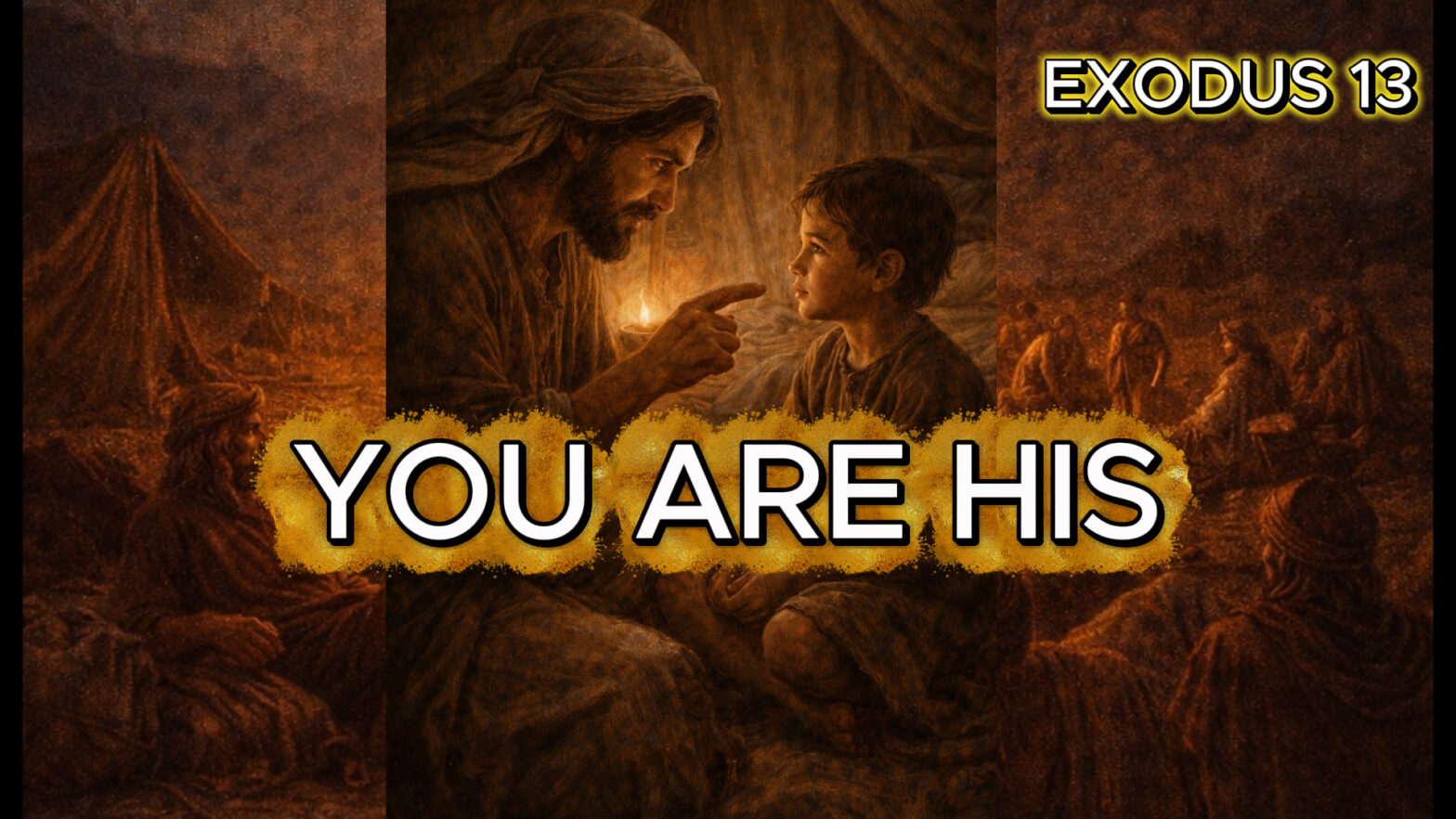
You are free now.
But—
do you still belong to yourself?
Salvation does not make you independent—
it means you now belong to God.
Exodus 13 reveals what happens after salvation: identity, remembrance, and divine guidance. After delivering Israel from Egypt, God declares that the firstborn belong to Him, establishes rituals to remember redemption, and leads His people through the wilderness with His presence. This chapter shows that salvation is not the end—it is the beginning of a new identity, a new belonging, and a life led by God Himself.
📖 What Is Exodus 13 About?
Exodus 13 takes place immediately after Israel leaves Egypt.
They are free.
But God does something unexpected.
👉 He claims them.
“Consecrate to Me every firstborn.”
Why?
Because God had just saved them.
👉 What He saves—He claims
This is not about control.
It is about identity.
God also commands them to remember:
- The Feast of Unleavened Bread
- The story of deliverance
- Teaching future generations
👉 “Tell your children what this means”
This shows something important:
👉 Salvation must be remembered
👉 Or it will be forgotten
Then God leads them.
Not the shortest path—
but the right one.
👉 He avoids the easier road
👉 because they are not ready for war
Instead—
- A pillar of cloud by day
- A pillar of fire by night
👉 God Himself becomes their guide
👉 This moment leads directly into Exodus 14,
where God reveals His power through the Red Sea.
🧩 Key Structure of Exodus 13
Exodus 13 unfolds in three clear movements:
1. Identity — The Firstborn Belongs to God (Verses 1–2, 11–16)
God declares:
👉 The firstborn is Mine
This is connected to the Passover:
- Egypt’s firstborn died
- Israel’s firstborn was spared
👉 Therefore:
- Life is not self-owned
- It is redeemed and belongs to God
2. Remembrance — Never Forget Salvation (Verses 3–10)
God commands them to remember:
- No leaven
- Annual celebration
- Teach future generations
Why?
👉 Because memory sustains faith
If they forget—
they will return in heart to Egypt.
3. Guidance — God Leads His People (Verses 17–22)
God does not lead them the easy way.
👉 He leads them the right way
Even if it is longer.
And He does not leave them alone.
👉 His presence goes before them
- Cloud by day
- Fire by night
👉 Guidance is not information—
👉 it is presence
👉 This movement from identity → remembrance → guidance
shows that salvation creates a new life under God.
👉 This journey continues in Exodus 14,
where God proves that His guidance leads to deliverance.
🧠 What This Reveals About God
Exodus 13 reveals who God is.
1. God Claims What He Saves
Redemption is not partial.
👉 It includes ownership
You are not your own.
2. God Builds Faith Through Remembrance
God knows something:
👉 People forget
So He establishes reminders.
👉 Faith grows through remembering
3. God Leads With Wisdom, Not Speed
The shorter path was dangerous.
So God chose another way.
👉 God’s way is not the fastest—
👉 but it is the safest
🔥 Why This Chapter Matters Today
We often think:
“Freedom means I can live however I want.”
But Exodus 13 reveals:
👉 Freedom means belonging
- Not to slavery
- But to God
We also want:
- quick answers
- fast direction
But God leads differently.
👉 Not always the shortest path
👉 but the right one
👉 This journey continues in Exodus 14,
where God shows that His guidance leads into situations
where only He can make a way.
🙏 Meditation
You have been saved.
But now—
who do you belong to?
You have been led.
But now—
will you trust His direction?
God does not just rescue.
He:
- claims
- forms
- leads
So the question is:
👉 Are you living as your own—
or as someone who belongs to God?
🔗 Navigation
◀ Previous: Exodus 12 — The Passover and the Exodus
▶ Next: Exodus 14 — Crossing the Red Sea
📚 Full Series: Exodus Bible Meditation Guide