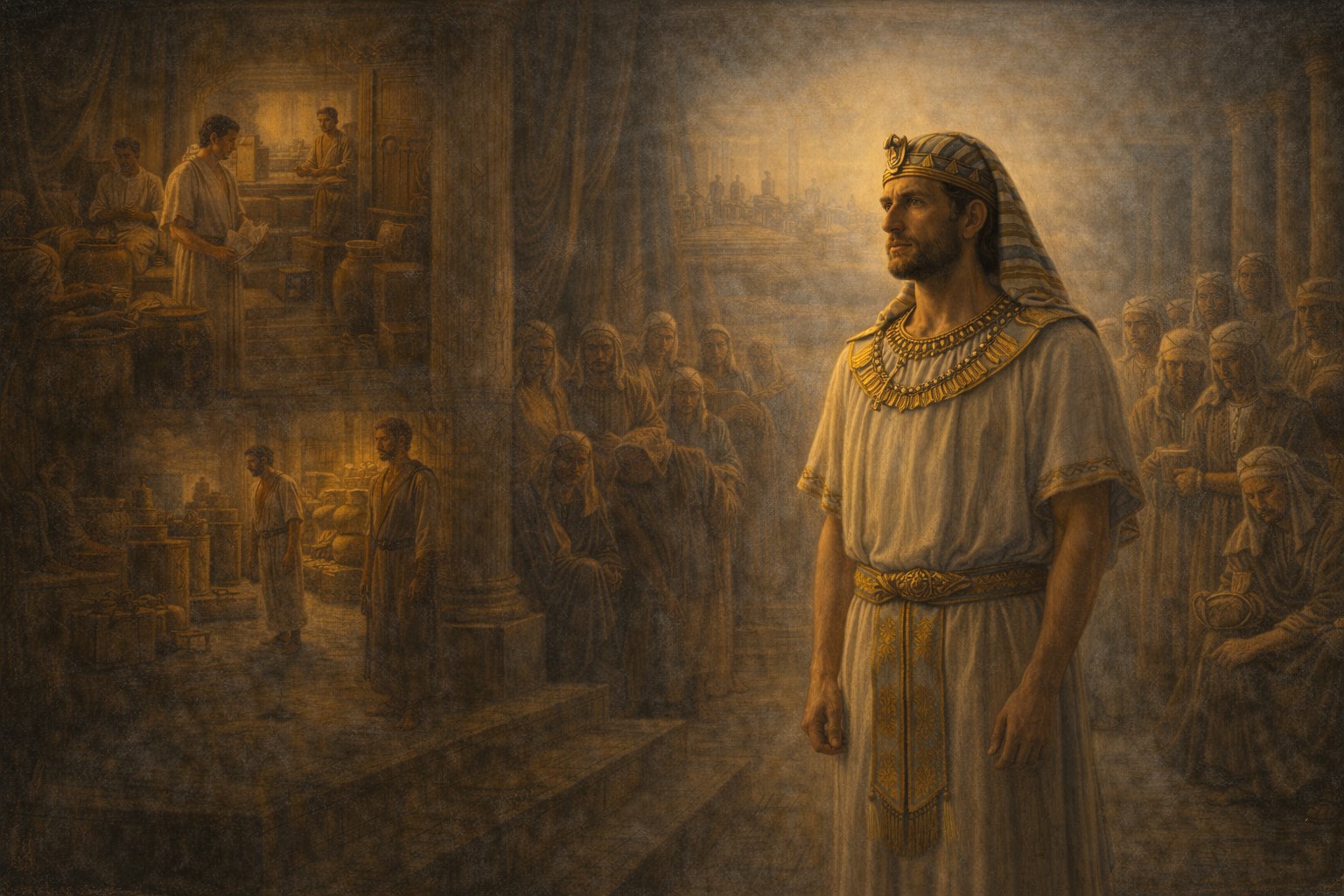
Genesis 41 — God raises Joseph from prison to power in Egypt to preserve life in the coming famine.
Genesis 41 records how Joseph is brought out of prison to interpret Pharaoh’s dreams during a time of deep anxiety in Egypt. Through God-given wisdom, Joseph reveals the meaning of the coming years of abundance and famine and is elevated to govern the land. The chapter marks a decisive turning point in the Joseph narrative, as God transforms forgotten suffering into public authority, appointing Joseph as the instrument through whom many lives will be preserved.
God’s Time Beginning in a Forgotten Prison
Joseph still remained in prison.
Even after the chief cupbearer was restored, Joseph was left forgotten, waiting in obscurity. Yet God’s time had not stopped. Though erased from human memory, he was moving precisely toward the moment appointed in God’s plan.
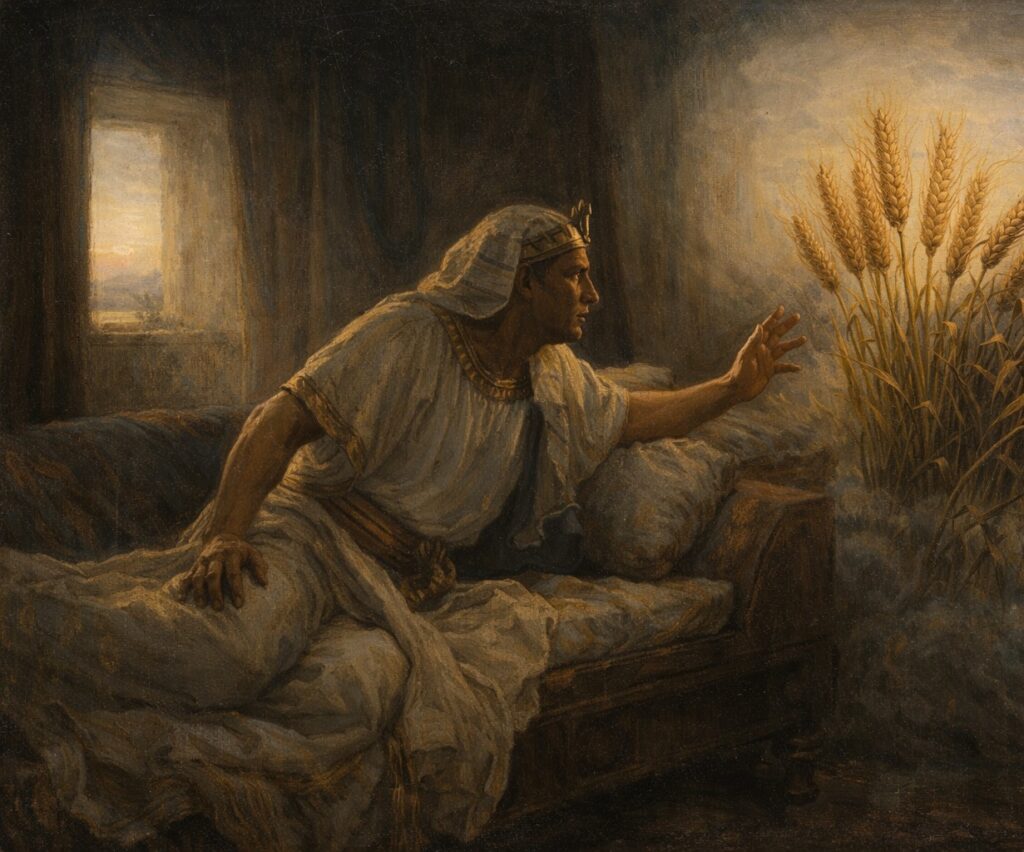
Two years later, Pharaoh dreamed two dreams. By the Nile appeared the fat cattle and the gaunt cattle, and from a single stalk the full ears and the withered ears. The same structure repeated twice confirmed that God had fixed the matter and would soon accomplish it. Yet none of Egypt’s wise men could interpret it. Then the Hebrew youth in prison was remembered. The time God had prepared had begun.
A Man Who Reveals God
Standing before the king, Joseph did not present himself. He declared clearly, It is not in me. God will give Pharaoh an answer of peace. The One who gives the dream is God, and the interpretation belongs to Him as well.
Through slavery and imprisonment, Joseph had learned for whom he existed. He was not living for his own honor but was called to serve others for God. Even the gift of interpretation was not his possession but a calling entrusted by God. Joseph’s life had become a channel that revealed God rather than himself.
From Interpretation to Governance
Joseph interpreted Pharaoh’s dreams. The seven good cattle and ears represented seven years of abundance; the gaunt cattle and withered ears foretold seven years of famine so severe that the memory of plenty would vanish.
Yet Joseph did not stop at interpretation. He proposed a national strategy: during the years of abundance, collect one-fifth of the grain and store it in the cities to prepare for famine. This was not merely the speech of an interpreter but the wisdom of a statesman. Pharaoh and all his officials recognized its truth. Divine insight spoken through one servant was reshaping the future of a nation.
God’s Raising That Appears Sudden
Pharaoh declared, Can we find a man like this, in whom is the Spirit of God? And he set Joseph over all the land of Egypt. A prisoner became ruler in a single day.
Yet this was not sudden success. Thirteen years of slavery, unjust imprisonment, and forgotten waiting had prepared this moment. Faithfulness in Potiphar’s house and responsibility in prison had formed the capacity to govern a nation. Not one experience in Joseph’s life was wasted. Behind everything was God’s providence.
A Ruler Who Saw the Greater Vision
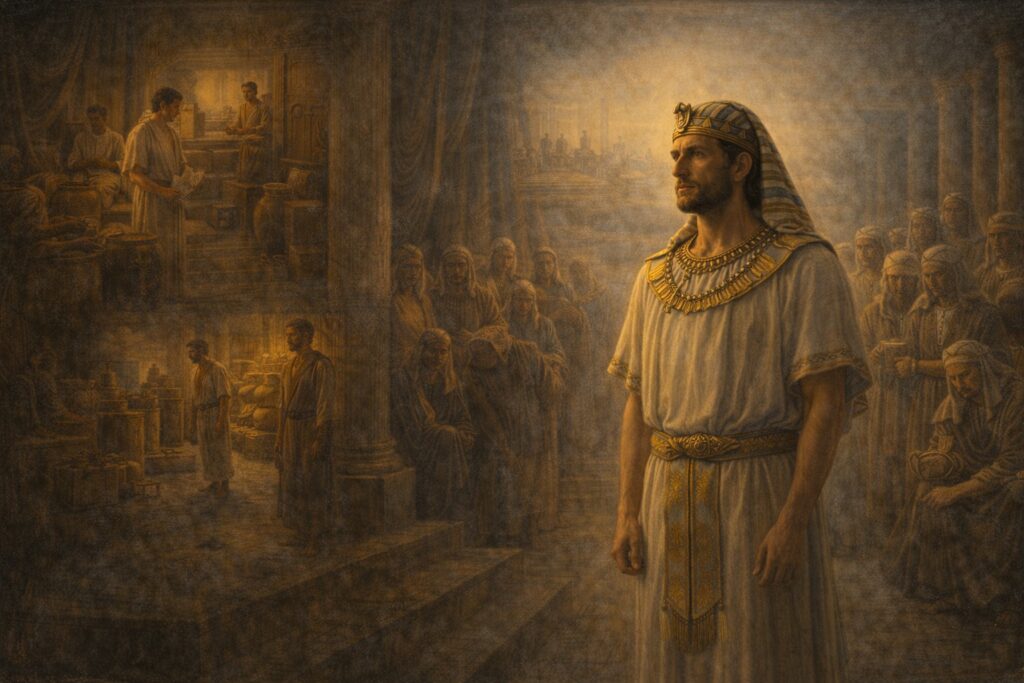
Joseph’s gaze did not rest on promotion. He saw the coming famine and knew that Canaan too would suffer. His father and brothers would one day descend into Egypt. He perceived the larger design of God—the promise to Abraham that Israel would enter Egypt and become a great nation.
Therefore Joseph did not indulge in power. He traveled throughout Egypt, working and preparing. The long years of humbling had carved humility and diligence into his character. The man God raises does not cling to position but moves toward purpose.
◀ Previous: Genesis 40 — Joseph in Prison
▶ Next: Genesis 42 — Brothers Go to Egypt
📚 Genesis meditation playlist