
Judah’s failure and Tamar’s courage reveal how God preserves the covenant line even through human brokenness.
Genesis 38 presents an unexpected interruption in the Joseph narrative, focusing instead on Judah and Tamar and exposing the moral fracture within Jacob’s family. Judah’s failure of responsibility and Tamar’s bold pursuit of justice unfold within a deeply complex social and covenantal context. Yet this chapter ultimately reveals a profound biblical reality: God preserves the promised lineage not through human righteousness but through His sovereign grace working even within broken circumstances. This Genesis 38 Bible meditation invites reflection on repentance, restoration, and the hidden continuity of the covenant line that leads toward Israel’s future and the broader redemptive story of Scripture.
A Story That Appears Morally Troubling
Genesis 38 is one of the most misunderstood chapters in Scripture.
At first glance, the story of Judah and Tamar seems morally confusing — even disturbing. Deception, hidden identity, accusation, and confession all unfold within a single chapter.
Yet the Bible does not present this account as mere scandal.
Immediately after Joseph is sold into slavery, the narrative deliberately shifts its focus to Judah. This shift is not accidental.
The chapter invites us to look beyond surface events and ask a deeper question.
Who Will Bear the Birthright?
At the heart of Genesis 38 lies a central issue:
Who will carry the covenant line forward?
Reuben, the firstborn, forfeited his birthright through grave sin.
Simeon and Levi disqualified themselves through violence.
Now attention turns to the fourth son — Judah.
Yet Judah himself is far from exemplary. He marries a Canaanite woman and fails to guard the spiritual direction of his household. His family grows outwardly, but its covenant foundation is unstable.
The deaths of Er and Onan are not random tragedies. They represent divine intervention within a narrowing covenant line.
History is tightening.

A Discarded Widow Who Clung to the Covenant
At the center of this unfolding tension stands Tamar.
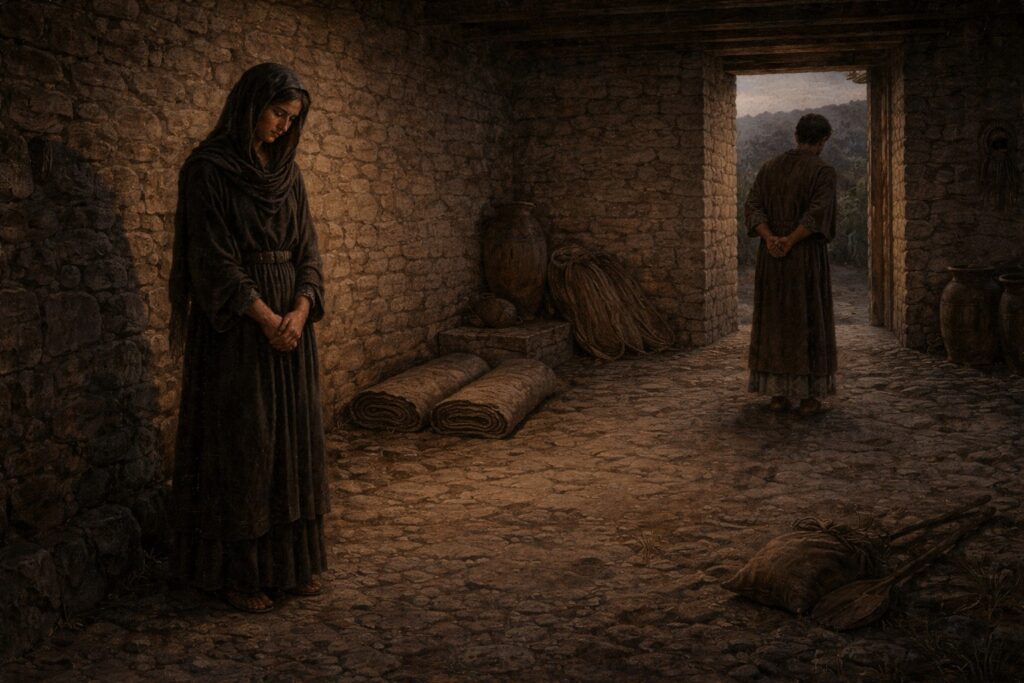
She is widowed.
She is sent away.
She is legally connected to the covenant household, yet practically pushed outside of it.
But Tamar does not release the promise.
Instead of abandoning hope, she makes a costly and dangerous decision. She refuses to fall outside the covenant line, even at the risk of her life.
This chapter is often read as a story of immorality.
Yet Scripture repeatedly emphasizes Tamar’s long endurance and restraint.
Her motive was not pleasure.
It was covenant preservation.
She was willing to risk everything rather than lose her place in the promise.
“She Is More Righteous Than I”
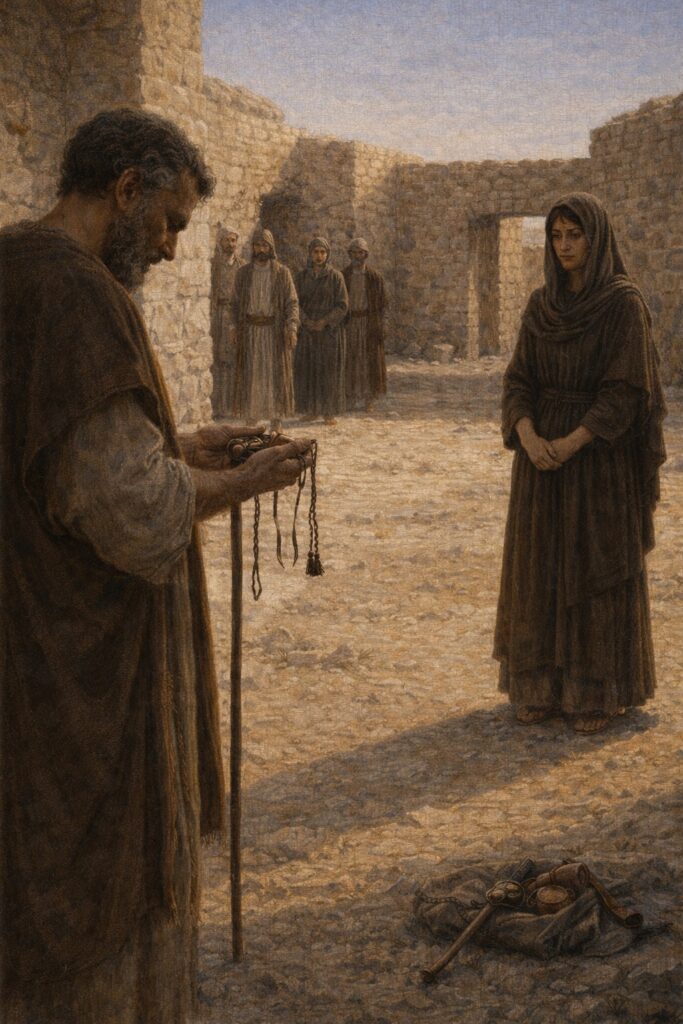
Three months later, Tamar’s pregnancy becomes known.
Judah reacts with anger and calls for judgment.
But Tamar presents proof — the signet, the cord, and the staff.
In that moment, Judah recognizes the truth and declares:
“She is more righteous than I.”
This confession is not merely a moral comparison.
It is recognition of covenant faithfulness.
Judah had treated the covenant lightly.
Tamar had clung to it at great cost.
God grants her twins.
From her line comes King David.
And ultimately, her name appears in the genealogy of Jesus Christ.
The foreign widow is brought into the center of redemptive history.
Grace worked quietly — through unlikely beginnings.
This Is Not Ancient Scandal — It Is a Present Question
Genesis 38 is not preserved to shock us.
It confronts us.
How is the covenant line continued today?
No longer by bloodline —
but by faith in Christ.
Tamar risked everything to preserve a physical lineage.
We are called to continue a spiritual lineage through the gospel.
Life must give life.
To believe is to transmit faith.
To receive grace is to extend it.
To follow Christ is to disciple others.
Genesis 38 reveals a God who works through moral collapse, through human failure, and through unlikely people — preserving His promise.
The covenant line narrowed —
but it did not end.
And neither does His purpose in us.
📌 In this video, we reflect on:
– Moral collapse within the covenant family
– The question of birthright
– Tamar’s decisive faith
– Judah’s confession
– The Messianic genealogy
– Our calling to spiritual inheritance
May this meditation lead you into deeper reflection on God’s providence and your role in continuing the gospel.
◀ Previous: Genesis 37 — Joseph’s Dreams
▶ Next: Genesis 39 — Joseph in Egypt
Genesis Bible Meditation Playlist
Genesis Bible Meditation Playlist