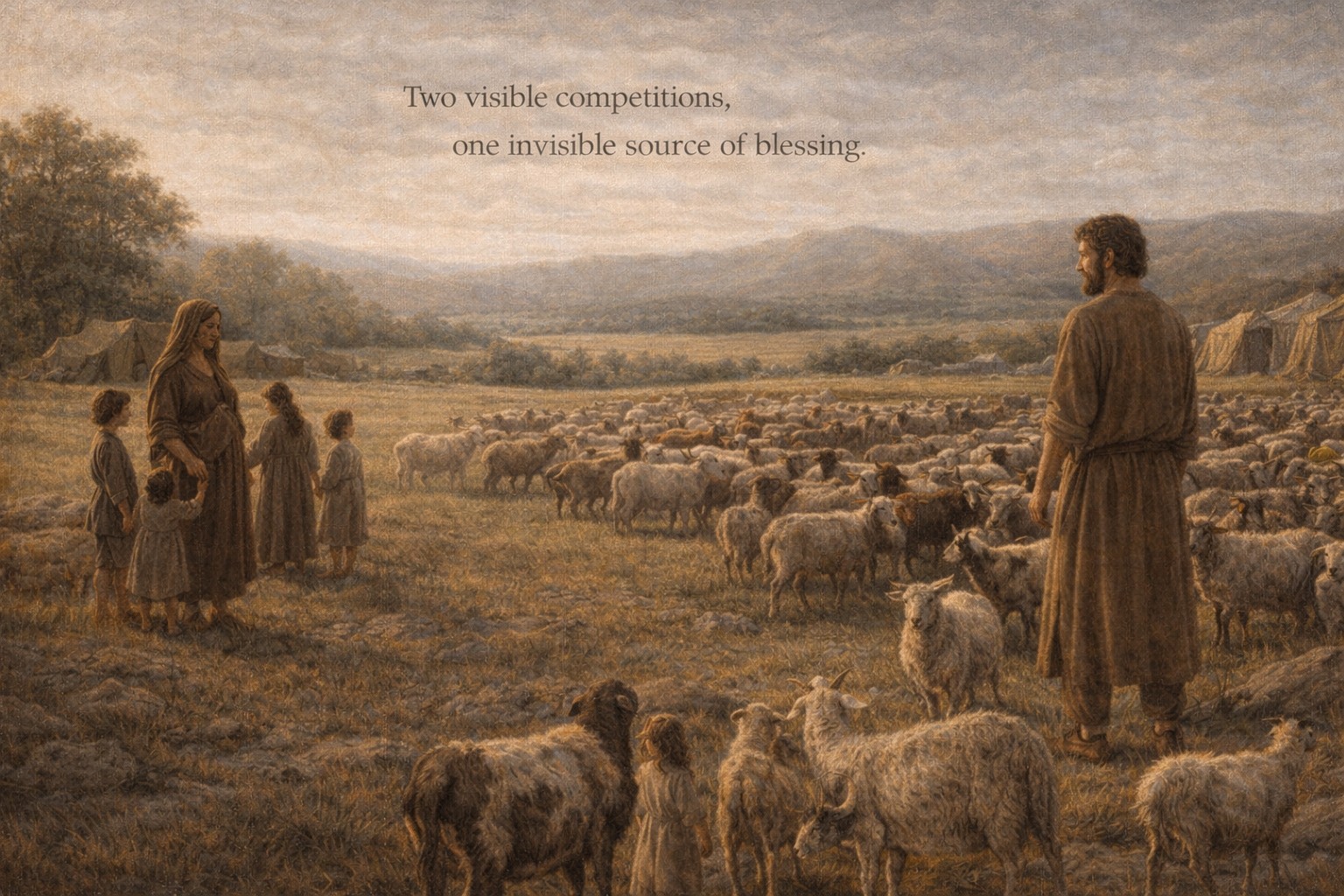
Genesis 30 recounts the rivalry of Leah and Rachel and the rapid growth of Jacob’s family and flocks, revealing God’s sovereign blessing amid human striving.
Genesis 30 depicts the intense struggle between Leah and Rachel for children, alongside Jacob’s growing prosperity under Laban despite deception and conflict. Through births, surrogacy, and competition, the twelve-tribe family begins to take shape, while God continues to multiply Jacob’s flocks beyond natural expectation. The chapter shows how divine blessing advances the covenant line even within human rivalry and imperfect motives, preparing the foundation for Israel’s future nationhood.
God’s covenant does not fail because people are weak.
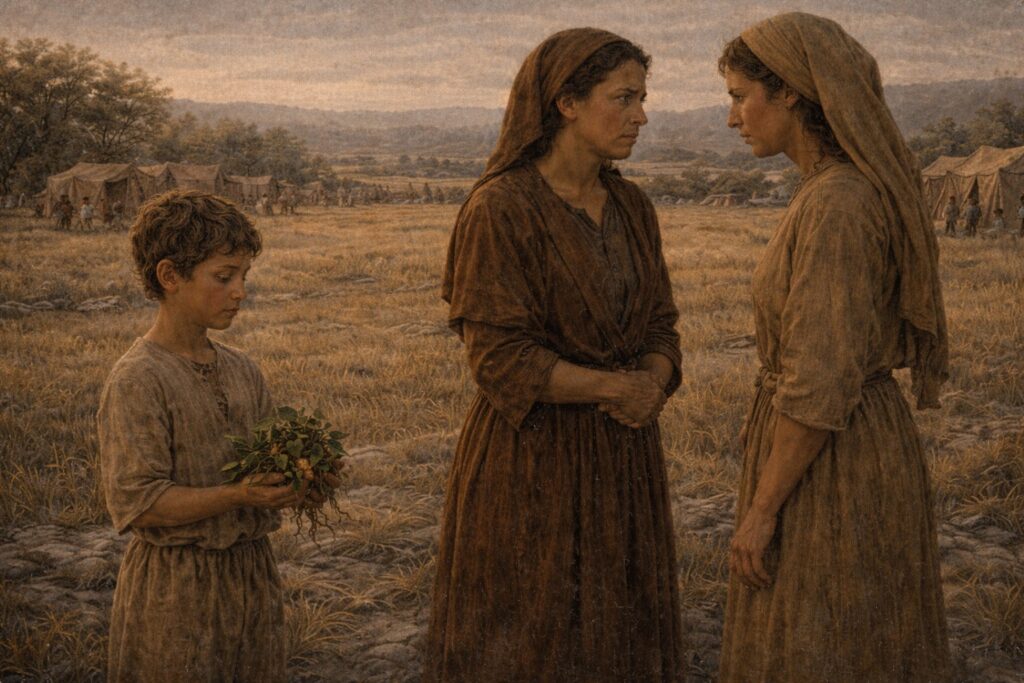
Rachel and Leah compete through childbirth, each seeking love, recognition, and security.
Children are born not only from joy, but from pain, jealousy, and desperation.
Names are spoken as prayers, wounds, and hopes.
Still, through this broken family structure, God is forming the foundation of His covenant people.
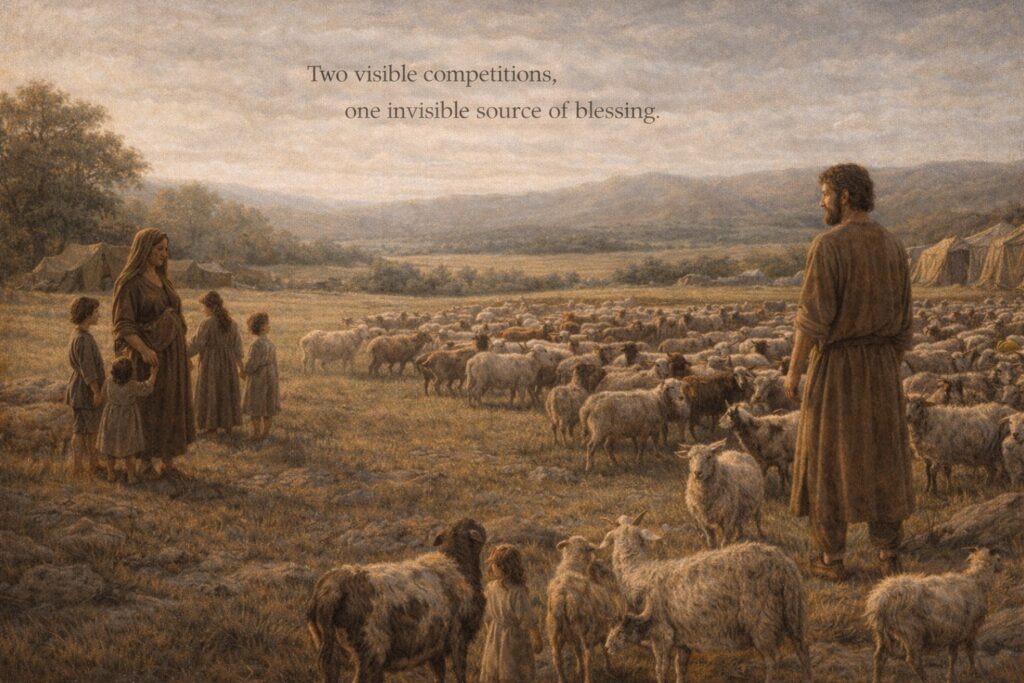
Human Competition, Divine Faithfulness
From a human perspective, Genesis 30 appears driven by competition.
Wives compete for children.
Jacob later navigates economic tension with Laban, seeking independence and provision through his labor.
Yet Scripture carefully redirects our attention.
Increase does not come from rivalry or strategy.
Behind every birth and every gain stands the faithful God who remembers His promise.
What humans pursue through struggle,
God grants through covenant.
Labor Is Visible, Blessing Is Given
Jacob works diligently among the flocks.
He prepares, watches, and waits.
Outwardly, his prosperity seems connected to wisdom and effort.
But the text never credits human technique as the source of blessing.
God alone gives the increase.
Human effort is present, but human control is not.
This chapter reminds us that faith often works without immediate proof.
God’s hand is active even when His work is not yet visible.
Twelve: God’s Covenant Structure
Genesis 30 prepares the way for a larger biblical pattern.
From these sons will come the twelve tribes of Israel.
Later, Jesus will appoint twelve apostles.
And Revelation will describe the New Jerusalem with twelve gates and twelve foundations.
“Twelve” is not coincidence.
It is God’s covenant structure—
designed to preserve unity, prevent scattering,
and sustain His people throughout history.
A Word for the Church Today
The church, like Jacob’s household, is not free from weakness.
It carries tension, imperfection, and unfinished growth.
Yet our hope is not found in human faithfulness.
Our hope rests in the God who remains faithful to His covenant.
When people fail, God does not abandon His work.
He gathers, preserves, and multiplies His people according to His promise.
Genesis 30 teaches us this enduring truth:
Prosperity flows not from human methods, but from God’s unchanging faithfulness.
◀ Previous: Genesis 29 — Jacob Meets Rachel
▶ Next: Genesis 31 — Jacob Leaves Laban
👉 Full Genesis Playlist
Genesis Bible Meditation Playlist