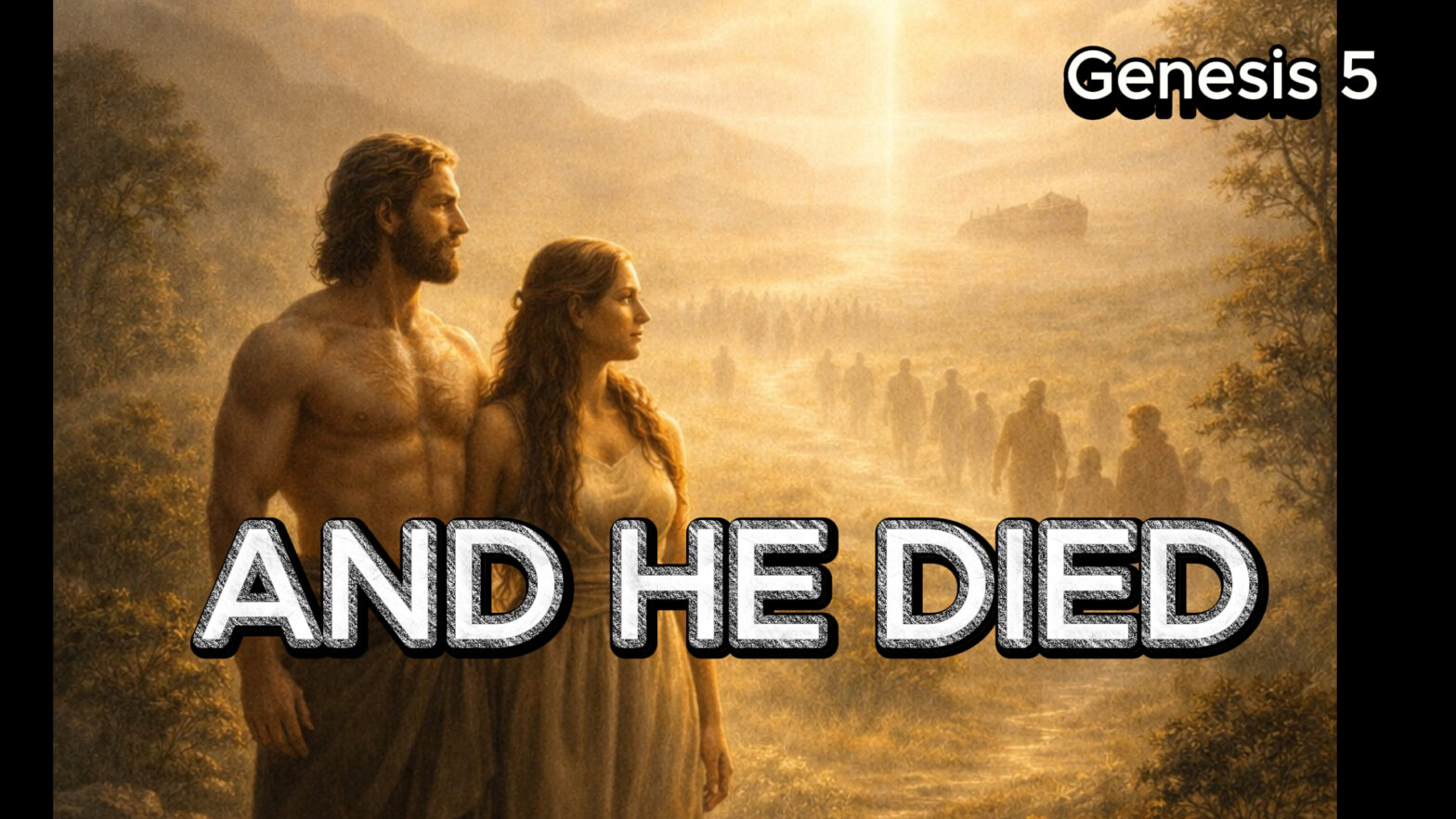
Genesis 5 records the genealogy from Adam to Noah, showing how humanity continued through the line of promise and pointing forward to God’s plan of salvation through future generations.
Genesis 5 records the genealogy from Adam to Noah, revealing how the lineage of faith continued through the generations after the fall. While the chapter may appear to be only a list of names and ages, it preserves the story of how God’s image and blessing were carried forward through a godly lineage, preparing the way for Noah and the coming judgment of the flood.
At first glance, Genesis 5 may seem like nothing more than a genealogy.
A series of names, ages, and repeated phrases often causes readers to skim quickly or pass over the chapter.
Yet Scripture preserves nothing without purpose.
Quietly but clearly, Genesis 5 reveals how God’s saving work has been faithfully carried forward through history. It also poses a question that reaches us today:
What kind of lineage am I leaving behind?
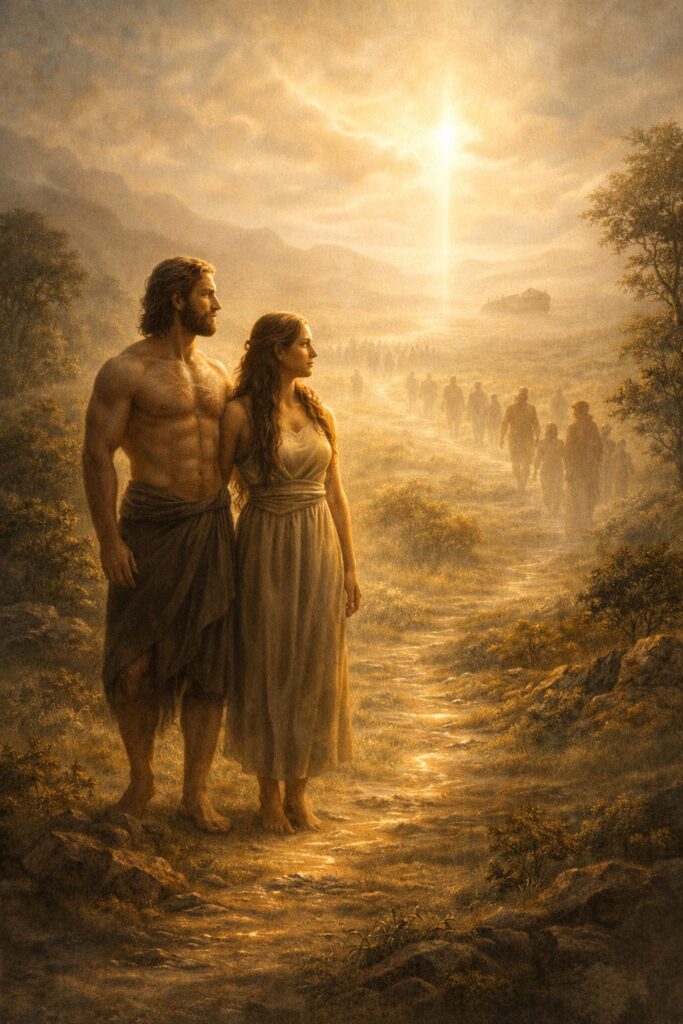
A Lineage that Carries God’s Image
Genesis 5 records the lineage that runs from Adam to Noah.
It is not merely a biological record, but a spiritual testimony. The reason genealogies matter in Scripture is not to preserve bloodlines, but to ensure that God’s blessing, image, and calling flow through generations.
God created humanity in His own image—male and female—as beings meant for union. Through marriage and childbirth, His image was intended to multiply and spread until His kingdom filled the earth.
Biblical genealogies, therefore, are not family records alone, but channels through which God’s grace moves forward.
Seth’s Line and the Contrast with Cain
This is why Genesis 5 stands in clear contrast to Genesis 4.
Genesis 4 records the lineage of Cain, a line marked by cultural achievement yet disconnected from God.
Genesis 5, however, does not recognize Cain’s descendants as part of Adam’s lineage. Instead, it records only the line of Seth.
“Adam had a son in his own likeness, after his image, and named him Seth.”
This likeness is not merely physical. It speaks of faith, the inheritance of God’s image, and the beginning of a godly lineage.
Genesis 5 is selective, recording only those connected to God’s redemptive plan. In this sense, it foreshadows the Book of Life.

The Line Leading to Noah
The genealogy ultimately moves toward one central figure: Noah.
Noah stands at the threshold of judgment and renewal—the man through whom God preserves life and begins again after the flood.
Strikingly, every ancestor in the lineage of faith is gathered by God before judgment begins.
This reveals a crucial truth: God’s salvation is never rushed. Not one is lost. Only after every chosen life is gathered does judgment come to completion.
Death Repeated, Yet Hope Remains
A sobering phrase appears repeatedly in Genesis 5:
“And after he lived … years, he died.”
Death is repeated again and again, yet it does not have the final word.
Unlike Cain’s lineage, which Scripture records only in terms of civilization, Seth’s lineage remains connected to fruitfulness and blessing.
Even in a history marked by death, God’s image is never extinguished.
The presence of Noah—the last righteous man of his generation—testifies that the lineage of faith remains intact.

Enoch Who Walked with God
Among all these names, one shines with particular brilliance: Enoch.
“Enoch walked with God; then he was no more, because God took him.”
Enoch did not see death.
His life bears witness to hope beyond the grave and foreshadows the resurrection and ascension of Jesus Christ.
To walk with God is to live with constant awareness of His presence and to shape one’s life according to His heart.
God’s Patience Before Judgment
From Enoch came Methuselah, the longest-living person recorded in Scripture.
According to tradition, the year of his death coincides with the year of the flood—a sign of God’s extraordinary patience.
God waited until the very last moment of grace before judgment began.
Lamech then named his son Noah, speaking of comfort from the curse of the ground.
Through Noah’s obedience and sacrifice, comfort was offered to God, and through the covenant of the rainbow, comfort was extended to all creation.
The Lineage Fulfilled in Christ
After Christ, Scripture no longer records physical genealogies in this way.
Jesus bore no physical children, yet He bore disciples through the Word.
In Him, every faithful lineage finds fulfillment.
The lineage that follows Christ is no longer written in blood, but in the gospel—recorded in the Lamb’s Book of Life.
Genesis 5 ultimately calls us to examine our own lives.
Even without physical descendants, anyone who raises another through the gospel is continuing God’s lineage.
May we walk with God as Enoch did, remain faithful as Noah did, and carry God’s image forward into the next generation—for His glory.
◀ Previous: Genesis 4 — Cain and Abel
▶ Next: Genesis 6 — Corruption and the Call of Noah
👉 Full Genesis Playlist
Genesis Bible Meditation Playlist