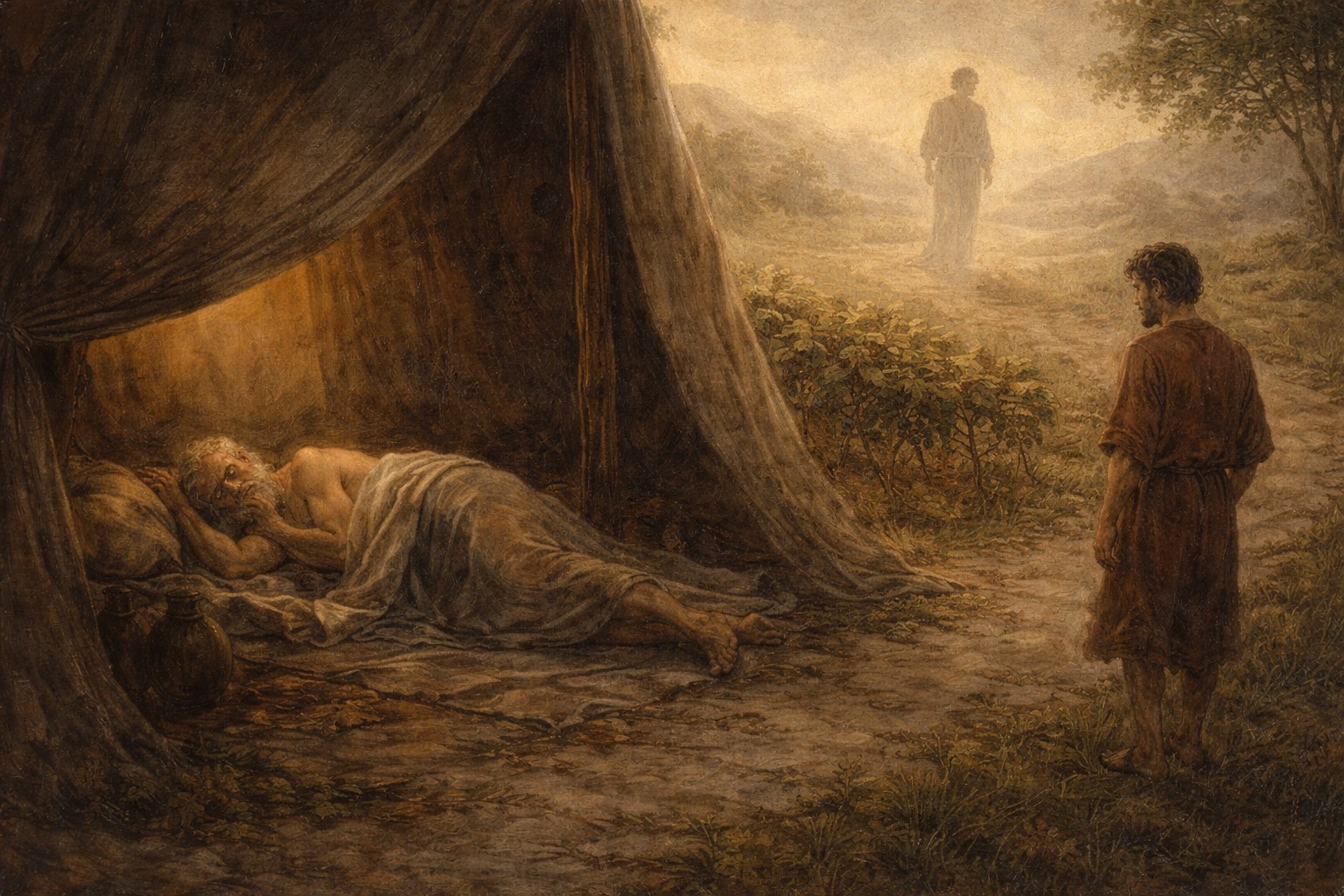
Genesis 9:18–29 records the story of Noah and his sons after the flood, revealing both human weakness and the prophetic destinies of Shem, Ham, and Japheth.
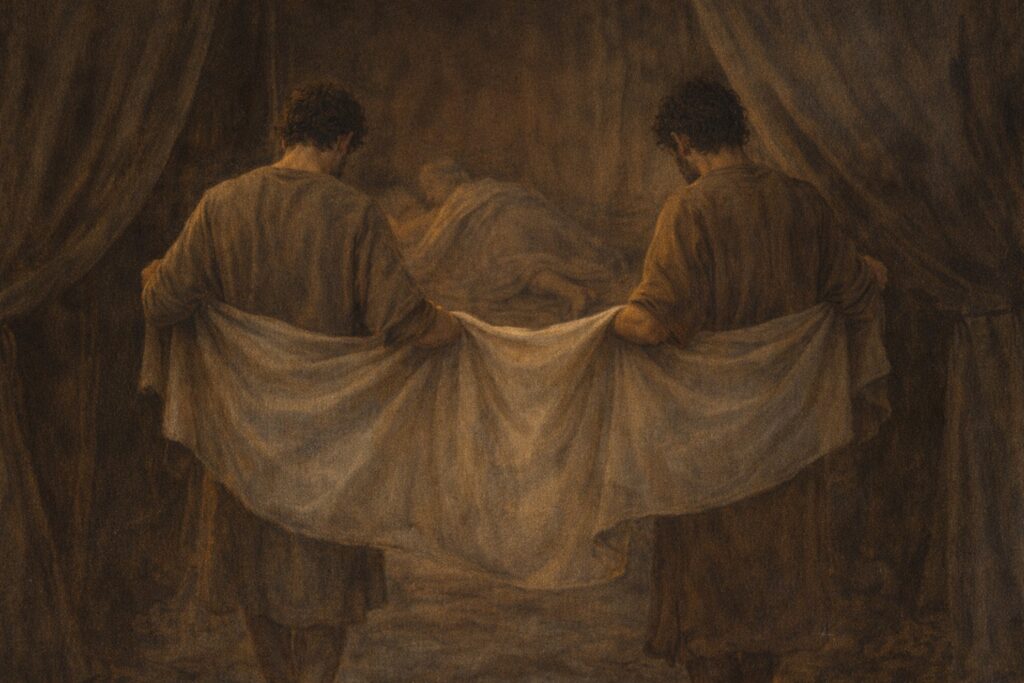
Genesis 9:18–29 records the story of Noah and his sons—Shem, Ham, and Japheth—at the beginning of the post-flood world. As humanity begins again after the great flood, this passage reveals both the lingering reality of human sin and the prophetic consequences that shape the future of the nations. Noah, though described earlier as a righteous man, plants a vineyard and becomes drunk, lying uncovered in his tent. Ham sees his father’s nakedness and exposes his shame, while Shem and Japheth respond with honor by covering their father without looking upon him. When Noah awakens, he pronounces words of blessing and curse that will echo through the future history of their descendants.
Two Spiritual Principles Revealed
From this incident, Scripture reveals two important spiritual principles.
The first is the principle of following.
Every person lives by following something.
We either follow God—the source of life and blessing—or we drift toward a direction that mocks God and damages life.
The path we follow ultimately determines the fruit of our lives and even the direction of history.
The second is the principle of wearing down.
Because humanity exists under original sin, we do not naturally grow spiritually stronger if left unattended.
A living tree retains vitality over time, but a dead tree decays as time passes.
In the same way, a person who does not continually receive God’s life inevitably grows spiritually dull.
That is why Scripture emphasizes not a single act of obedience, but a continual walk with God.
Noah’s Weakness and Its Influence
Noah inherited a spiritual legacy that stretched back to Enoch, who walked with God and did not see death.
That legacy sustained Noah through divine judgment and allowed him to find grace in the midst of the flood.
Yet even Noah was still a man under original sin, capable of spiritual looseness.
His drunken state left him vulnerable.
Though Noah may not have intentionally sinned, his condition affected his entire household.
That influence became visible in Ham, who chose to expose and ridicule his father’s shame rather than protect it.
Covering Shame Versus Exposing It
Shem and Japheth’s response points us back to the Garden of Eden.
After Adam and Eve sinned and became overwhelmed by shame, God did not mock them or expose their nakedness.
Instead, He made garments of skin and covered them.
Covering shame is God’s way.
Provoking sin, exposing it, and mocking it endlessly is the way of the enemy throughout Scripture.
Shem and Japheth had evidently meditated on God’s heart and His ways, which is why they naturally followed His example.
Ham, by contrast, chose the opposite posture.
Blessing, Curse, and God’s Patience
After this event, Noah pronounced declarations over his sons.
To Shem he said, “Blessed be the LORD, the God of Shem,” establishing a line through which redemption would continue.
To Japheth he spoke a blessing of expansion: “May God enlarge Japheth, and let him dwell in the tents of Shem.”
History confirms the fulfillment of these words.
Through the line of Abraham came Christ, and through Japheth the gospel spread to the nations.
The curse spoken over Canaan raises difficult questions.
Scripture does not present it as an impulsive outburst, but as a declaration marked by warning and patience.
Ham had time to repent and an opportunity to change direction.
Yet the biblical record shows that he ultimately did not turn from that path.
A Call to Bless, Not to Curse
God is the Judge, but He is also exceedingly patient.
In Eden, sin appeared immediately, but its consequences unfolded gradually across generations.
Judgment always comes after a season of grace.
For this reason, Scripture speaks clearly to us today.
We are not called to be people who pronounce curses, but people who pass on blessing.
We are commanded to love our enemies and pray for those who persecute us.
Our words are never insignificant.
Therefore, we must remain alert—both in whom we follow and in what we choose to speak.
From this passage, three truths stand before us:
1. Do not follow the path of mockery and curse, but follow God, the source of blessing.
2. Acknowledge that spiritual decline happens naturally, and strive daily to walk with the Lord.
3. Turn away from curse and choose blessing.
This is the path that pleases God
and the path that brings life into history.
May you walk in victory in the Lord.
◀ Previous: Genesis 8 — Waters Recede
▶ Next: Genesis 10 — Nations from Noah
👉 Full Genesis Playlist
Genesis Bible Meditation Playlist