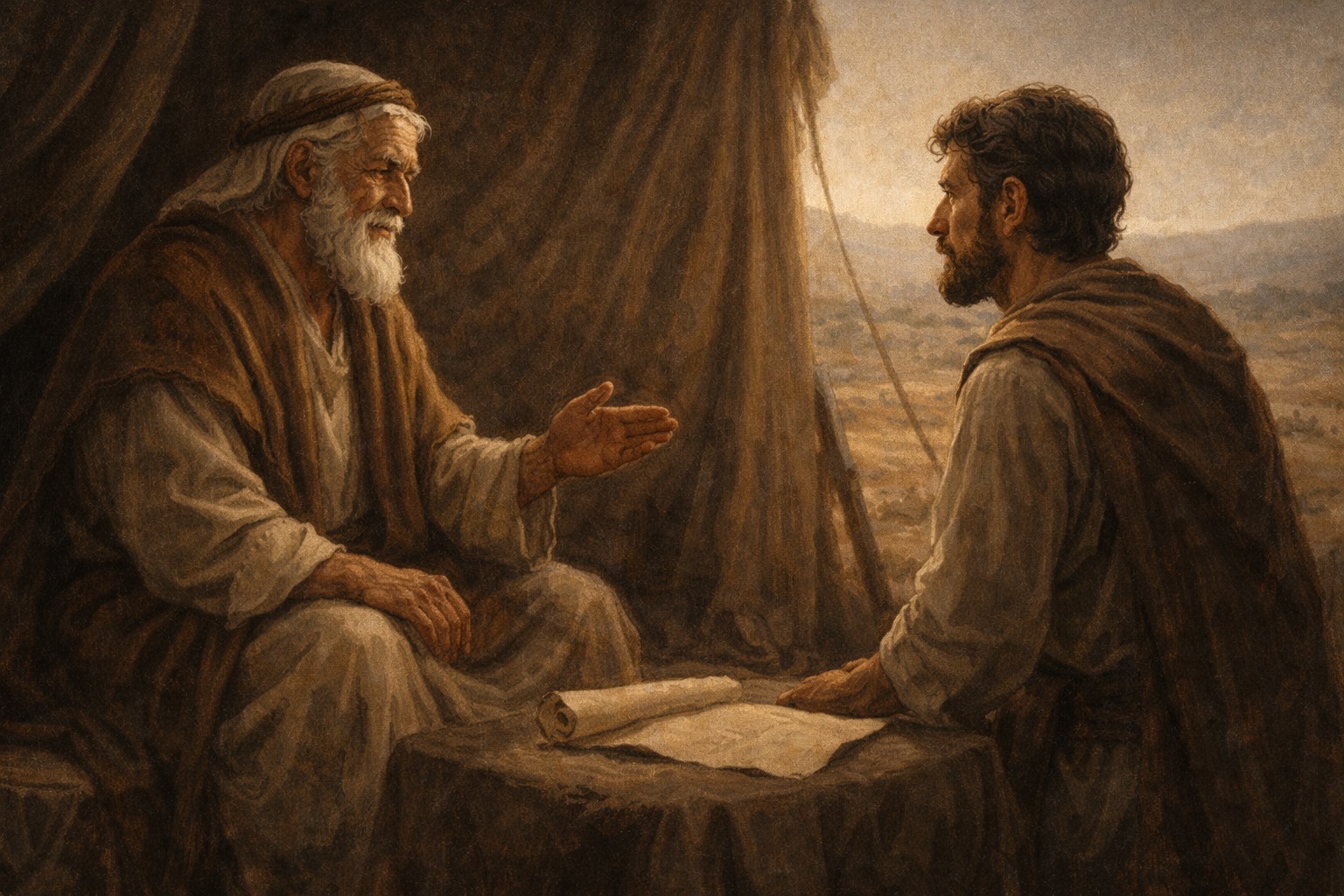
God faithfully leads Abraham’s servant to Rebekah, revealing divine guidance in establishing the next generation of the covenant family.
Genesis 24 presents one of the most detailed narratives in Genesis, describing how Abraham’s servant finds a wife for Isaac. Determined to secure the covenant line, Abraham sends his trusted servant back to his homeland to seek a bride among his relatives. Through prayer, providence, and careful discernment, the servant encounters Rebekah, whose character and generosity reveal God’s guidance. The chapter emphasizes divine direction in seemingly ordinary events, demonstrating how God faithfully prepares the next generation of the covenant family. The marriage of Isaac and Rebekah becomes a crucial step in the continuation of God’s promise.
1. The Final Mission of Abraham
Abraham was advanced in age, yet his only son Isaac remained unmarried. God’s plan to establish His kingdom in the land of Canaan was to unfold through Abraham becoming a great nation. For that promise to continue, Isaac had to take a wife. This was not a personal preference or family concern—it was an absolute necessity for the covenant. Securing a wife for Isaac became the final mission entrusted to the aged patriarch.

2. An Oath Bound to the Covenant
Isaac could not marry just anyone. Covenant people are not defined merely by having children, but by raising children within the covenant. Abraham had learned this truth painfully through Ishmael. He therefore summoned his most faithful servant and bound him with an oath taken under the sign of circumcision—the mark of the covenant. This oath declared that Isaac’s marriage was not a private matter, but a sacred continuation of God’s redemptive promise.
3. No Return to the Old Life
Abraham commanded his servant not to take a wife from the daughters of Canaan, a land marked by idolatry and corruption. Nor could Isaac return to Haran. To go back would mean returning to life before the covenant. The future of God’s promise could move forward only by remaining where God had called them to stand.
4. A Marriage Entrusted to God’s Leading
Abraham confessed his faith clearly: “The LORD, the God of heaven, will send His angel before you.” Isaac’s marriage would not be guided by human calculation, but by divine providence. The servant responded by unfolding his plan before God in prayer, committing every step with care and reverence.

5. Prayer Answered Before It Was Finished
At the well of Nahor, the servant prayed for a sign—not beauty, but character. Before he finished praying, Rebekah appeared. Her willingness to serve, even watering ten camels, revealed diligence and kindness. The servant immediately recognized God’s hand and bowed in worship. What the world calls coincidence, faith calls providence.
6. Faithfulness That Bears Witness
Even before eating, the servant faithfully recounted every detail of his mission, testifying to God’s work. Rebekah’s family acknowledged, “This matter comes from the LORD,” and Rebekah herself freely chose to go. Her decision became her entrance into the covenant line through which Christ would come.

7. The Quiet Fruit of Covenant Faithfulness
Genesis 24 concludes simply: “Isaac took Rebekah as his wife and loved her.” This chapter is not merely a marriage story—it is a testimony to faithfulness. God’s covenant advances through faithful people who pray, obey, and give thanks along the way. As Scripture teaches, the kingdom of God is built through those who walk faithfully within His covenant.
Amen.
◀ Previous: Genesis 23 — Death of Sarah
▶ Next: Genesis 25 — Generations of Abraham
📖 Genesis Bible Meditation Series
Genesis Bible Meditation Playlist