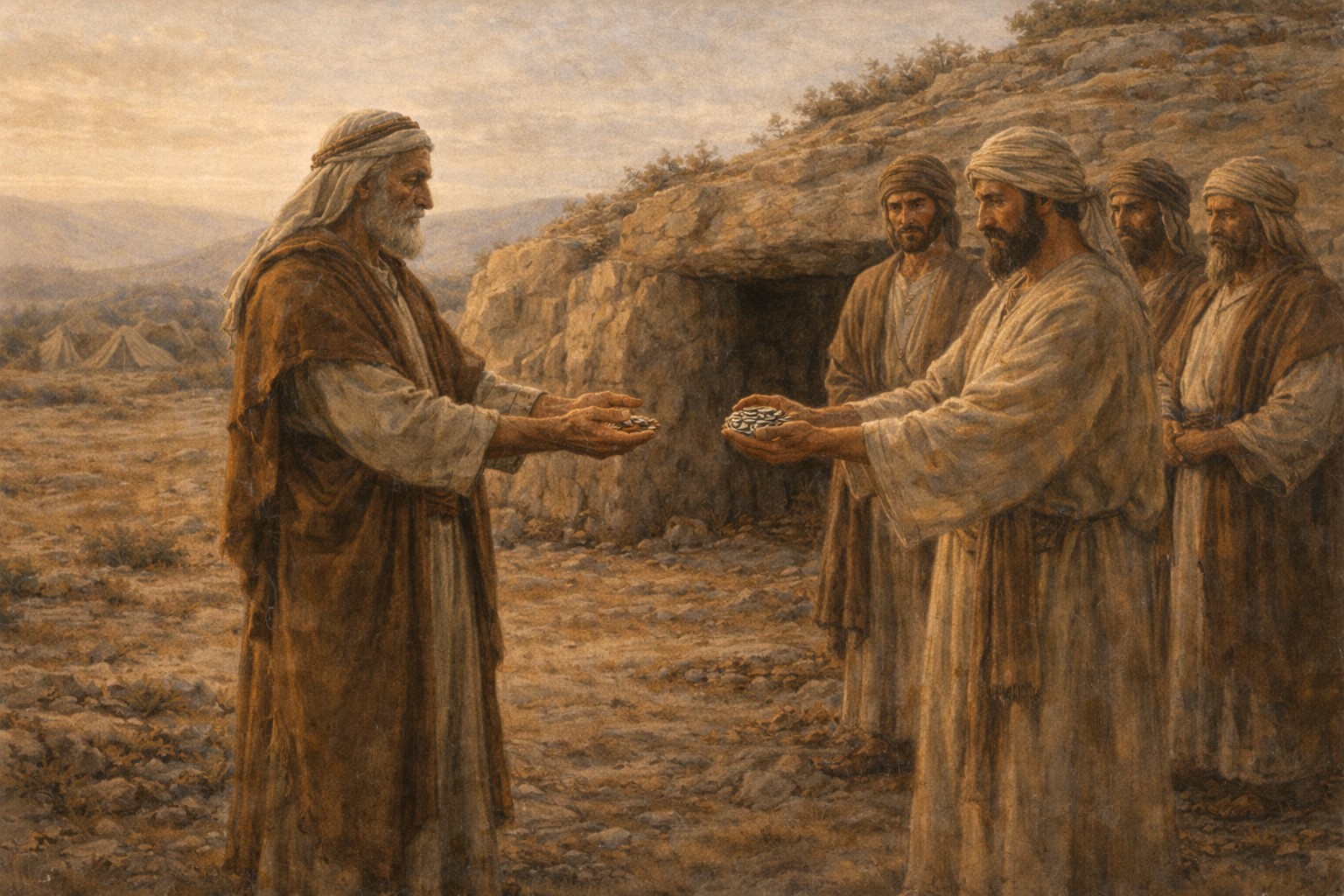
Abraham purchases the cave of Machpelah, establishing the first possession of the promised land through Sarah’s burial.
Genesis 23 records the death of Sarah and the first legal acquisition of land in the promised territory. Abraham negotiates with the Hittites and purchases the cave of Machpelah as a burial site for Sarah. Though the promised land has not yet been fully given to Abraham’s descendants, this purchase represents the first tangible possession within that promise. The chapter highlights Abraham’s faith in God’s future fulfillment and establishes a permanent burial place for the patriarchal family. Genesis 23 therefore connects personal loss with enduring hope in God’s covenant promise.
1. The Faith That Remembered the Covenant
In Genesis chapter 22, Abraham was able to offer Isaac as a burnt offering for one clear reason: he remembered God’s covenant and believed it to the very end. The covenant God gave to Abraham can be summarized simply—God would establish the kingdom of Christ, and Abraham was called to form His people.
When God commanded him to leave his country and go to the land He would show him, the promise was never centered on land itself. It was a calling to live as a covenant disciple, raising the promised seed until the Sovereign Christ would come.
2. The Land Was Never the Center
Throughout his life, Abraham lived in tents in the land of Canaan. Though he was wealthy, he never purchased land to live on. This was not because he lacked resources, but because the land was not the heart of the covenant.
For Abraham, Canaan was the setting for obedience, not the goal. He understood that the fulfillment of God’s promise would come in God’s time, not in his own lifetime.
3. Faith That Waited for God’s Timing
Abraham knew that God’s covenant was not a matter of possession or human effort, but a matter of time. In Genesis 15, God clearly declared that Abraham’s descendants would live as sojourners in a foreign land for four hundred years before returning.
Because of this, Abraham lived as a pilgrim, teaching his descendants to be ready both to leave the land at God’s command and to return when God called them back.
4. The Only Land Abraham Ever Bought
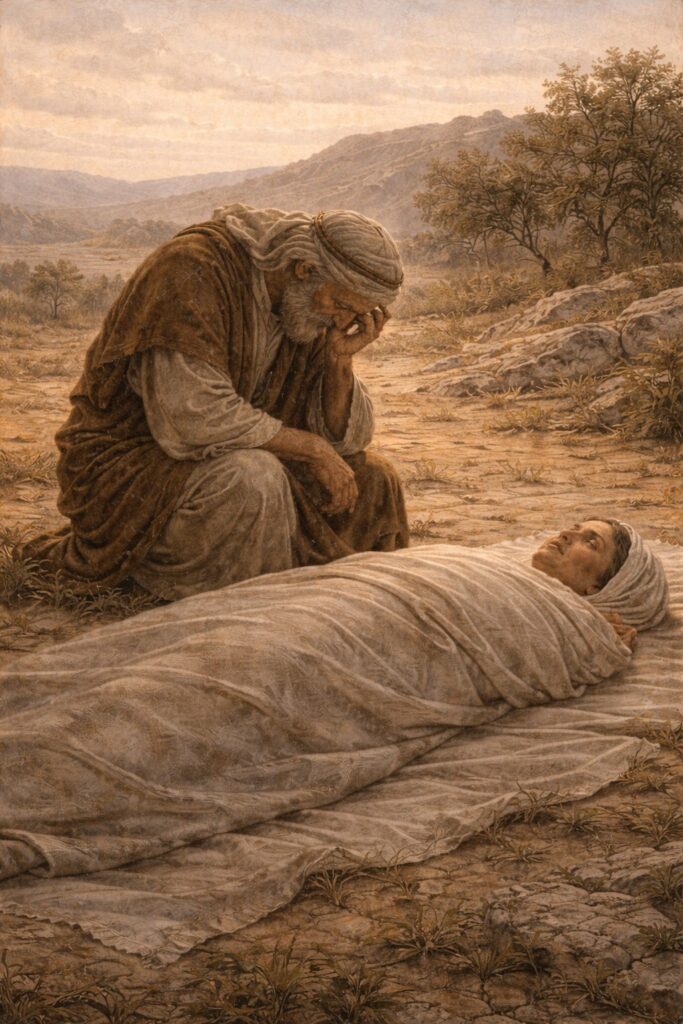
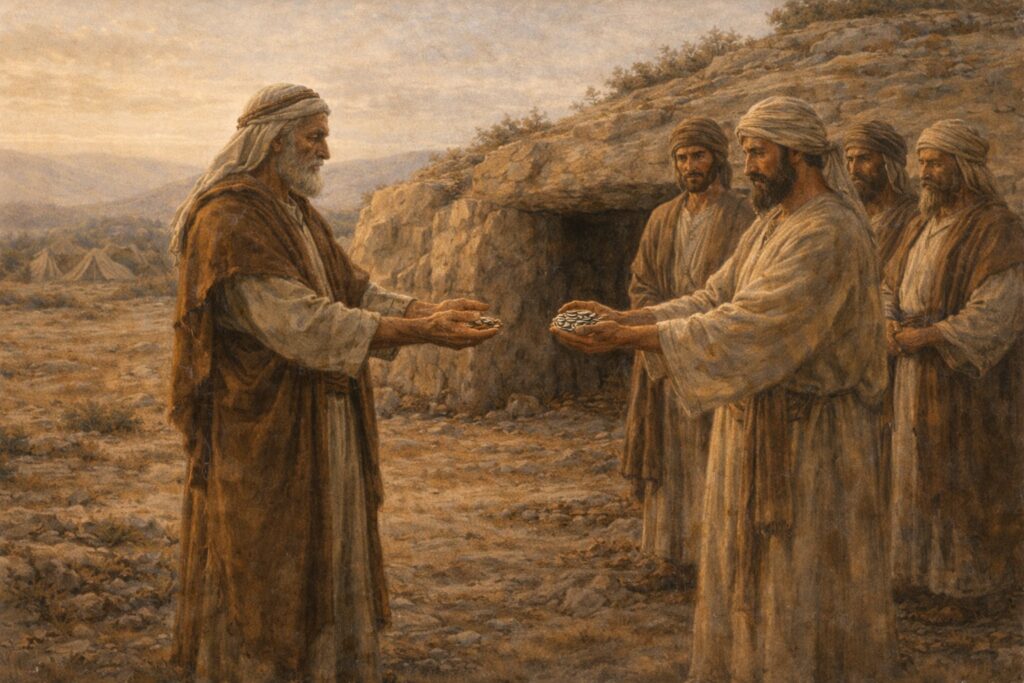
There came one moment when Abraham had a reason to buy land. Sarah died, and he needed a burial place. He confessed openly, “I am a foreigner and a sojourner among you.”
He could have accepted the land as a gift, but he refused. Abraham knew that only land purchased at full price could serve as a lasting testimony. The book of Hebrews explains why—he was longing for a better country, a heavenly one.
5. A Tomb That Taught the Covenant
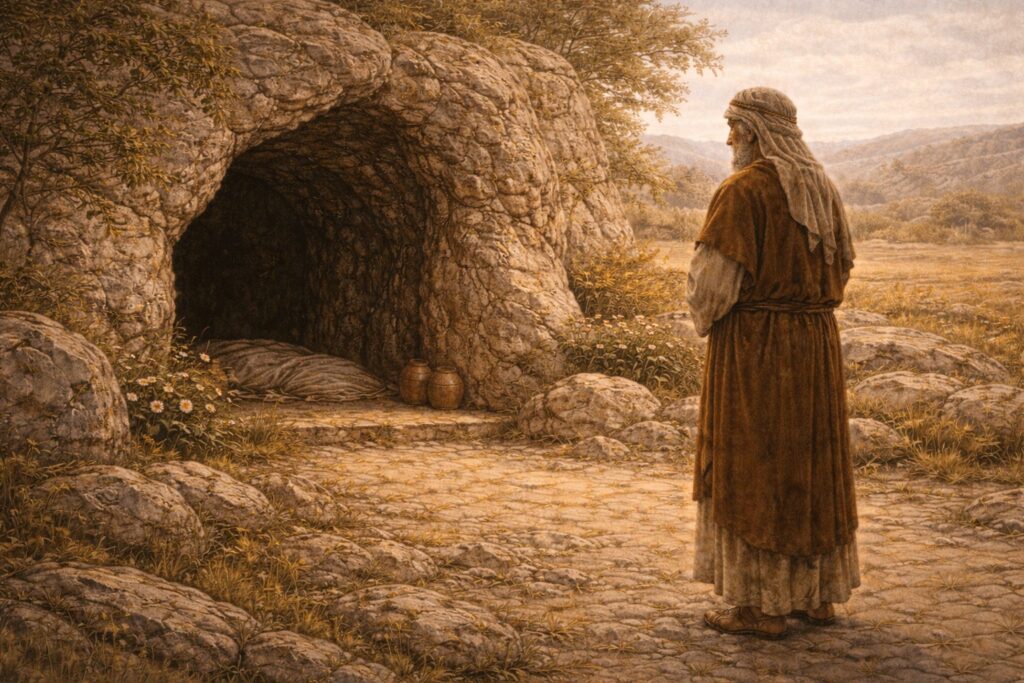
The cave of Machpelah was not purchased for life, but for death. It became a covenant marker for future generations. That tomb proclaimed, “You must return to this land,” not for possession, but for God’s kingdom.
If Israel returned merely for land, it would be a return of desire, not of covenant.
6. A Hope Passed Through Generations
Jacob later commanded that he be buried in that same tomb. Joseph made his descendants swear to carry his bones up when God delivered them. Four hundred years later, Moses carried Joseph’s bones out of Egypt.
Israel did not leave Egypt for land. They left for the covenant.
7. The Call for Us Today
Scripture records this burial purchase in detail to teach us to look far ahead. The city Abraham longed for—the city with foundations, whose builder is God—is the kingdom of heaven.
Today, the heavenly kingdom and the church on earth are being built together. To gain people through the gospel is to gain what is eternal.
8. The Price We Must Pay
Therefore, the price we are called to pay today is clear: to proclaim the gospel, to make disciples, and to live as faithful citizens of heaven.
Do not labor for earthly things as your final goal. Lift your eyes beyond the land and fix them on heaven.
The city Abraham saw from afar—the city God Himself is building—is drawing ever closer.
Amen.
◀ Previous: Genesis 22 — Sacrifice of Isaac
▶ Next: Genesis 24 — Isaac and Rebekah
📖 Genesis Bible Meditation Series
Genesis Bible Meditation Playlist