
God reaffirms the covenant with Isaac, preserving him through conflict and blessing him in the land of promise.
Genesis 26 focuses on Isaac and demonstrates how God faithfully preserves the covenant across generations. During a time of famine, Isaac remains in the land as God instructs him and experiences extraordinary blessing despite conflict with surrounding peoples. The chapter shows repeated disputes over wells with the Philistines, yet Isaac consistently chooses peace rather than retaliation. In the midst of these tensions, God appears to Isaac and reaffirms the same covenant promises given to Abraham. Genesis 26 therefore highlights God’s faithfulness, the importance of patient endurance, and the continuation of the covenant line through Isaac.
When God Reaffirms the Covenant
Genesis 26 reaches what appears to be a moment of resolution.
After repeated conflicts over wells and territory, Isaac finally goes up to Beersheba. There, the LORD appears to him and speaks words that echo the covenant given to Abraham.
“Do not be afraid, for I am with you. I will bless you and multiply your descendants.”
This moment is not incidental. It is God’s confirmation that Isaac’s quiet endurance was not weakness but faith. By choosing not to fight, Isaac had trusted that blessing does not come through force, but through God’s promise. The covenant stands firm, regardless of human opposition.

An Altar, a Tent, and Restored Worship
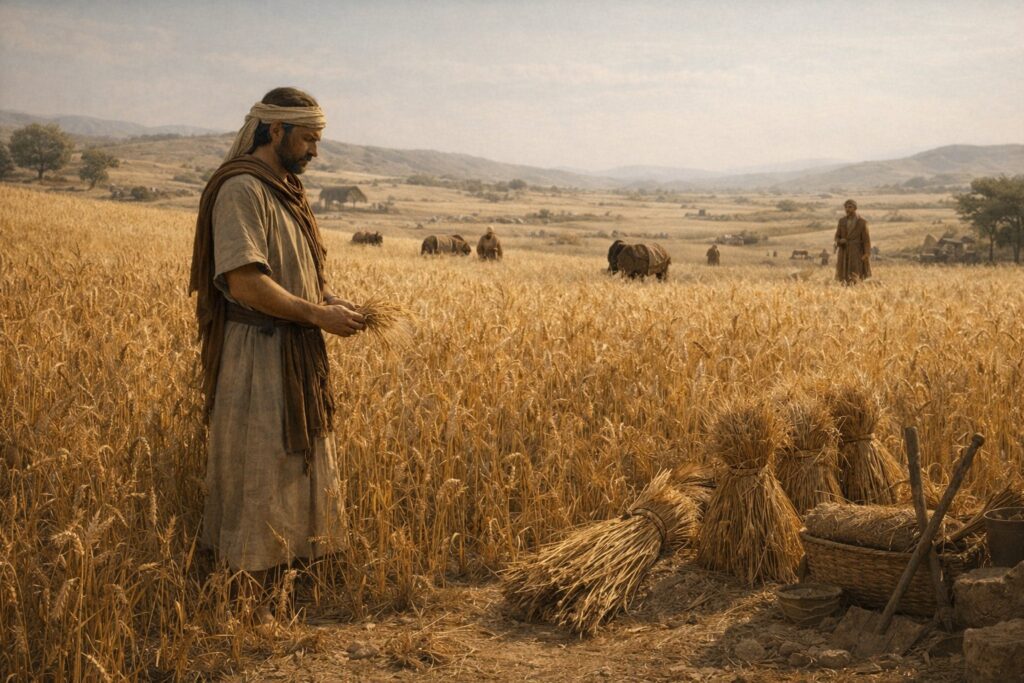
Isaac responds to God’s appearance by building an altar and calling on the name of the LORD. He pitches his tent and settles there. These actions are deeply symbolic. The altar represents worship, the tent represents dwelling, and together they signify a restored spiritual order.
At this point in the narrative, everything appears aligned. Isaac is prosperous, protected, and firmly rooted in God’s promise. From the outside, his life looks like a clear testimony of divine blessing.
Yet Scripture now shifts its focus.
A Failure That Wealth Cannot Cover
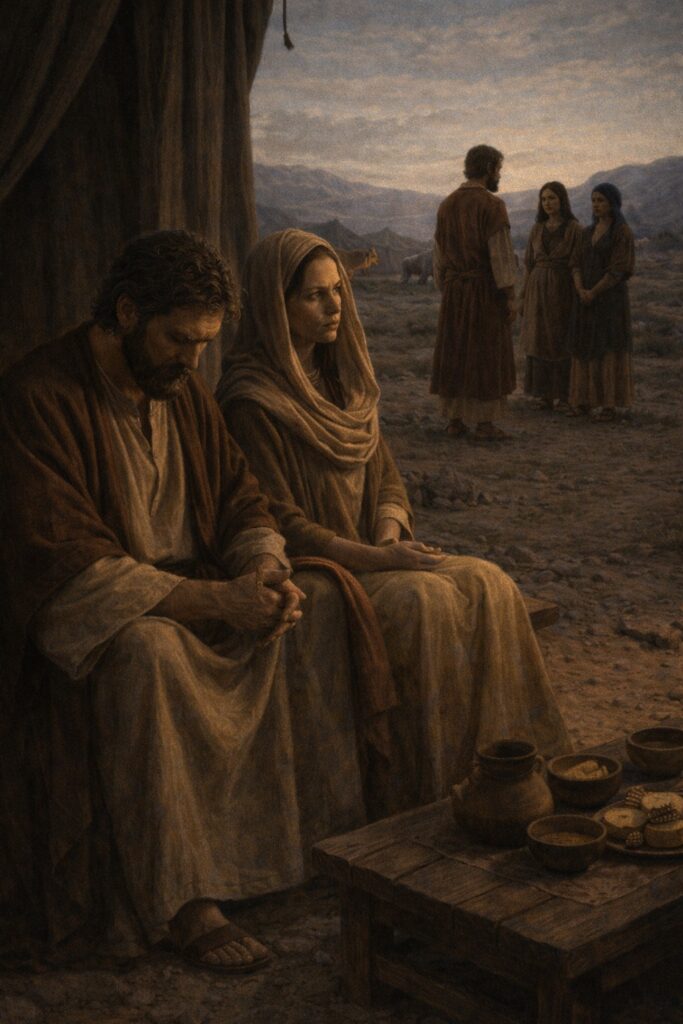
Immediately after this spiritual high point, we are told that Esau marries Hittite women. The Bible does not describe this as a minor personal choice or a cultural misunderstanding. It presents it as a serious spiritual problem.
Esau’s marriages reveal that he does not value the covenant. He is the firstborn, yet he lives as though the birthright carries no weight. His choices show that he neither understands nor believes in the calling attached to his position.
This is the turning point of the passage. Isaac succeeded in life, but something essential was slipping away inside his home.
The Limits of Success
Genesis 26:23–35 confronts us with a sobering truth. Material success, peace with enemies, and even personal faithfulness do not automatically guarantee spiritual continuity in the next generation.
Isaac protected his wealth and avoided conflict, but he failed to secure the covenant legacy within his household. The chapter quietly reminds us that the most painful failures are often not public, but private—unnoticed until they have already taken root.
This passage asks us a searching question:
What does it truly mean to succeed in life, if the covenant is not passed on?
◀ Previous: Genesis 25 — Generations of Abraham
▶ Next: Genesis 27 — Jacob Receives Blessing
📖 Genesis Bible Meditation Series
Genesis Bible Meditation Playlist