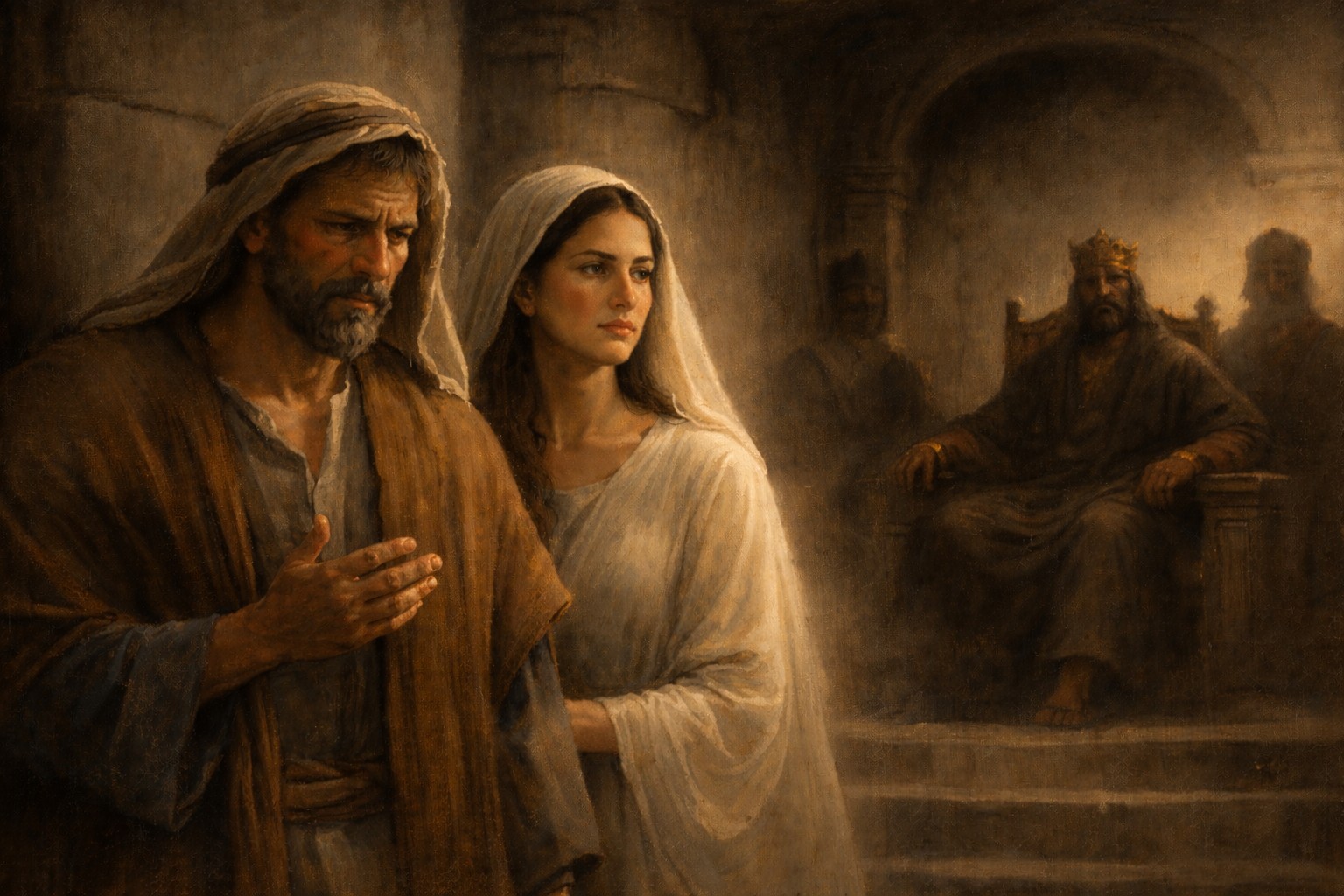
Genesis 20 reveals how God protects Sarah, corrects Abraham’s fear, and preserves His covenant promise even through human weakness.
Genesis 20 records a troubling moment in Abraham’s life when fear leads him to repeat an old failure. Arriving in Gerar, Abraham again calls Sarah his sister, and King Abimelech takes her into his household. The situation echoes the earlier event in Genesis 12, when Abraham used the same deception in Egypt. In both cases, Sarah’s safety and the covenant promise appear to be placed in danger. Yet Genesis 20 ultimately reveals something deeper: even when Abraham’s faith falters, God intervenes to protect Sarah and preserve His covenant plan.
Genesis chapter 20 records another failure in Abraham’s life. Once again, he tells a lie. By calling his wife Sarah his sister, Abraham chose to protect his own life at the expense of his wife’s purity. It was a fearful decision shaped by human calculation rather than faith. This same failure had already occurred earlier in Genesis chapter 12, when Abraham went down to Egypt during a famine. There too, Sarah nearly became another man’s wife, and only God’s direct intervention preserved her.
Yet Genesis 20 shows us something unsettling: the same sin is repeated. This time, not in Egypt, but before Abimelech, king of Gerar. Abraham’s weakness is unmistakable. He did not fully trust God. He relied on strategy rather than obedience. And once again, he failed to guard what God had entrusted to him.
Remaining in the Covenant Land, Yet Still Weak
There is, however, a crucial difference between these two events. In Genesis 12, Abraham left the promised land and went down to Egypt. In Genesis 20, he remains within the land of Canaan. He has not abandoned the covenant land, yet he commits the same sin. This reveals an important truth: spiritual growth is not automatic. Remaining within the covenant does not mean the absence of failure.
Canaan itself was a corrupt land under judgment, as seen in the destruction of Sodom and Gomorrah. And yet, it was precisely in such a land that God placed Abraham. God chose a weak human being, entered into covenant with him, and committed Himself to shaping and maturing him over time. The covenant does not depend on human strength, but on God’s faithfulness.
Why Sarah’s Purity Had to Be Preserved
In both Genesis 12 and Genesis 20, Sarah’s purity is protected by extraordinary divine intervention. This was not merely about moral preservation. Sarah was the only woman who could bear the covenant son. The covenant given to Abraham was inseparable from Sarah, who shared in that covenant as one body with him.
In Genesis 17, her name was changed to Sarah, “mother of nations.” In Genesis 18, God promised that she would give birth within a specific time. The reason Sarah could not belong to another man was absolute and covenantal. God’s redemptive plan depended on the covenant son who would come through her. Even when Abraham failed, God did not.
God Who Prevents Sin
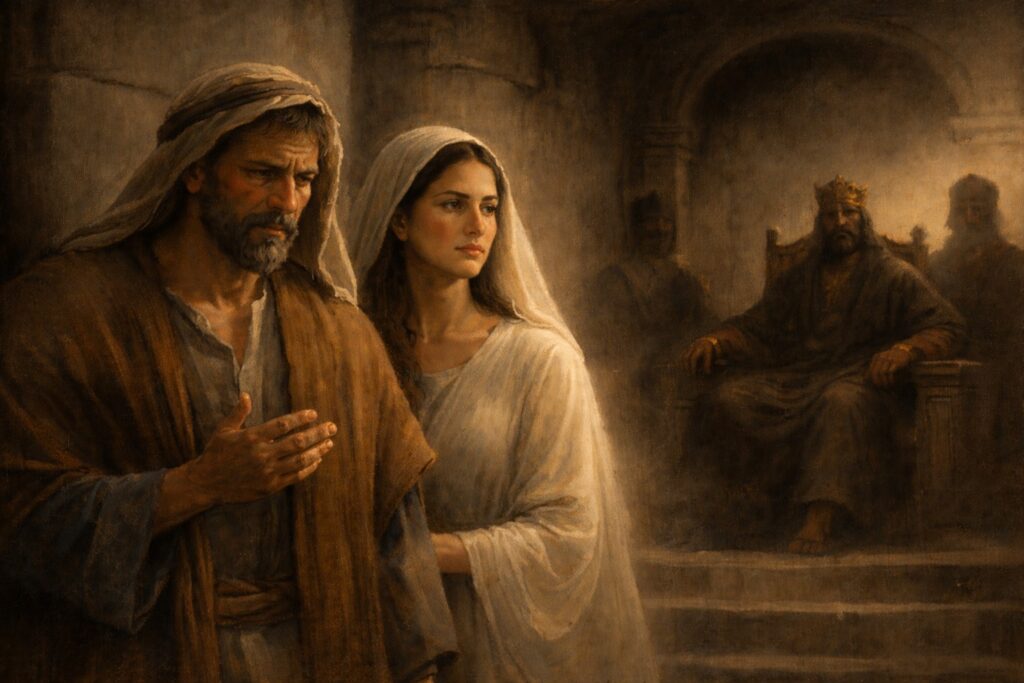
God appears to Abimelech in a dream and declares, “You are as good as dead because of the woman you have taken.” Abimelech protests his innocence, explaining that he had not approached Sarah. God acknowledges this and says, “It was I who kept you from sinning against Me.” Abimelech’s innocence was not rooted in moral superiority, but in God’s sovereign restraint.
God intervened because Sarah was the bearer of the covenant promise. From Eden onward, Scripture reveals that God establishes His kingdom through the offspring of the woman. The covenant line would not be compromised—not even for a moment.
A Lying Man Called a Prophet
One of the most striking moments in this chapter comes in verse 7. God calls Abraham a prophet and declares that Abimelech’s life will be restored through Abraham’s prayer. This is astonishing. Abraham had lied. He had acted out of fear. He had repeated the same sin. Yet God entrusts intercessory authority to him.
Why? Because Abraham did not stand before God in his own righteousness. The righteousness God acknowledged was covenant righteousness—righteousness grounded in the coming work of Christ. It was confirmed through circumcision and sustained by remaining within the covenant path. Though weak, Abraham did not abandon the covenant. In repentance and prayer, his intercession became effective, not because of his merit, but because of Christ’s righteousness credited to him.
The Faithfulness of God to the End
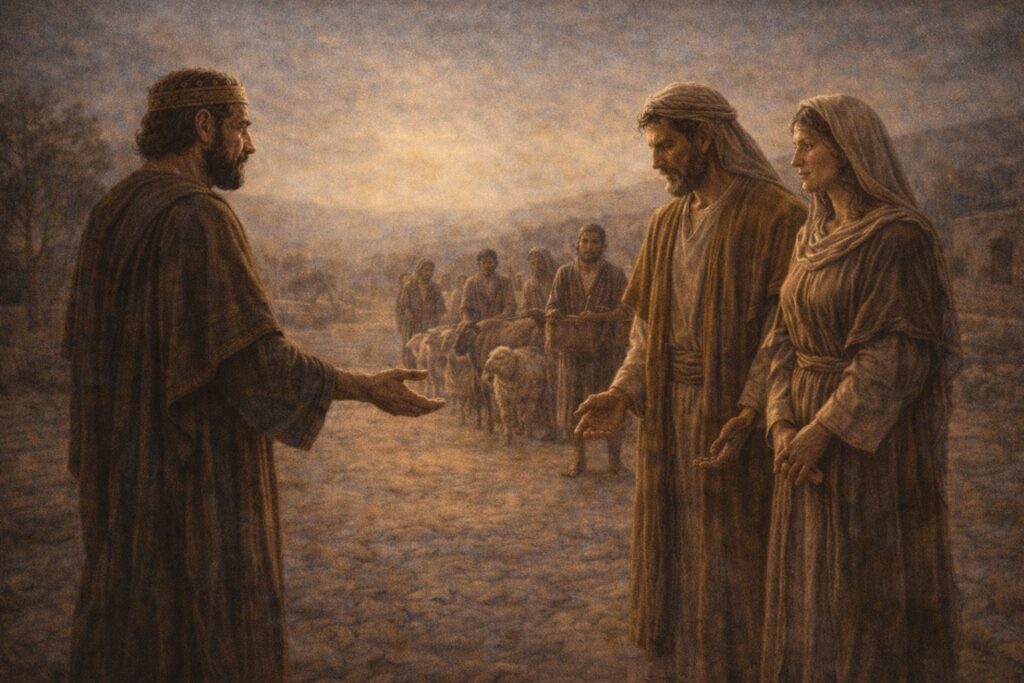
Through Abraham’s prayer, Abimelech’s household is restored, closed wombs are opened, and life returns. God appeared to Abimelech not for Abimelech’s sake, but for Abraham’s. This reveals a profound truth: God guards His covenant people to the very end.
Human faith may falter, but God’s covenant does not. No matter the circumstances, no matter human weakness, God fulfills what He establishes in His own name. Therefore, we too are called to live honestly and faithfully wherever God has placed us—trusting not in our strength, but in His unchanging faithfulness.
An unshaken covenant built upon weak faith.
May this word lead us once again to lay hold of grace.
Amen.
◀ Previous: Genesis 19 — Sodom and Gomorrah
▶ Next: Genesis 21 — Birth of Isaac
👉 Full Genesis Playlist
Genesis Bible Meditation Playlist