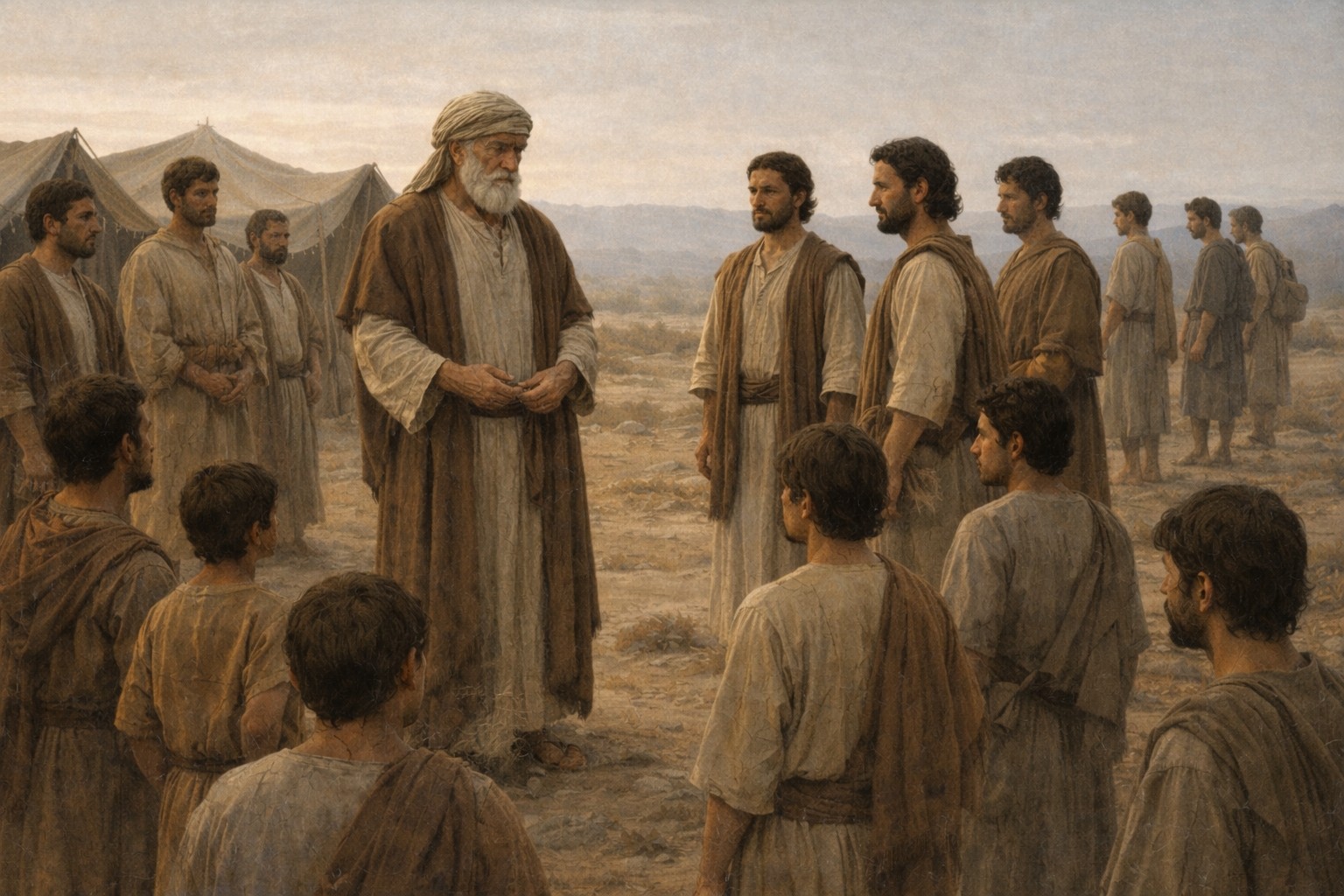
The transition from Abraham to Isaac unfolds as the birth of Esau and Jacob reveals the mystery of God’s sovereign choice.
Genesis 25 marks the transition from the generation of Abraham to the generation of Isaac and his sons. The chapter begins with the death of Abraham, closing the era of the patriarch through whom God first established the covenant promise. Attention then shifts to the birth of Isaac’s twin sons, Esau and Jacob, whose lives will shape the next stage of the biblical narrative. Even before their birth, God declares that the older will serve the younger, revealing that the covenant line will continue through Jacob. Genesis 25 therefore introduces the tension between human expectations and God’s sovereign choice in advancing His redemptive plan.
The Word Spoken Before Birth
How was the covenant that Isaac received being passed on to the next generation?
When Isaac had no children, he prayed earnestly for his wife Rebekah, and God graciously answered. Yet even before the children were born, Scripture tells us that they struggled within her. God then spoke a decisive word: “Two nations are in your womb, and the older shall serve the younger.”
This declaration was not meant to provoke rivalry or conflict. It revealed a covenant principle that runs throughout Scripture: true greatness is found in service. Jesus Himself later confirmed this truth, teaching that whoever desires to be great must become a servant, and that even the Son of Man came not to be served, but to serve and to give His life as a ransom for many.
A Household That Failed to Hold the Word
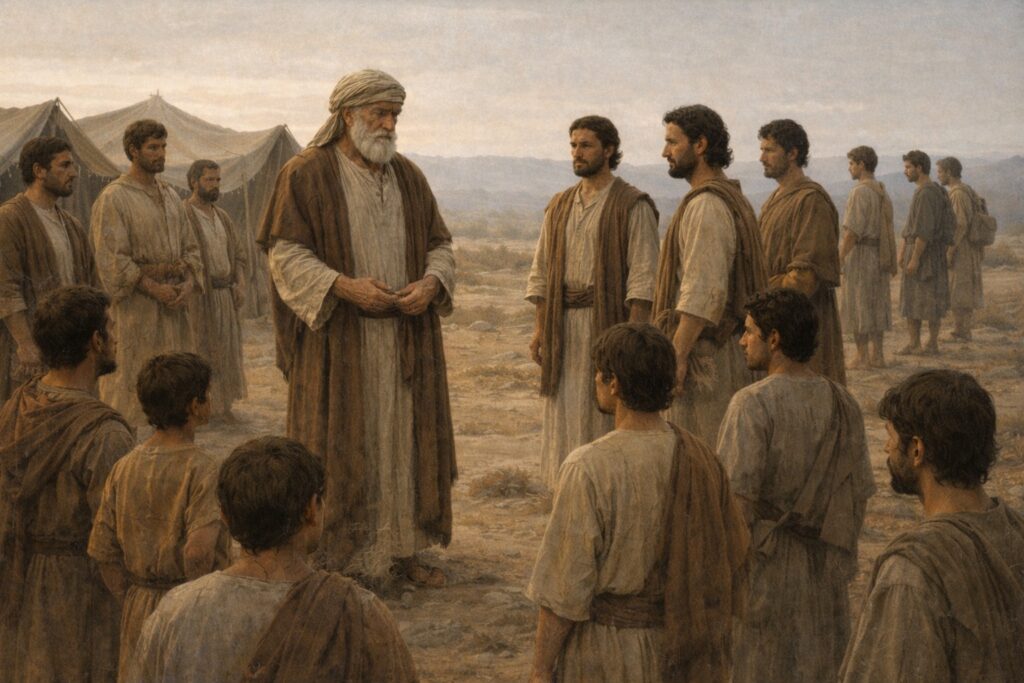
Despite this clear word from God, Isaac’s household failed to hold firmly to it. The division that appeared in Rebekah’s womb seems to have reflected an inner division already present between Isaac and Rebekah themselves. Scripture speaks with striking brevity: “Isaac loved Esau, but Rebekah loved Jacob.”
Parental love became competitive. As unity weakened, true service faded, and love itself was practiced with selfish motives. Isaac favored Esau because of the food he brought him, while Rebekah favored Jacob according to her own preference. The children learned rivalry not through instruction, but through observation. As marital unity fractured, covenant instruction could no longer stand as one.
Despising the Birthright
The consequences soon became evident. Esau declared, “I am about to die; what good is the birthright to me?” These words reveal that the firstborn of the covenant family did not understand his own identity. The birthright was not merely a family privilege—it represented priesthood, kingship, and the inheritance of God’s promise.
By Genesis 26, Esau had already married two Hittite women, aligning himself with a culture destined for judgment. As a hunter, he was far removed from the heart of a shepherd. By his choices and by his own words, Esau revealed that he did not believe the covenant he was meant to carry.
Knowledge Without Covenant Character
Jacob, on the other hand, understood the value of the birthright. Yet the way he pursued it was not worthy of the covenant. Through calculation and greed, he exploited his brother’s weakness. He possessed covenant knowledge, but lacked covenant-shaped character. He desired greatness, yet failed to understand that greatness comes through service.
God had spoken this truth even before the twins were born. Still, Isaac and Rebekah seem to have failed to teach it fully to their sons.
The Root of the Failure
Looking deeper, the root of the problem lies with Isaac. He allowed Esau to grow accustomed to a life shaped by bloodshed and secular values. He enjoyed the food Esau provided and loved him for it. This was not the posture of a patriarch or priest, but of a father who neglected covenant instruction. God’s purpose in choosing Abraham—to teach his household to walk in righteousness and justice—was lost. Both covenant instruction and family unity collapsed.
A Call to Faithful Transmission
Brothers and sisters, the covenant is not automatically transmitted by the faith of one generation. Without unity and teaching, it easily fades. We, too, are like grass and flowers—quick to wither. Therefore, we must love one another and remain united. We must teach our children through the Word. Within the community, we must hold fast to evangelism and discipleship.
God did not choose us so that salvation would end with us as individuals, but so that we might proclaim the excellencies of Christ. May we hold firmly to the center of the covenant and walk to the very end the path of faith completed through unity, in the name of our Lord.
Amen.
◀ Previous: Genesis 24 — Isaac and Rebekah
▶ Next: Genesis 26 — Isaac in Gerar
📖 Genesis Bible Meditation Series
Genesis Bible Meditation Playlist