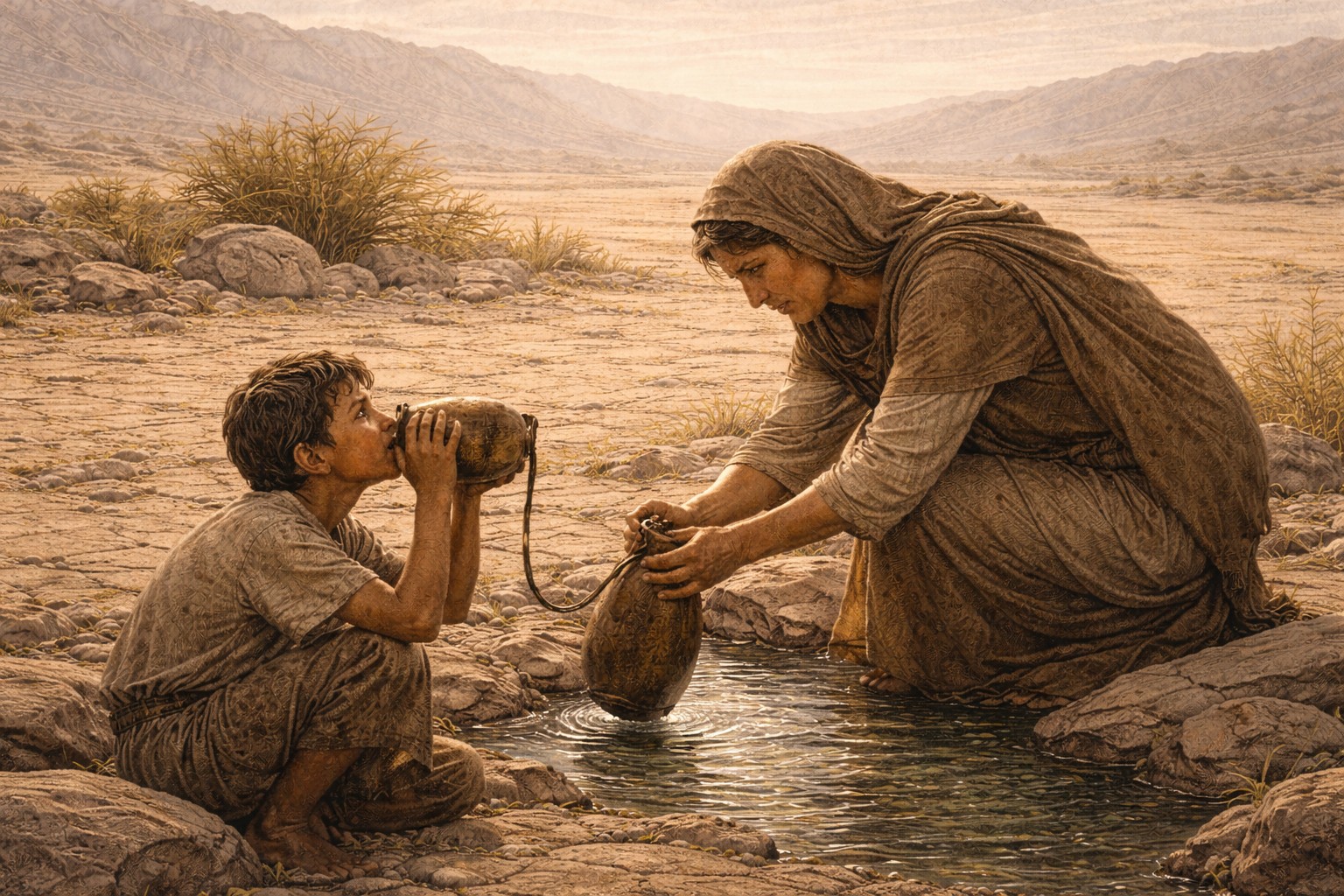
Isaac is born according to God’s promise, confirming that the covenant advances by God’s faithfulness rather than human strength.
Genesis 21 celebrates the fulfillment of one of God’s most important promises: the birth of Isaac. After years of waiting, Abraham and Sarah finally receive the son through whom the covenant will continue. The chapter highlights the joy of this long-awaited promise while also addressing tensions within Abraham’s household, particularly the departure of Hagar and Ishmael. Even in these complex circumstances, God demonstrates care and provision for all involved. Genesis 21 therefore confirms that God’s promises are fulfilled in His perfect timing and that His covenant plan moves forward through Isaac.
1. Joy Interrupted by Conflict
Genesis chapter 21 presents a scene where joy and pain stand side by side. It is not merely a record of family tension, but a clear testimony of how God protects His covenant through sovereign judgment and enduring grace.
In Israel, a child was typically weaned at around three or four years of age, and a feast was held to mark the occasion. It was meant to be a day of blessing and goodwill. Yet on that very day, Ishmael—already about seventeen years old—spoke and acted cruelly toward the young Isaac. Scripture describes this as “mocking,” but the term carries far more weight. This was not playful teasing, but deliberate persecution intended to humiliate the child of promise.
Sarah’s response reveals the seriousness of the situation:
“The son of this slave woman shall not share in the inheritance with my son Isaac.”
2. A Challenge to the Covenant Heir
Ishmael’s actions reveal a deeper conflict beneath the surface. Though he knew that Isaac had been appointed by God as the covenant heir, he acted as though the rights of inheritance belonged to him as the firstborn. His mockery was an attempt to undermine the position of the son of promise.
This was not simply personal jealousy. It was resistance against God’s sovereign decision. Ishmael knew the decree, yet chose to oppose it.
3. The Heart Behind the Conflict: Hagar
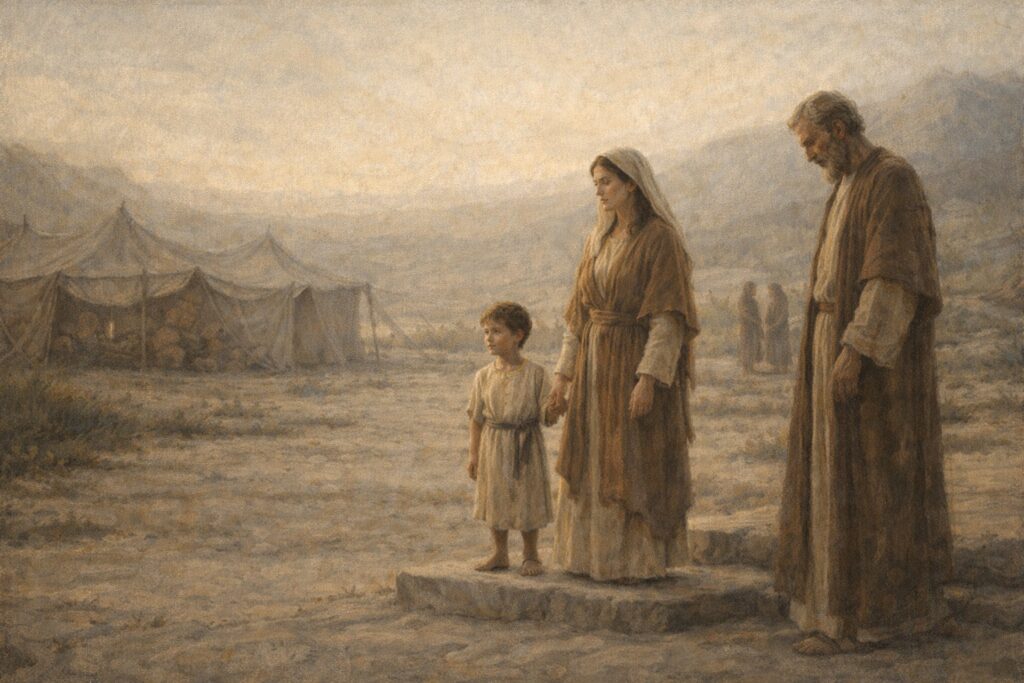
Ishmael’s attitude did not emerge in isolation. Behind his words and actions stood the heart of his mother, Hagar. In Genesis 16, the angel of the LORD had clearly instructed her to return to Sarah and submit to her authority. God also foretold that Ishmael would live in ongoing conflict with others.
Hagar confessed that God is the One who sees. She knew that God discerns not only outward actions but the motives of the heart. Yet rather than remaining within the order of the covenant, she appears to have desired more—seeking to overstep her place and elevate her son to the position God had already assigned to Isaac.
4. Was Sarah’s Demand Too Harsh?
At this point, a natural question arises: Was Sarah’s demand excessive? Did Hagar and Ishmael truly need to be sent away?
When viewed through the principle of a royal household, the answer becomes clear. Isaac had already been chosen by God as the covenant heir—appointed by divine sovereignty. If the son of a concubine were to persecute the appointed heir, order and peace within the household would be impossible.
Abraham’s family was not merely a private household. It was the starting point of God’s redemptive kingdom. In this context, inheritance was not about property, but about covenant succession.
5. Abraham’s Pain and God’s Verdict
Despite understanding the justice of Sarah’s words, Abraham’s heart was torn. Ishmael was a son he deeply loved. Before Isaac’s birth, he had regarded Ishmael as his heir. In this moment, Abraham likely felt the weight of his past choices returning to him.
Then God spoke decisively:
“Listen to whatever Sarah tells you, because it is through Isaac that your offspring will be named.”
Here, “offspring” refers not merely to physical descendants, but to the line of redemptive history that would ultimately lead to Jesus Christ. Yet God did not abandon Ishmael. For Abraham’s sake, He promised to make Ishmael into a great nation as well.
6. Sovereignty Before Law, Grace Before Merit
Many ask whether this contradicts the law of the firstborn’s inheritance. Scripture reminds us of a crucial principle: sovereignty comes first; the law comes afterward. God’s sovereign declaration establishes the law, not the other way around.
If the law were ultimate, no one could be saved. Salvation exists because God sovereignly bestows grace. In Genesis 21, God firmly establishes this foundational principle at the very beginning of redemptive history.
7. Obedience Born of Reverence
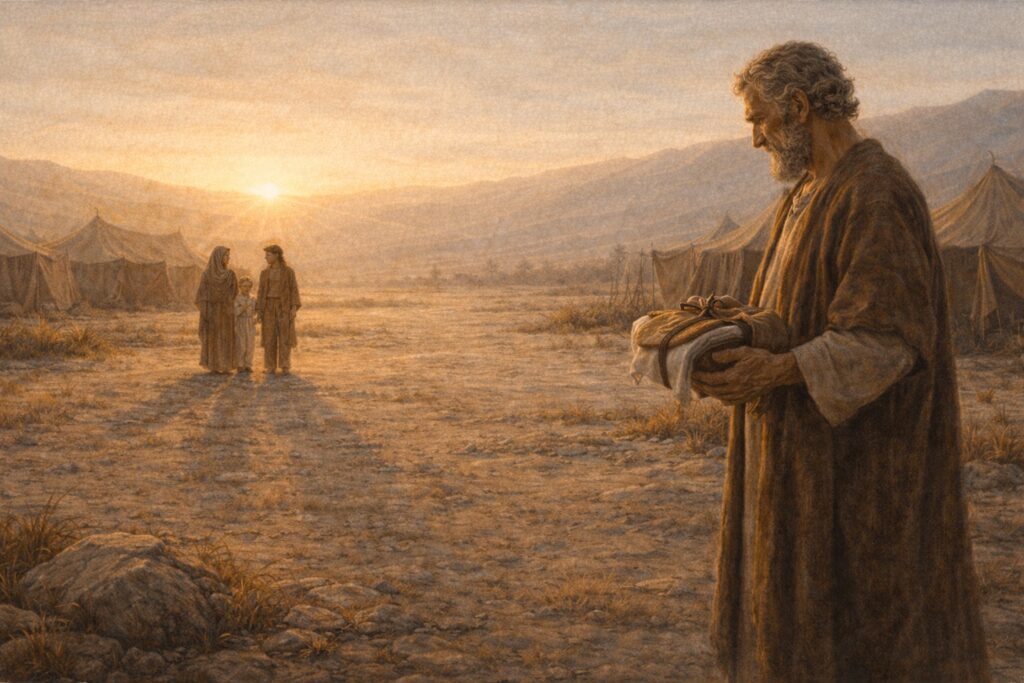
Once Abraham heard God’s word, he no longer hesitated. Scripture records, “Early the next morning, Abraham got up…” He prepared bread and water and sent Hagar and Ishmael away.
His heart must have been filled with sorrow. Yet Abraham chose obedience, placing God’s sovereignty above personal emotion. This is the posture of a servant standing before divine authority.
8. Grace in the Wilderness
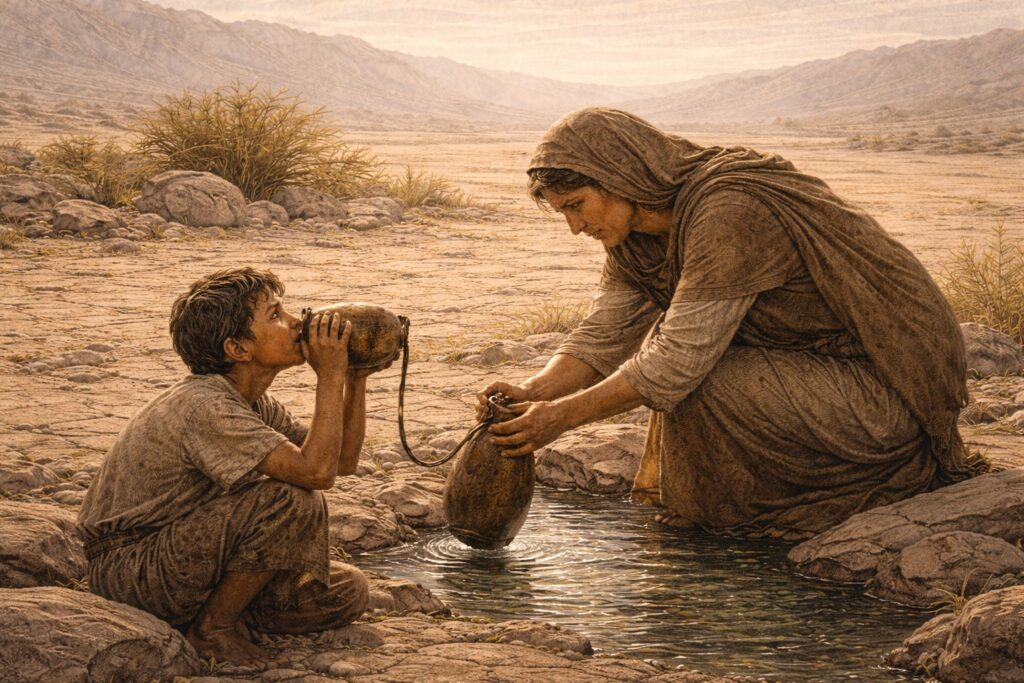
In the wilderness, Hagar and Ishmael reach a complete dead end. Yet God hears the boy’s cry. He opens Hagar’s eyes to see a well of water and preserves their lives.
Grace is clearly given. Yet Ishmael gradually distances himself from the covenant household. By choosing an Egyptian wife, he steps outside the covenant line. Grace was extended, but he did not live as a covenant member.
9. Covenant Peace and Lasting Worship
The chapter concludes with a covenant of peace between Abraham and Abimelech. Abimelech acknowledges, “God is with you in everything you do.” Abraham plants a tamarisk tree at Beersheba and calls on the name of the LORD, the Eternal God.
Where God’s covenant is honored, peace ultimately rests.
10. A Word for Us Today
Genesis 21 speaks clearly to us. God may allow pain in order to protect His covenant, but throughout every process, He never withdraws His grace.
Greed and pride tear down the covenant community. Humility and obedience preserve it. May we also live by the principle of God’s sovereignty first, grace first, and worship in peace within the covenant community.
◀ Previous: Genesis 20 — Abraham and Abimelech
▶ Next: Genesis 22 — Sacrifice of Isaac
📖 Genesis Bible Meditation Series
Genesis Bible Meditation Playlist