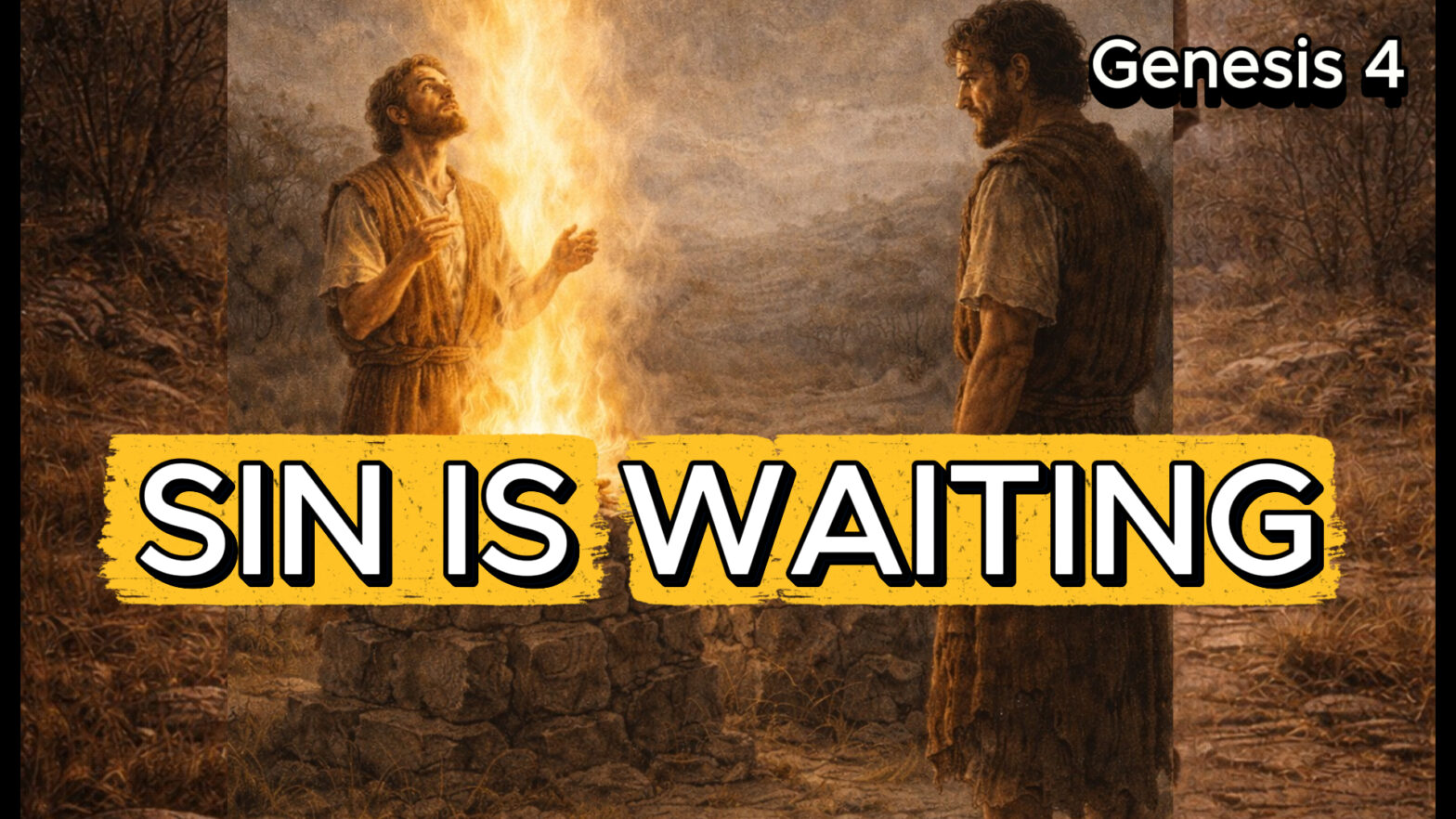
Genesis 4 records the story of Cain and Abel, revealing the first murder in human history and the spread of sin after the fall.
Genesis 4 records the story of Cain and Abel, revealing how sin spread through humanity after the fall and leading to the first murder in human history. The chapter shows the contrast between true worship and rejected worship, as Abel offers a sacrifice accepted by God while Cain’s anger leads him into violence. Yet even in the midst of judgment, Genesis 4 also introduces the beginning of a godly lineage through those who call upon the name of the Lord.
Life Outside Eden, Yet Worship Continues
After being driven out of Eden, Adam and Eve lived a life marked by lack, toil, and pain.
Yet they did not abandon God. Through offerings, they continued to remember Him.
They lived day by day holding onto the promise that the offspring of the woman would come—
the hope of salvation that God Himself had spoken.
Eve gave birth to her first son and named him Cain, meaning “acquired.”
Her confession—
“I have gained a man with the help of the LORD”—
reveals that she still relied on God and trusted His promise.
Perhaps she even hoped that this child might be the promised offspring,
the Messiah Himself.
The First Worshiper, and the First Murderer
Scripture then confronts us with a shocking truth.
Cain, the firstborn of humanity and a worshiper,
became the first murderer.
Cain was not taught evil.
There was no corrupt culture, no violent society, no external pressure.
And yet, he chose sin on his own.
This is the reality of original sin.
Original sin is not merely a record of past wrongdoing.
It is a condition—
a heart inclined toward sin from birth,
a life that believes sin can be hidden,
and a soul that refuses to stand honestly before God.
Cain reveals this condition with frightening clarity.
The Same God, Two Very Different Hearts
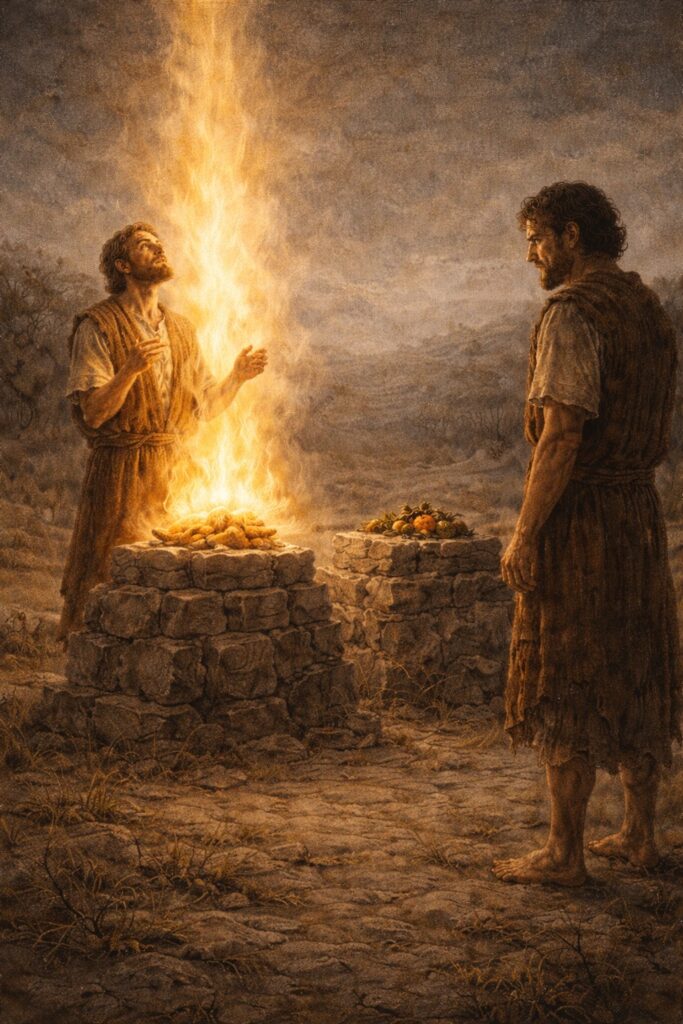
Abel also brought an offering.
He offered it at the same time, to the same God, in the same place.
Scripture says,
“Abel also brought of the firstborn of his flock and of their fat portions.”
That word—“also”—is important.
It reveals Abel’s heart:
a desire to stand before God together with his brother.
Abel set apart the firstborn lamb.
He tended it, waited for it, and offered it at the right time.
Throughout that waiting, he remembered God.
His sacrifice looked forward—
toward the coming offspring of the woman,
the Messiah who would one day be offered.
Cain, however, brought his offering in his own time and in his own way.
Nothing was set apart.
There was no desire for unity, no reverence of heart.
Outwardly it looked like worship,
but inwardly his heart never reached God.
God Looks First at the Person, Not the Offering
This is the central truth of Genesis 4:
God does not first look at the offering.
He first looks at the person.
God accepted Abel, and therefore accepted his offering.
God did not accept Cain, and therefore did not accept his offering.
Cain could see the difference clearly.
Yet he did not repent.
He became angry, and his face fell.
Then God came to him—not with judgment, but with grace:
“If you do well, will you not be accepted?
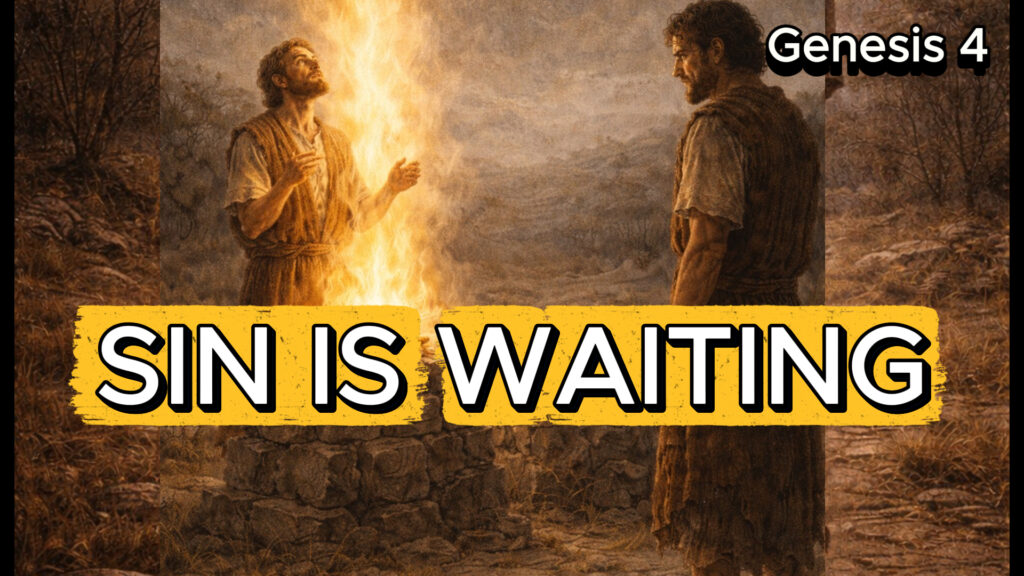
And if you do not do well, sin is crouching at the door.
Its desire is for you, but you must rule over it.”
Sin is always crouching at the door.
Whenever the place of obedience is left empty,
sin immediately takes that space.
Yet God’s word is clear:
“You can rule over it.”
This was not condemnation.
It was an invitation to repentance.
But Cain rejected even this word of grace.
A Sin That Believed It Could Be Hidden
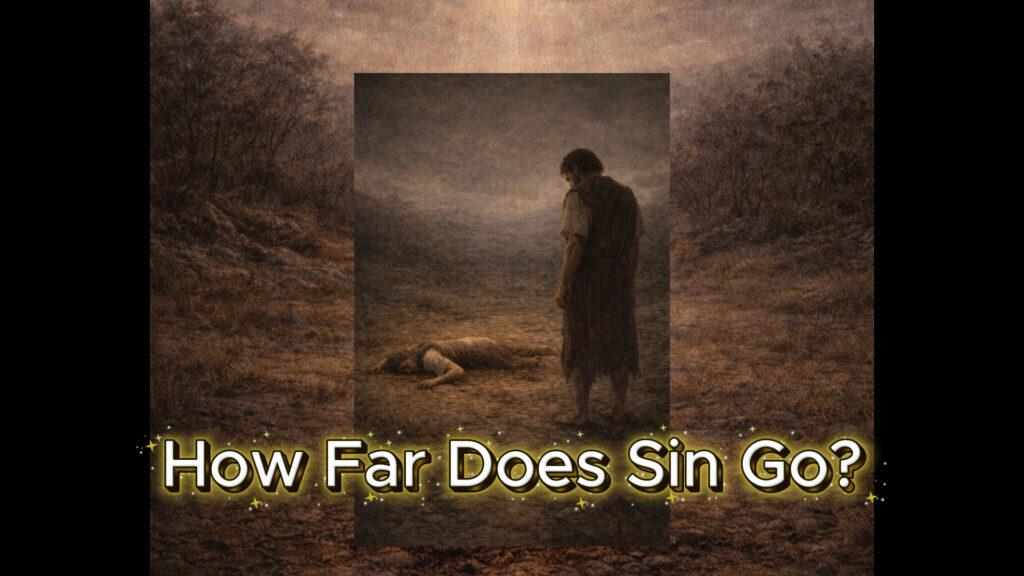
“And Cain rose up against his brother Abel and killed him.”
Cain offered sacrifices.
He heard God’s voice.
He received warnings.
Yet he surrendered his soul to sin,
believing he could hide his crime where no one could see.
But nothing is hidden from God.
God asked,
“Where is your brother Abel?”
This was not a question for information.
God already knew.
It was His final invitation to repentance before judgment.
Cain answered,
“I do not know. Am I my brother’s keeper?”
These words reveal more than an excuse.
They expose a heart that denies responsibility,
believes it can deceive God,
and has lost the image of God altogether.
Blood That Cries Out, and Grace Still Offered
God declared,
“The voice of your brother’s blood is crying to Me from the ground.”
Abel became the first martyr in human history.
The blood of the righteous does not remain silent.
It cries out to God for justice.
And yet, God did not immediately kill Cain.
Instead, He placed a mark on him—
not to justify his sin,
but to stop the cycle of revenge
and to declare that judgment belongs to God alone.
It was Cain’s final season of grace.
His last opportunity to repent.
Civilization Without God
Cain then left the presence of the LORD
and built a city east of Eden.
His descendants developed civilization—
livestock, music, culture, metalworking, and technology.
But nowhere was there true peace.
A civilization built without God
may provide security,
but it can never give lasting happiness.
Lamech, one of Cain’s descendants, boasted in violence.
He twisted God’s word to justify his brutality.
Civilization advanced,
but spiritual darkness deepened.
This is the legacy of Cain’s lineage.
Another Seed, and the Birth of Worship
Yet God did not allow hope to disappear.
He gave another seed—Seth.
Though born from the same body as Cain,
Seth was born through restoration,
as a seed of God’s word,
bearing the image of God.
Scripture then declares:
“At that time people began to call upon the name of the LORD.”
Not technology.
Not culture.
Not human achievement.
But worship began again.
The lineage of Seth became a worshiping community—
a line that passed through David
and ultimately led to Jesus Christ.
Which Path Are We Walking?
Today, lineage is no longer defined by blood,
but by new birth through the gospel.
That lineage is the Church.
And that lineage includes us.
Which path are we walking?
The way of Cain,
or the way of Seth?
Do we seek security and happiness
through achievement and civilization,
or through worship—calling on the name of the LORD?
This video invites us to examine our hearts.
Worship.
Gospel.
Discipleship.
May this holy seed continue through our lives.
May we be those who build the lineage of life today.
In the name of the Lord, we bless you.
Amen.
◀ Previous: Genesis 3 — The Fall of Man
▶ Next: Genesis 5 — Generations of Adam
👉 Full Genesis Playlist
Genesis Bible Meditation Playlist