— A Meditation on Genesis Chapter 3
This post is a written reflection of the video,
prepared for those who wish to read the passage slowly
and follow the flow of meditation on God’s Word.
(Genesis 3)
Genesis chapter three is not merely the record of humanity’s first crime. It is a profound revelation of where responsibility truly lies, what collapses when the covenant is broken, and how the devil brings humanity to ruin. At the same time, this chapter contains the very first proclamation of salvation, spoken in the midst of judgment. Far from being an ancient story, Genesis 3 is a mirror that reflects our own lives today.
Eve did not fully understand the covenant. Into that gap, the serpent stepped. She took the fruit and gave it to her husband, who was with her. Scripture is deliberate and clear. Adam was present the entire time. As the serpent distorted God’s command, as the woman answered incorrectly, as the serpent spoke an outright lie, as the fruit was touched, taken, and handed over—Adam remained silent. Not once did he speak.
Why did Adam say nothing? Because the sin of abandoning the covenant had already taken root in his heart. His silence was not neutrality. By standing by and doing nothing, Adam became a willing participant in sin.
Adam was not an ignorant man. He possessed discernment and wisdom sufficient to name every living creature. Yet he abandoned his responsibility as the covenant representative. Scripture later declares, “As in Adam all die.” The representative was meant to guard the covenant, explain the truth, and stop the transgression. Adam did none of these. His silence proved that the covenant had already been forsaken within.
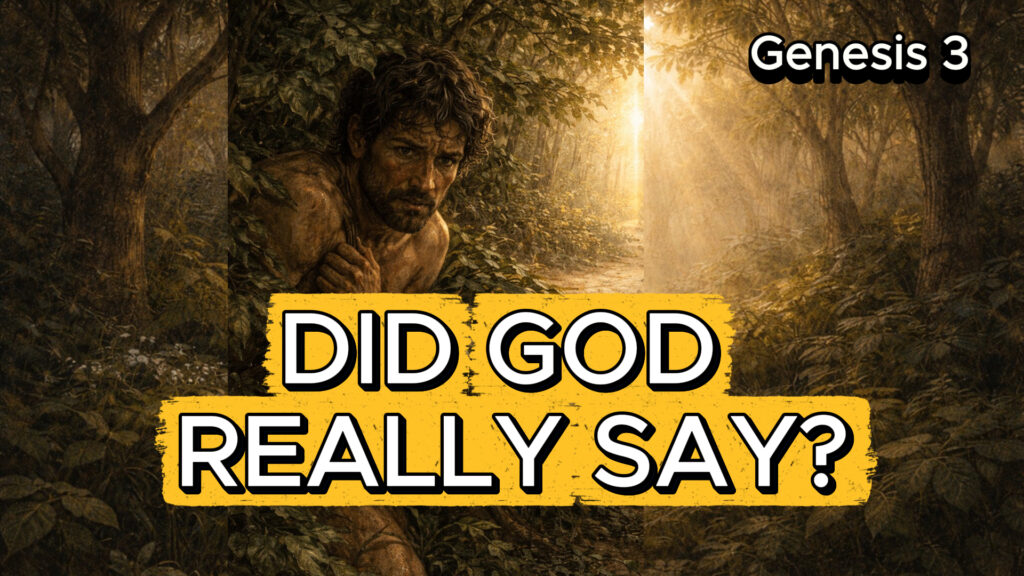
Sin always produces three responses: shame, hiding, and fear. “Then the eyes of both were opened, and they knew that they were naked.” This does not describe enlightenment but spiritual collapse. Though they could now see the body, they fell into spiritual blindness. The soul lost its light, and humanity began to flee from God, imagining it could hide from Him.
God then calls out, “Adam, where are you?” This is not a question of location, but of relationship. “Are you still in God, or have you fled outside of Him?” Before judgment, God always extends an invitation to repentance—a gracious call to step forward in honesty.
But Adam was not honest. “I was afraid because I was naked, so I hid.” He spoke only of consequences, not of sin itself—the breaking of the covenant. Then he shifted blame: “The woman You gave to be with me—she gave me the fruit.” His accusation ultimately pointed toward God. This is the mark of a will already enslaved by the devil: refusing responsibility and turning blame upward.
God presses further. “Who told you that you were naked?” God grieves that shame was taught by the serpent. “Have you eaten from the tree I commanded you not to eat from?” Adam avoids both truths—the deception of the enemy and the fact that the command was given to him alone.
Eve, however, gives the answer God was waiting to hear. “The serpent deceived me, and I ate.” She clearly identified the enemy and confessed her own action without blaming another. Upon this confession, God pronounced judgment on the serpent.
“I will put enmity between you and the woman, and between your offspring and hers; He will crush your head, and you will strike His heel.” This declaration is both judgment against the devil and the first covenant of salvation for sinners. The devil would wound the heel, but his head would be crushed.
This promise has already been fulfilled in history. The devil orchestrated the crucifixion of Jesus Christ, the offspring of the woman. Yet the cross was not Satan’s victory. The sinless Son of God offered His life as a sacrifice for sinners. God accepted that offering, and through resurrection, ascension, and the outpouring of the Spirit, granted complete victory. The serpent’s head has been crushed, and this victory will be fully revealed when Christ returns as Judge.
Judgment fell upon the devil, with no possibility of restoration. But Adam and Eve received discipline. Judgment ends in destruction; discipline aims at repentance and restoration. God disciplines each according to the nature of their sin, revealing its true shape.
To the woman, God declared pain in childbirth. Through eating the fruit, death entered humanity, and thus life would now come through pain. Yet this pain is not without hope. From the woman’s offspring would come the Savior. For those who believe the covenant, childbirth becomes a pathway of hope, not despair.
To Adam, God said, “Cursed is the ground because of you.” Adam trusted the ground more than God, so discipline came through the very thing he relied upon. Life would now require toil, and the ground would resist him. “You are dust, and to dust you shall return.” This speaks not only of physical death, but spiritual separation from God. Yet even here, divine love is hidden. Through lack and struggle, humanity learns a vital truth: we cannot live without God.
Adam then named his wife Eve, the mother of all living. Even under the shadow of death, he believed that life would come again through the woman’s offspring. Faith clung to the covenant even within discipline.
God clothed Adam and Eve with garments of skin. Behind these garments lay the death of an innocent life. Blameless blood was shed to cover the shame of sinners. This was the first sacrifice, pointing forward to the blood of Jesus Christ. Only the blood of Christ covers sin forever. It is the true garment of righteousness.
Finally, God barred humanity from the Tree of Life, guarding the way with a flaming sword. This was not punishment, but grace. Eternal life cannot be seized by human righteousness; it is given only as a gift from God. Scripture later reveals that the way back to the Tree of Life is opened to those who wash their robes in the blood of the Lamb.
May we learn to see hope within discipline. May we seek God with humble hearts, living lives of daily repentance, clothed in the righteousness of Christ. Through the victory of Jesus—the offspring of the woman—may we resist the devil and hold fast to the covenant.
Amen.
Genesis Bible Meditation Playlist